[audio:https://alarm-magazine.com/wp-content/uploads/2011/11/Oneohtrix_Point_Never_Replica.mp3|titles=Oneohtrix Point Never: “Replica”]
Hajduch: One-man experimental electronic project Oneohtrix Point Never is discussed in the same breath with all the other John Carpenter / kosmische / synthesizer music that has garnered attention the past few years (most notably, the oft-mentioned-here Emeralds). However, during that time, the Oneohtrix sound has wandered further and further from the reservation, incorporating blistering noise and looped samples. Replica continues this trend, layering the mournful polysynth washes with odd, clipped samples from television commercials.
Morrow: We talked about Daniel Lopatin‘s collaborative Ford & Lopatin (with Joel Ford of Tigercity) back in June, but that was a much more ’80s-influenced and synth-heavy album. Replica is very ambient, and though it may seem shapeless at first, there are all sorts of sampled melodies percolating beneath the surface. To those unaccustomed to this style, the album can come off as inaccessible or difficult to appreciate, but if you spend some time and immerse yourself in the waves of sound, it should grow on you. The subtlety of the music is best served with repeated listens.
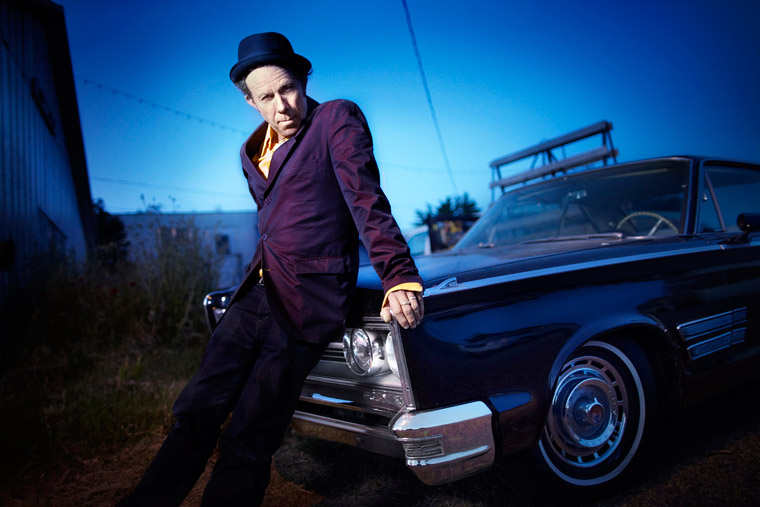
[audio:https://alarm-magazine.com/wp-content/uploads/2011/10/Tom_Waits_Bad_as_Me.mp3|titles=Tom Waits: “Bad as Me”]
Tom Waits is legend, larger than life. Few musicians are as cloaked in mythology. Yet his music has always been what music should be: comforting in places, jarring in others, pushing boundaries while always honoring the legacy of American songwriting. Bad as Me, Waits’ first studio album in seven years, is all of these things, continuing the direction that he established with Closing Time in 1973 and hammered into the ground with Swordfishtrombones a decade later.
At the time, Swordfishtrombones signified a new Waits, a man unafraid to be confronted. The confidence came in large part from his marriage to Kathleen Brennan. They’re still married, and Waits credits Brennan as his support, collaborator, and muse. Here, every track was written and produced by Brennan and Waits together. Those tracks oscillate between manic and maudlin, flip-flopping throughout the entire album. Where a Depression-era blues tune ends, a ballad begins. Waits’ voice is a freight train and then a frail leaf.
That voice, of course, is a wonder. Waits can sound like a woman down on her luck, a Mississippi blues man, a possessed mule, and an army of brokenhearted ogres. Every harsh word has been employed to make sense of the ragged clatter that emerges from Waits’ throat. It’s as if his voice has always been 60 years old and his body only now caught up.
We’ve been talking about it for months, and it finally happened: Amon Tobinbrought ISAM to Chicago. Named after Tobin’s latest album, the multimedia masterwork has been making the rounds (mostly in Europe) since June, but now audiences in the US are getting a taste of the immersive performance.
Amid a geometric configuration of cubes, upon which colorful, dynamic visuals were projected, Tobin worked from a laptop station. The music, composed primarily of manipulated, non-instrumental field recordings, paired with the projection mapping to create a mesmerizing synthesis of sound and light. You can read all about Tobin, his latest album, and the ISAM tour in our recent feature story. Design studio Leviathan has a full list of credits on its website, so you can see who was responsible for the killer visuals. Photographer Wallo Villacorta captured these images at the Congress.
In 1992, a collective of up-and-coming hip-hop artists at UC Davis — future big names DJ Shadow, Gift of Gab and Chief Xcel of Blackalicious, Lateef the Truthspeaker, and Lyrics Born — started up an underground record label called Solesides Records. Seven years later, the label transformed into Quannum Projects, and with the change came a host of esteemed releases that made it an independent hip-hop powerhouse alongside labels such as Definitive Jux, Rhymesayers, Stones Throw, and Anticon.
In addition to its commitment to quality hip hop, Quannum upholds values of ethnic diversity, artistic freedom, and do-it-yourself perseverance, sticking to its roots as a fully independent label throughout hip-hop’s pivotal evolution from burgeoning statement to mainstream farce. In advance of the label’s 20th anniversary, ALARM caught up with Lateef to chat about underground hip hop, his debut solo LP, and “selling out.”
What is your definition of hip hop? Do you think that the rise of mainstream rap diluted the art and culture of hip hop from decades ago?
To me, hip hop is a lens through which you see the world. I think that because the history of hip hop is not really something that is taught or passed on, different generations have different colored lenses. I don’t know if hip hop has been diluted as much as it has simply changed.
Unfortunately, a lot of that change has been dictated to the culture from those outside the culture. When pop culture values become the dominant voice of a counter-culture, the counter-culture becomes a pop culture. That’s kinda what’s happened to hip hop. As the genre became popular, the things that sold were the things that reflected popular culture values more than the values of hip hop. The stuff that sold more was viewed as more successful and (in the eyes of pop-culture values) “bigger.” The values of hip-hop culture were quickly trashed as being invalid.
One example is the notion of “selling out.” At one time, the concept was taboo to the point of rhetoric in hip hop. These days, it’s a key point in most marketing plans. People actually consider themselves lucky if they can sell out. It’s kind of the point for a lot of artists now, the reason they are even in hip hop to begin with.
In a lot of ways, hip hop has been commodified in a way that reduces it to a sales pitch. I mean, a lot of bubble-gum-pop singing acts are tagged as “hip hop” because they wear cargo pants. Crazy but true. It’s just another way that the culture is exploited by those that have no respect or real appreciation for the music or culture. They don’t really care, and nobody’s going after them, so why would they stop?
Still, I think there are a considerable number of artists – old and new – that are still making great music, even in a challenging and rapidly changing musical environment. In some ways, those that are making music in what is increasingly becoming a market wasteland are doing it for purer, more passionate reasons than ever.
That was probably a much longer answer than you were looking for…
Don’t be fooled by the minimalism of Tallest Trees’ external cover art: the Technicolor forms revealed within are as vibrant and unexpected as the music from this quirky electro-indie duo out of Nashville.


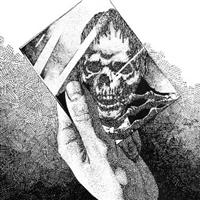 Oneohtrix Point Never: Replica (Software / Mexican Summer, 11/8/11)