
Morrow vs. Hajduch

Morrow vs. Hajduch: Sahy Uhns’ An Intolerant Disdain of Underlings

Scott Morrow is ALARM’s music editor. Patrick Hajduch is a very important lawyer. Each week they debate the merits of a different album.
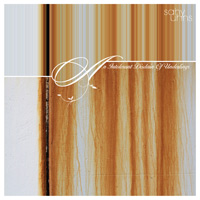
Sahy Uhns: An Intolerant Disdain of UnderlingsSahy Uhns: An Intolerant Disdain of Underlings (Proximal, 10/18/11)

Sahy Uhns: “Anticipation of the Night”

[audio:https://alarm-magazine.com/wp-content/uploads/2011/10/Sahy_Uhns_Anticipation_of_the_Night.mp3|titles=Sahy Uhns: “Anticipation of the Night”]

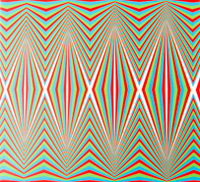
Morrow: Sahy Uhns (pronounced “science”) is the solo moniker of electronic/hip-hop producer Carl Madison Burgin, whose debut CD comes as part of a 5″ x 5″ book with photographs of the California deserts. The deserts are said to have inspired the album, but the glitchy, beat-ridden sounds therein are more the soundtrack for robots break-dancing than cactus needles rustling in the wind.

Though at times it simply resembles another detailed IDM album, An Intolerant Disdain of Underlings stands out with highly melodic phrasings and nuanced differences in timbre. It’s a beautiful, danceable sound collage that’s good for the car or the dance floor, falling somewhere between the styles of Warp recording artists (Chris) Clark and Harmonic 313.


KILLL

Are Mokkelbost & KILLL: A New Meaning to “Art Metal”

Killl: s/tKILLL: s/t (Fysisk Format)

KILLL: “194”

[audio:https://alarm-magazine.com/wp-content/uploads/2011/09/KILLL_194.mp3|titles=KILLL: “194”]

Are Mokkelbost had a problem with purple.

“In Norway, the cultural conception is that it’s a hippie color,” the 35-year-old visual artist and musician says. “A lot of middle-aged women are dressed in purple. So I think it was that association that ruined it for me.”

Instead of avoiding the color, Mokkelbost made a decision to challenge his preference. The result, “ION – Omni No. 6,” is a 90 x 60 cm paper collage that morphs from predominantly purple to blue to green as the viewer’s eye travels up the work.

In the end, the decision was simple. “I tend to design visual systems that include stuff I am ambivalent about,” Mokkelbost says.

Experimentation and fearless decision-making are themes that wind through all of the Oslo-born talent’s work. He constantly strives to improve his craft, whether he’s working on a new collage or playing in one of his many bands.

My Brightest Diamond

Pop Addict: My Brightest Diamond’s All Things Will Unwind

Every Thursday, Pop Addict presents infectious tunes from contemporary musicians across indie rock, pop, folk, electronica, and more.

My Brightest Diamond: All Things Will UnwindMy Brightest Diamond: All Things Will Unwind (Asthmatic Kitty, 10/18/11)

My Brightest Diamond: “Reaching Through to the Other Side”

[audio:https://alarm-magazine.com/wp-content/uploads/2011/09/my_brightest_diamond_-_all_things_will_unwind_-_reaching_through_to_the_other_side.mp3|titles=My Brightest Diamond: “Reaching Through to the Other Side”]

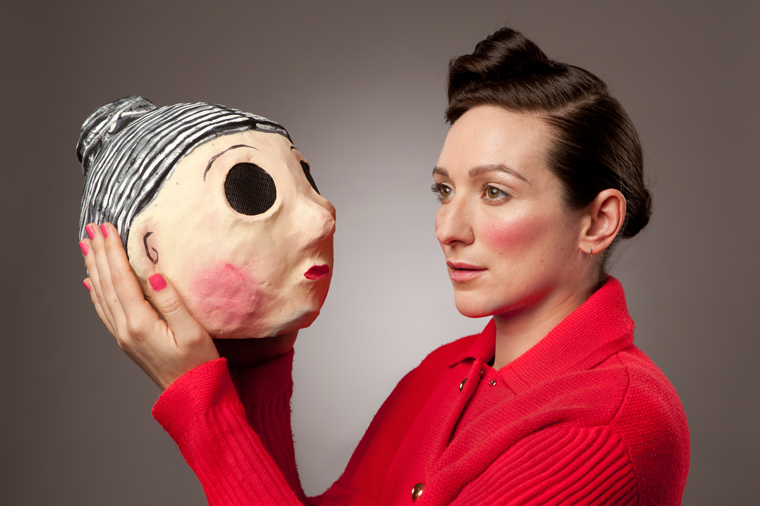
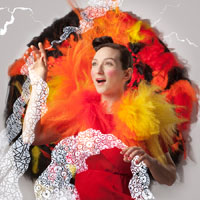
Detroit-based singer/songwriter Shara Worden has long made a career as an indie-pop mercenary. Over the past decade or so, she has lent her talents to Sufjan StevensIllinoisemakers, collaborated with The Decemberists, covered Radiohead for an OK Computer tribute album, appeared on numerous compilations (including her excellent cut on Dark Was the Night), and contributed to the chamber ensemble yMusic (which also includes Bon Iver, Antony & the Johnsons, the New York Philharmonic, and Rufus Wainwright).

Clearly, Worden has no problem keeping busy. But even in the midst of her many endeavors, Worden has found time for her indie-pop pet project, My Brightest Diamond, without ever skimping on musical quality or integrity.

Such is the case on All Things Will Unwind, My Brightest Diamond’s third effort on Asthmatic Kitty, as Worden’s talents are as focused and as strong as ever. Indeed, the most engaging aspect of My Brightest Diamond is undoubtedly Worden’s voice. With such grace and skill in tow, it’s no wonder that so many acts enlist Worden as a hired hand. Her voice is so pure, so strong yet delicate, so confident and dynamic, that there is no denying the presence of an immense talent. Swaying between sweet, soft-edged crooning (“She Does Not Brave the War”) to full-on, forceful belt-outs (the latter half of “Be Brave”), Worden knows exactly what she’s doing. The songs swell and sway, kept adrift — and often take flight — thanks to Worden’s cosmic vocal work.

Morrow vs. Hajduch

Morrow vs. Hajduch: Craig Wedren’s Wand

Scott Morrow is ALARM’s music editor. Patrick Hajduch is a very important lawyer. Each week they debate the merits of a different album.

Craig Wedren: WandCraig Wedren: Wand (Nerveland, 9/27/11)

Craig Wedren: “Are We”

[audio:https://alarm-magazine.com/wp-content/uploads/2011/09/Craig_Wedren_Are_We.mp3|titles=Craig Wedren: “Are We”]

Morrow: In 1994, Shudder to Think scored a brief and unlikely radio hit with “X-French Tee Shirt,” a quirky rock anthem with a crescendo-building three-minute chorus/outro. Though the mathy post-hardcore four-piece had an established résumé, including a release on Dischord, a move to Epic Records gave it a chance at radio exposure, introducing impressionable alt-rock listeners to front-man Craig Wedren and his breathy, fiercely belted falsettos.

Since his time in Shudder to Think, Wedren has spent a lot of time writing themes for film and television, and he released a pair of solo albums (one entirely of ambient tracks) in the 2000s. Wand is “official” followup to the 2005 album Lapland.

David Toop

Zine Scene: Sinister Resonance

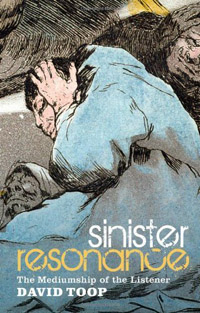
David Toop: Sinister ResonanceDavid Toop: Sinister Resonance (Continuum, 6/24/11)

David Toop’s new book, Sinister Resonance, looks at the ubiquity and power of sound and silence in our lives, even if we rarely take note of it. What is it about a sudden noise in a darkened house, a lull in a conversation, or eavesdropping that quickens our pulse and plays on our emotions? This musician-writer sets out to enrich our understanding of what sound means in a primal, emotional sense.

Toop explains sound as something uncanny, even eerie, and generally of uncertain source. Sound is like a ghost — intangible, always just out of reach, impossible to pin down, a “present absence” or “absent presence,” tied to emotion and memory, uniting past and present. It’s an unconventional thesis, and his approach to the study of silence is appropriately academic, even methodical.

However, his evidence follows the interdisciplinary approach of media studies; Toop looks at every kind of book, film, and artwork imaginable and supports his claim with examples spanning two centuries.  Nothing is off-limits, from Sigmund Freud and Old Masters to creaky old houses. In fact, it’s Freud’s theory of the uncanny that gets the most attention, in connecting our emotional response with the sensual data of sound. Sounds and silence possess the power to unnerve us, and their sudden appearance (or absence) is often eerie.