Boom Bip

Q&A: Boom Bip

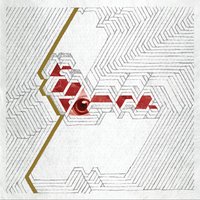
Boom Bip: Zig ZajBoom Bip: Zig Zaj (Lex, 9/27/11)

Boom Bip: “All Hands”

[audio:https://alarm-magazine.com/wp-content/uploads/2011/09/Boom_Bip_All_Hands.mp3|titles=Boom Bip: “All Hands”]

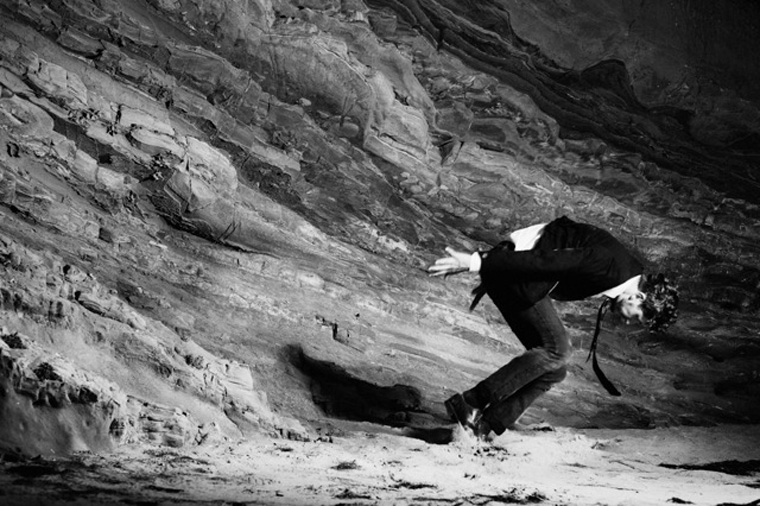
Ever since his loop-based beginnings, Bryan Charles Hollan — known better as experimental hip-hop artist Boom Bip — has been on the search for his optimal live-band incarnation. He seems to have found it.

In 2002, Seed to Sun demonstrated Hollan’s ability to make compelling organic and instrumental hip hop. On his recordings since that time, nearly everything has been performed by hand, and the results have been admirable — but nothing has clicked quite like his newest effort, Zig Zaj.

Now Hollan is armed with a permanent live band, consisting of Josh Klinghoffer (Red Hot Chili Peppers), Eric Gardner (Gnarls Barkley, Charlotte Gainsbourg), and Josiah Steinbrick. Their chemistry is immediately evident on Zig Zaj, which also sports standout guest spots from Alex Kapranos of Franz Ferdinand (for one very Depeche Mode track), Money Mark, Luke Steele (Empire of the Sun), Cate Le Bon, and Mikey Noyce (Bon Iver).

Partly because of the guests, the new material takes a poppier and more rock-driven direction. But there’s still plenty of the old Bip underneath, as synths and electronics commingle with the bass grooves and delicate acoustic riffs. ALARM caught up with Hollan to find out more about the evolution of his band and what projects he has in the works.

Tell us about the evolution of the live band. How has that affected or led to what we’re hearing on Zig Zaj?

The evolution of the live band has been like creating a new breed of dog. I’ve constantly been trying to fine-tune it to something enjoyable for me. This time, though, I got it right. The current live band is fantastic. With Zig Zaj, I certainly had the live show in mind when constructing the tracks. As a result, intensity became part of the equation, and you can hear that in the tone of the songs.

Coming out of the collaboration with Gruff Rhys of Super Furry Animals (as Neon Neon), what made you decide to scale back the dance elements for the new album?

The Boom Bip albums have always been more about the moment and trying to not have any limitations or concern for genre. I just let whatever comes out come out. I don’t really think, “What genre does this fit into and what bin will this sit in at the record store?” Although it has become a game for me to see where it is placed. I’ve seen my album in everything from rap to avant-garde.

Peter Wolf Crier

Pop Addict: Peter Wolf Crier’s Garden of Arms

Every Thursday, Pop Addict presents infectious tunes from contemporary musicians across indie rock, pop, folk, electronica, and more.

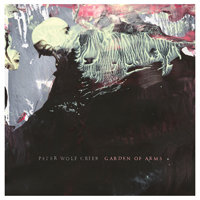
Peter Wolf Crier: Garden of ArmsPeter Wolf CrierGarden of Arms (Jagjaguwar, 9/6/11)

Peter Wolf Crier: “Settling It Off”

[audio:https://alarm-magazine.com/wp-content/uploads/2011/09/Peter-Wolf-Crier-Settling-It-Off.mp3|titles=Peter Wolf Crier: “Settling It Off”]

There are enough two-pieces nowadays that people understand the formula can work without a full backing band — and work well. When Peter Wolf Crier, the two-man collaboration between Peter Pisano and Brian Moen, released alt-folk gem Inter-Be in 2010, it seemed to have a good handle on what it was doing. An acoustic-driven approach, sprinkled with sporadic percussion and piano, established Peter Wolf Crier as one of the year’s best-kept secrets.

But that was the problem; the band’s sound was so subdued that it often went unnoticed, and the band struggled to put its stamp on the indie-folk scene. Peter Wolf Crier ultimately had two options for its next release: create another Inter-Be-esque album and risk floundering again, or expand and experiment. Though it stands to reason that either direction may have proven fruitful, there’s no denying that Garden of Arms is a product of the second option.

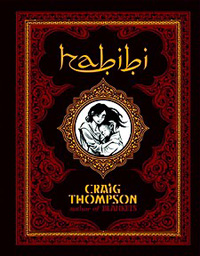
Craig Thompson: Habibi

Zine Scene: Habibi

Craig Thompson: HabibiCraig Thompson: Habibi (Pantheon, 9/20/11)

Can love survive great hardship through words and memory alone?

In Habibi — where community can be explained in the recurrence of one myth among many people, where stories and art become protection for the downtrodden, and where people can be bought, sold, and traded as easily as water — Craig Thompson explores the possibility of love and connection in a failed state. “Habibi” is Arabic for “my beloved,” but what does that mean when you can’t control your own fate, much less that of your beloved?

Thompson’s previous novel, Blankets, explored his own coming of age (and first experience of freedom and love) against the backdrop of a harsh and forbidding religious community. A lyrical look at the complex nature of community and survival through love, Blankets also explored the role of religious belief in myth-making. Habibi revisits similar territory, transporting the narrative to the Arabic world while still dealing with similar issues of freedom and bondage, love found in the strangest places, and the magical qualities of words and memory.

Habibi follows Dodola, a girl sold into slavery at a young age, and Zam, the younger boy she meets in captivity. They grow up together as friends despite their differences, endure separation and changes (both of their own making and forced on them), and eventually carve out a life in a world of slavery and uncaring governments. Although they must make hard choices in order to survive, Dodola and Zam remain connected, even in the face of lengthy physical separation.

Nocando

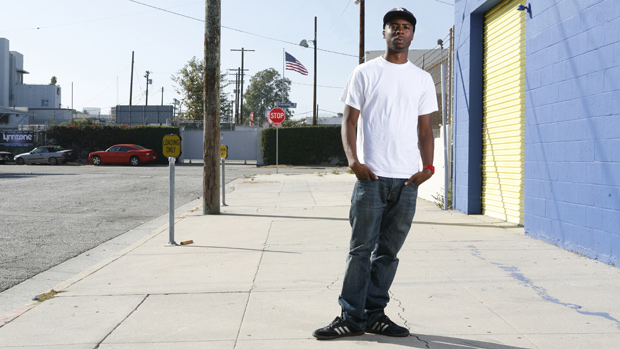
Guest Spot: Nocando explains the power of wordplay

Flash Bang Grenada: 10 HatersFlash Bang Grenada10 Haters (Hellfyre ClubAlpha Pup, 8/23/11)

Flash Bang Grenada: “In a Perfect World” (f. Open Mike Eagle)

[audio:https://alarm-magazine.com/wp-content/uploads/2011/08/Flash_Bang_Grenada_In_a_Perfect_World.mp3|titles=Flash Bang Grenada: “In a Perfect World”]

Some rappers tell stories, some tell jokes, and some mangle language into a string of witticisms. A few manage to do all three of these things at once. It’s this balance that LA-based rhymer Nocando hopes to achieve. His affiliation with stalwart rap collective Project Blowed led to a rapid ascent of the battle-rap circuit, culminating in a 2007 Scribble Jam championship. Known for his clever, sarcastic style, he recently teamed up with kindred spirit Busdriver to form Flash Bang Grenada. The duo’s debut album, 10 Haters, was just released in late August and received a TWBA nod. Here, Nocando explains what wordplay means to him, and how he hopes to one day harness its powers.

Wordplay
by Nocando

As far back as I can remember (roughly seven years ago), I’ve been consumed with wordplay. It’s the tool that a rapper’s ego uses to stroke itself. Even if the rapper doesn’t pause after the punchline and say, “Get it? Let’s get it!” and use ad libs like “Dayummmm” to highlight his wordplay, he secretly wants to do. I’m not trying to make this an “I hate wordplay” rant, because I’m one of the wordplay-abusing rappers in question.

Me: Hi, I’m Nocando. I’m a wordplay junkie.
Other wordplay junkies: Hi, Nocando.

Moses Supposes

Moses Supposes: Major labels brace themselves for loss of their most popular catalog in 2013

Moses Avalon is one of the nation’s leading music-business consultants and artists’-rights advocates and is the author of a top-selling music business reference, Confessions of a Record Producer. More of his articles can be found at www.mosesavalon.com.

The Mayan calendar claims that the world will come to an abrupt end in 2012. We have all heard the hype and suffered through the movies. But even if that prediction falls flat, the pop-music business may still experience its own armageddon shortly thereafter. Are these just the ravings of another music-industry expert flying off the rails? Let’s see.

In 2013, many classic recordings are scheduled to slip out of the control of their major labels. No, I’m not referring to odd recordings that no one actually collects. This list of records includes some of the top-selling albums of all time (abbreviated list below)!

Even though music-business insiders have been dreading this for years, the New York Times finally decided that it was a newsworthy enough subject and published a piece a few weeks ago about this issue (called “termination of masters”). Unfortunately, the reporter they assigned seemed to a have limited understanding of how the music business really works, as well as of copyright in general. In his article, he kept interchanging the word “songs” with “master recordings,” which littered his post with inaccurate statements like, “artists can claim their songs in 2013.”

Though this New York Times piece may be new info to outsiders, it is a subject that has long been on the minds of those concerned with the recording industry and artist rights. I reported about the subject in a 2008 Moses Supposes article. Here’s the reprint for your perusal:

Mayan meltdown at majors

The hot topic for the American Bar Association conference in 2008 was “termination of masters,” a little raison d’etre in the copyright act that supposedly levels the playing field for authors who are often at a disadvantage to the big, bad publisher (or record company, in this case). The copyright act states that after 35 years, the license or transfer of a work must “terminate” and revert back to the original author.

Braid

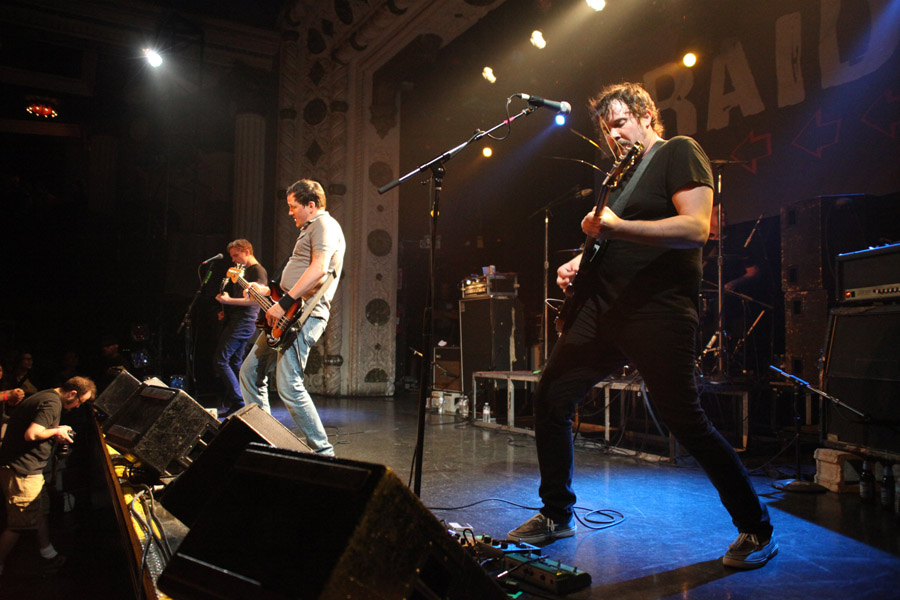
Concert Photos: Braid @ Metro (Chicago, IL)

Formed in the early ’90s in Champaign, Illinois, emo-rock band Braid has been mostly out of commission for the past decade. Save a brief reunion tour in the summer of 2004, the band has been split up, with each member doing his own thing. Last year, Bob Nanna and Chris Broach were performing DJ sets together at Bar Deville in Chicago and decided to once again reunite the band. A new EP, Closer to Closed, was released on August 16 via Polyvinyl. Contributing photographer Elizabeth Gilmore was on hand for Braid’s first show in roughly seven years.

Braid