Sole & The Skyrider Band

Q&A: Sole & The Skyrider Band

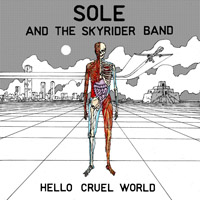
Sole & The Skyrider Band: Hello Cruel WorldSole & The Skyrider BandHello, Cruel World (Fake Four Inc., 7/19/11)

Sole & The Skyrider Band: “Hello, Cruel World”

[audio:https://alarm-magazine.com/wp-content/uploads/2011/07/Sole__the_Skyrider_Band_Hello_Cruel_World.mp3|titles=Sole & The Skyrider Band: “Hello, Cruel World”]

Citing differences in vision for his label and a desire to release music independently, Tim Holland split in 2010 with the Anticon collective that he helped to found. Now, with his faithful Skyrider Band at his side, Holland has released his first official release as Sole since the departure, and it’s another bold chapter in a bold career.

Skyrider, which has been the force behind Sole’s sonic development over the past few years, now sets a surprisingly mainstream and orchestral backdrop for Holland’s rhymes, which have slowed and become more decipherable — but no less potent in criticism. As he explains below, Holland wanted Hello, Cruel World to sound more like a “big rap album,” and it accomplishes the feat with club beats, vocoder-inspired choruses, and a posse of collaborators (Sage Francis, Xiu Xiu, Lil B, and many more). But the musical backdrop also is more cerebral and beautiful, thanks in part to the talents of band member and film-score composer William Ryan Fritch (a.k.a. Vieo Abiungo).

Holland also is keeping busy with DIY videos and his Nuclear Winter mixtape series, which employs the Situationist détournement technique of “turning expressions of the capitalist system against itself.” In this case, it’s taking hits by Lil Wayne, Rihanna, and the like and dropping politically current themes on them. Here Holland explains this mixtape concept while discussing the state of the world and the Sun Tzu-inspired direction of his new album.

Now three albums into recording with Skyrider, how do you feel that your sound has evolved since joining forces?

It’s pretty crazy, really. When we started out, all I wanted was to be a hip-hop version of Godspeed You! Black Emperor, and somehow along the way, we listened to way too much Young Jeezy and Lil Wayne in the car. The rest is history, I guess! For a while, The Skyrider Band was living in LA and working a lot with Telephone Jim Jesus, and Skyrider really came into its own on the production tip.

A member of Skyrider (William Ryan Fritch) has experience scoring films. How much did he influence the orchestral accents of Hello, Cruel World?

Ryan has always been way too talented for his own good. On our past work, we weren’t experienced enough with how to make the band aesthetic work for a hip-hop album, and I feel like through all of Ryan’s work with real composers, doing film scores, working with Asthmatic Kitty, and branching out on his own, he has a really solid grasp of what to add to Skyrider’s beats to take them over the top. The big surprise on this album is his vocal contribution; he’s able to layer my off-key singing with his beautiful crooning and really make stuff sound great.

Hello, Cruel World has a much more radio-friendly sound and even features Melodyne software (similar to vocoder software) in many choruses. Was there any deliberate decision to target a broader audience to get your messages across?

Yes, there was. In Sun Tzu’s Art of War, he says you can’t keep attacking using the same method; in order to succeed, you have to surprise your opponents. I had listened to gangster rap so much that its influence and aesthetic had taken over what I did, and coincidentally, that is what the hip-hop people are listening to right now. It wasn’t so much an opportunistic move as it was a natural evolution. So we thought it would be an interesting gamble to try to make an album that would be an SSRB take on Jay-Z or TI — a big rap album. What I like about those albums is that they all collaborate with their homies and put each other on. After years of mainly writing music alone, it was really fun to try to collaborate with some of my favorite artists. Usually, when people use these styles, they try to be ironic, but we take rap music very seriously.
Moses Supposes

Moses Supposes: Why you should think twice before joining ASCAP, BMI, or SESAC (Part I)

Moses Avalon is one of the nation’s leading music-business consultants and artists’-rights advocates and is the author of a top-selling music business reference, Confessions of a Record Producer. More of his articles can be found at www.mosesavalon.com.

It’s one of the top-10 questions that I’m asked: ASCAP, BMI, or SESAC — which one should I join? Here’s a rock-‘n’-roll answer: How about none of them? At least not right away.

All of these competing performing-rights organizations (PROs) spend a great deal of their members’ money selling “belonging,” as if there is an immediate benefit to membership, like collecting money that they have been holding for you. But experience indicates that you’d be better off waiting to sign with any of them. Wonder why? Here’s the truth about PROs in this three-part series taken from Moses Avalon’s latest book, 100 Answers to 50 Questions on the Music Business.

ASCAP (American Society of Composers, Authors, and Publishers) and BMI (Broadcast Music, Inc.) — often called the “Coke and Pepsi” of performing-rights organizations — will both tell you that it is irrational not to join one of their organizations. They collect the bulk of all the performance royalties in the US, and will assure you that you cannot get your share unless you are a member.

In their pitch, they will make it sound as if your music is already out there earning money, and the PRO is just holding it for you, like a bank, waiting for your application. But the truth is that unless you write a hit song or a soundtrack for a TV show like The Simpsons, you are unlikely to see any significant royalties, even if you are a member.

That said, the real question is not whether to join, or which one to join, but rather when the right time to join either ASCAP or BMI is. (SESAC is by invitation, and so the pros and cons outlined here are not really applicable.)

Many people who are new to the industry think that they should sign with one or the other as soon as they can. The lavish events that both ASCAP and BMI host make one think that joining means there is an immediate chance to collect money. This is not true. Even if you are a member, you only get paid if:

1. There is money to collect for your musical works, and more importantly…

2. You meet their requirements to receive money after you join.

DeVotchKa

DeVotchKa: Gypsy-Fusion Quartet Hits the Big Time

Achieving public familiarity through featured songs in Little Miss Sunshine, DeVotchKa has worked hard to make a name for itself. Its Gypsy-influenced sound employs a wide variety of styles and instrumentation, celebrating a genre that has been around for hundreds of years.

Karlsson & Winnberg

Contest: Tickets to Miike Snow DJ set for Lollapalooza after-party

Assuming that you still have enough left in your tank after a weekend full of hot Lollapalooza action, you can get your groove on Sunday night at the official after-party at The Mid. We’re giving away four pairs of tickets to what promises to be a dance-party extravaganza.

The lineup comprises a worldly bunch. Swedes Christian Karlsson and Pontus Winnberg of Miike Snow will be playing a headlining DJ set, with support from Australian house duo Bag Raiders, UK-based DJ Jackmaster, California-based The M Machine, and Chicago’s own DJ Trentino.

Dead Rider

Q&A: Dead Rider

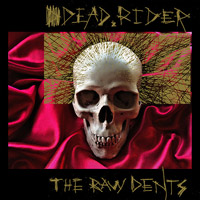
Dead Rider: The Raw DentsDead Rider: The Raw Dents (Tizona, 5/23/11)

Dead Rider: “Mother’s Meat”

[audio:https://alarm-magazine.com/wp-content/uploads/2011/05/dead_rider-mothersmeat.mp3|titles=Dead Rider: “Mother’s Meat”]

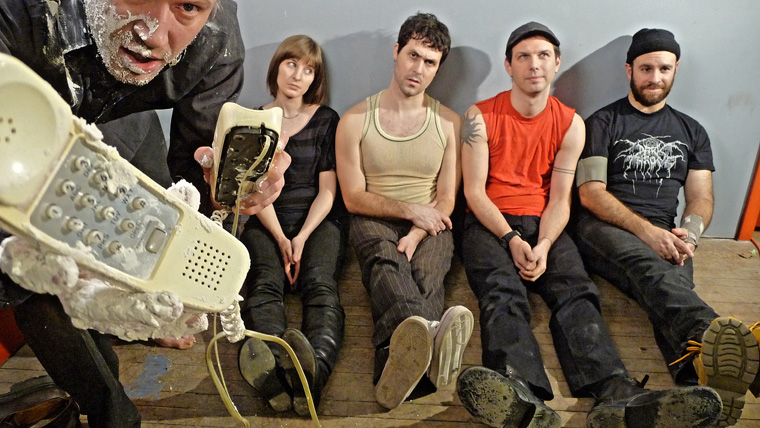
In 2009, Chicago-based rock group D. Rider released its debut album, Mother of Curses, on Tizona Records. Since then, the former three-piece (Todd Rittman, Andrea Faught, and Noah Tabakin) evolved into a four-piece, with Matt Espy on drums (who replaced the originally recruited drummer, Theo Katasaounis), and changed its truncated name to Dead Rider. The newly christened band’s rapport fostered more elaborate multi-instrumentation and collaborative composing, allowing Rittman, Dead Rider’s founder and former member of US Maple and Singer, to produce his rhythmic grooves on a more complex scale.

Dead Rider’s sophomore album, The Raw Dents, signifies the band’s newfound dynamics, with layered guitar/bass/drum, trumpet and saxophone blows, and the occasional interlude of supplementary sound. Rittman’s voice, which could be considered an instrument in itself, is distinct, versatile, and unavoidably haunting at times, adding to the album’s texture, as it adjusts with the intended mood of each track. The Raw Dents maximizes the fundamental elements of rock and balances psychedelia, noise, and synths with Dead Rider’s hard-driving sound.

We spoke with Rittman about the progression of Dead Rider’s lineup, its influence on the band’s music, and its latest record.

What did you hope to accomplish with D. Rider that you didn’t/couldn’t with US Maple?

Mostly to keep making music. The music for both bands functions on its own natural evolution and doesn’t prescribe to some set agenda. I would say, though, looking at Dead Rider’s evolution, we seem to be concerned with groove and space a little more. This band has a few more options for the creation of both groove and space, considering the multi-instrumental skills of the band. Also, everyone in the group has learned the all-important skill of restraint—something we exploit a great deal.

How did you originally choose D. Rider’s partners in crime, and how have their inclusions affected your songwriting dynamics?

Andrea and I met while playing with Cheer-Accident together. Then we started jamming a little on the side in a goofy cover band of sorts. We actually met Noah when he was rehearsing at a club where we were waiting to do a soundcheck.  He was really going for it at the rehearsal, and it made quite an impression on me. We met Matt at a D. Rider gig. His band, Avagami, was opening, and his drumming blew me away.

Harm's Way

The Metal Examiner: Harm’s Way’s Isolation

Every Friday, The Metal Examiner delves metal’s endless depths to present the genre’s most important and exciting albums.

Harm's Way: IsolationHarm’s Way: Isolation (Closed Casket Activities, 7/5/11)

Harm’s Way: “New Beginnings”

[audio:https://alarm-magazine.com/wp-content/uploads/2011/07/06-New-Beginnings.mp3|titles=Harm’s Way – New Beginnings]

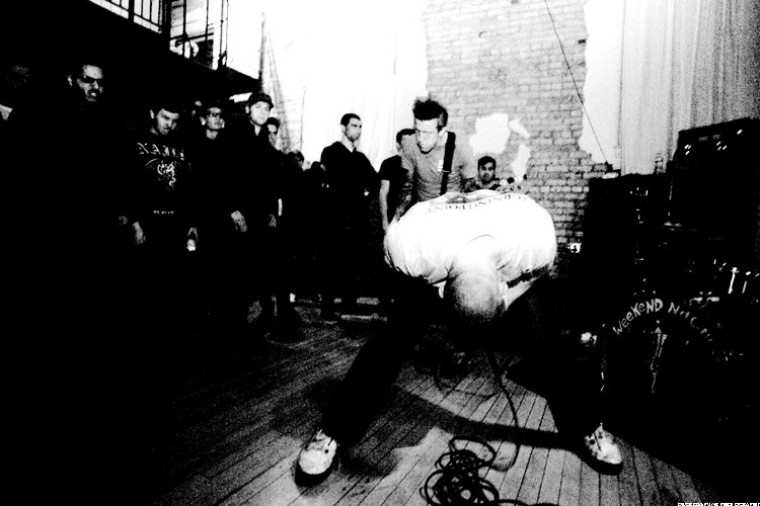
Though ostensibly affiliated with the hardcore scene, Harm’s Way has moved into the primitive, mid-paced territory of death-metal bands like Bolt Thrower and Asphyx. Originally formed in 2005 as a power-violence band in the vein of Crossed Out and Infest, Harm’s Way has become slower and more metallic with each of its releases. Isolation, its second full-length recording, is a definitive statement for the band, cementing its vision of the possibilities in heavy music.

Hardcore and metal have fed off of each other for decades. In the early and mid-1980s, Metallica, Celtic Frost, and other pioneering bands cited not only the new wave of British heavy metal as an influence, but also hardcore bands like Discharge. Since then, there has been a two-way street between the metal and hardcore communities, with New York-based hardcore bands like the Cro-Mags and Madball clearly borrowing ideas on heaviness from death-metal bands, and a band like Obituary claiming Merauder as an influence.

Washed Out

Pop Addict: Washed Out’s Within and Without

Every Thursday, Pop Addict presents infectious tunes from contemporary musicians across indie rock, pop, folk, electronica, and more.

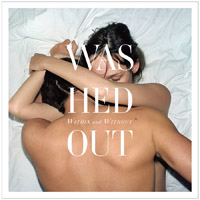
Washed Out: Within and WithoutWashed Out: Within and Without (Sub Pop, 7/12/11)

Washed Out: “Amor Fati”

[audio:https://alarm-magazine.com/wp-content/uploads/2011/07/Washed-Out-Amor-Fati.mp3|titles=Washed Out: “Amor Fati”]

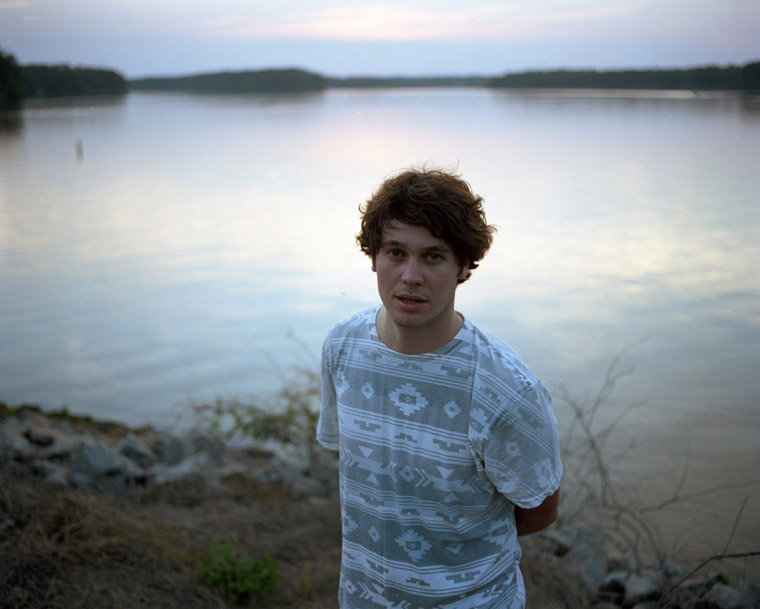
In 2009, indie-electronica novice Ernest Greene appeared on the scene under the moniker Washed Out, offering an accessible and diverse dose of new wave with the impressive Life of Leisure EP. The debut recording delved into a re-imagined electronica sound, taking cues from mid-’80s synth heavyweights and incorporating a modern twist. It was a very bright start, but it was only a matter of time before Greene’s fresh, revitalized “chillwave” sound was put to the test on a full-length effort.

Two years later, Washed Out has returned with a proper LP — Within and Without — that expands on that initial, unique sound. Employing a glut of synths and electronic beats, Washed Out has taken new wave to a whole new level, modernizing the sound and legitimizing the genre. Mixing slowed dance beats with synth-heavy arrangements and various electronica ornamentations, Washed Out has put together a solid, unified offering.

Within and Without’s soothing soundscapes stem from the standout opener, “Eyes Be Closed.” Integrating waves of synth with steady drumming and atmospheric strings, the track moves fluidly, fluctuating between Washed Out’s subtle yet complex inner workings. There are a lot of things going on musically, with ocean-like soundscapes pulling in and out, shoring up with spastic, spaced-out keys and a sea of, well, “washed out” and reverberated vocals that submerge into the rest of the song, becoming musical textures within themselves.