


Morrow vs. Hajduch

Morrow vs. Hajduch: Ford & Lopatin’s Channel Pressure

Scott Morrow is ALARM’s music editor. Patrick Hajduch is a very important lawyer. Each week they debate the merits of a different album.

Ford & Lopatin: Channel PressureFord & Lopatin: Channel Pressure (Software / Mexican Summer, 6/7/11)

Ford & Lopatin: “World of Regret”

[audio:https://alarm-magazine.com/wp-content/uploads/2011/06/Ford__Lopatin_World_of_Regret.mp3|titles=Ford & Lopatin: “World of Regret”]

Hajduch: Ford & Lopatin (formerly Games) is comprised of Daniel Lopatin (a.k.a. Oneohtrix Point Never) and Joel Ford (from indie/’80s-pastiche band Tigercity).  Their music together is a jittery, looped amalgam of trashy ’80s vibes.  Riffs and vocals are recorded, deconstructed, down-sampled, and smashed back together.  Their previous output as Games was a hypnotic series of tightly looped samples from synth-pop hits that never existed.

Channel Pressure takes the conceit a step further, adding occasional lyrics and the nebulous idea of a concept album.  If you toned down the funk (and the length) of the poppier songs from Daft Punk‘s Discovery, and made them a bit more spastic, you’d approach the sound of Channel Pressure.

Morrow: To me, it sounds like Prefuse 73 twisting around the Miami Vice theme.  The ’80s synth sounds and fake drum hits are out of control.  Between those elements, the airy pop vocals, and the deep, bouncy bass, Channel Pressure has enough nostalgia to unleash a torrent of endorphins for anyone born before 1988. (Entertainingly, one song is titled “Too Much MIDI (Please Forgive Me).”)

But there’s enough of a modern and experimental twist (hence the slightly stretched Prefuse comparison), and that prevents it from being strict homage.


William Elliott Whitmore

Guest Playlist: William Elliott Whitmore’s top anti-war songs

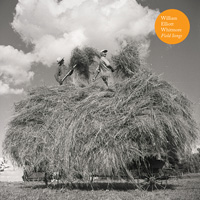
William Elliott Whitmore: Field SongsWilliam Elliott Whitmore: Field Songs (Anti-, 7/12/11)

William Elliott Whitmore: “Everything Gets Gone”

[audio:https://alarm-magazine.com/wp-content/uploads/2011/06/04-Everything-Gets-Gone.mp3|titles=William Elliott Whitmore: “Everything Gets Gone”]

Folk songwriter William Elliott Whitmore graced the cover of ALARM 35 back in 2009, right after he had made the jump to Anti- (read story here). At the time, he was promoting his new album, Animals in the Dark, which saw his blues-infused creations bolstered by additions of pedal steel, organs, strings, and drums. Now, he’s set to release a new full-length, Field Songs, which speaks to a uniquely American experience. Never one to hide his political beliefs, Whitmore was kind enough to share with us 10 of his favorite anti-war songs.

10 Anti-War Songs
by William Elliott Whitmore

1.  Operation Ivy: “Unity”

A bit of protest from the Bay Area’s premier ska outfit.

Pillars & Tongues

Q&A: Pillars & Tongues

Pillars & Tongues: The Pass and CrossingsPillars & Tongues: The Pass and Crossings (Endless Nest, 6/28/11)

Pillars & Tongues: “The Making Graceful”

[audio:https://alarm-magazine.com/wp-content/uploads/2011/06/05-The-Making-Graceful.mp3|titles=Pillars & Tongues: “The Making Graceful”]

Incorporating clusters of percussion, classical accompaniment, and swelling drones, Chicago-born trio Pillars & Tongues generate a unique conglomerate of folk, chamber, and gothic musical styles. Baritone vocalist Mark Trecka, violinist Beth Remis, and bassist Evan Hydzik explore melodic frontiers, reshaping Pillars & Tongues’ origins of the former soul-folk band Static Films into a project of dynamic and organic experimentation.

The past several years of extensive touring have done well to feed Pillars & Tongues’ musical curiosity. With the release of its third full-length album, The Pass & Crossings, the group continues to produce myriad tonal colors and textures.  ALARM caught up with Trecka to discuss the band’s years-long touring stretch, composing, recording, and the new record.

With 300 performances in the past three years, Pillars & Tongues has been described as a “transient force” and “in near-constant motion.”  Do you ever get weary of continuously being on the road?

Of course we get weary of continuously being on the road, but anybody can get weary of anything.  I personally haven’t kept a residence in the past two years, but when I last did so, I got weary of that from time to time and wanted to be in motion.  I’m not sure that I can say for certain which state, at its weariest, is more wearisome, but stopping isn’t really an option for me at the moment.  There are those among us who are pretty certain that the road is the most wearying state of being and so tend to resist it, I think.  And some of us find home and road equally wearying; that is to say, whatever way we go, we all end up in the same place.  And like Beth says about touring, it’s cheaper than just driving around.

Skipp Whitman

Beats & Rhymes: Skipp Whitman’s Skipp City

Every other week, Beats & Rhymes highlights a new and notable hip-hop, rap, DJ, or electronic record that embraces independent sensibilities.

Skipp Whitman: Skipp CitySkipp Whitman: Skipp City (self-released, 11/1/10)

Skipp Whitman: “Famous”

[audio:https://alarm-magazine.com/wp-content/uploads/2011/06/Skipp_Whitman_Famous.mp3|titles=Skipp Whitman: “Famous”]

Rappers’ careers live and die on image. So when a rapper is born of middle-class artist parents in the swanky suburb of Brookline, Massachusetts, he’ll inevitably have to deal with being an anomaly in the genre. Compound that with said rapper being a white boy who goes by Skipp Whitman, and it takes effort simply not to be seen as a novelty. Luckily for Whitman, his 2010 record, Skipp City, deftly avoids stereotype and proves that his music deserves to be taken seriously.

This record, Whitman’s debut LP, represents the culmination of years of paying dues on the underground hip-hop scene, a fact that he cleverly lampoons on the opener, “Release Dates.” In a genre where albums are pushed back almost as often as they are released, Whitman finds humor and heart in his honesty, deciding to own up to his record’s delays rather than pretend that they didn’t exist. “Everybody’s been asking, when’s your album dropping? / You ain’t copping nothing, cheapskate,” he raps, continuing in the chorus, “I’ve been waiting my whole life, you’ve been waiting two years,” and “perfection is a bitch, but so is not being clear on release dates.”

Whitman’s tongue-in-cheek self-effacement is one of the album’s brightest qualities. He doesn’t try to hide the embarrassing mundanity of his roots. “I know that I could get nice things doing some other shit, so why am I chasing this fame?” he raps on “Good Morning,” admitting that his middle-class origins could likely have taken him to financial success much faster than hip hop. This willingness to consider and reject the easy route makes him a much more sympathetic and charismatic figure.

Rabbits

Guest Spots: Rabbits’ rat-filled allegory of cooperation

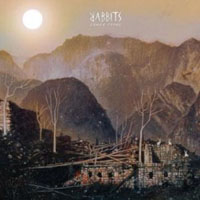
Rabbits: Lower FormsRabbits: Lower Forms (Relapse, 2/15/11)

Rabbits: “Duck The Pigs”

[audio:https://alarm-magazine.com/wp-content/uploads/2011/01/Rabbits_Duck_The_Pigs.mp3|titles=Rabbits: “Duck The Pigs”]

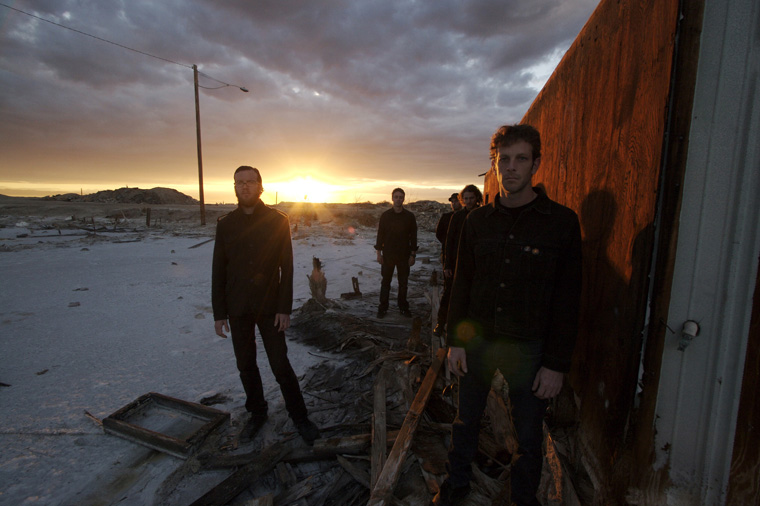
Portland, Oregon-based sludge-rock trio Rabbits isn’t big on accessibility. Its music — heavily distorted, brutally noisy — is polarizing, as the extensive catalog of reviews on the band’s website reveals. Its name — generally stylized in all caps — is topped off with an inverted R on the cover of its newest record, Lower Forms. There’s not much of a back story or many illuminating interviews, so a lot of people don’t seem to “get” Rabbits. If you’re in the camp that believes you don’t really need to know the drummer’s dog’s name to enjoy its music, read on, and see what Rabbits and rats have in common.

Why Rat?
by Rabbits

Rabbits sings songs about science. Science, like philosophy (the two are difficult to disentangle and once were one in the same), is about explaining what goes on in the world. How do we explain Rabbits?  Tricky. We can tell you this: you would not even be reading about Rabbits right now were it not for cooperation that goes on in the Portland punk and metal scene. All for one and one for all. Why do you think Portland has such a long tradition of sick, heavy, scuzzy, musical weirdos? Cooperation. And science has a lot to say about cooperation.

Once upon a time, a man named Axelrod hosted a contest in a computer. You could send in a strategy to play a game called The Prisoners’ Dilemma.  The game is this: Two prisoners arrested for the same crime must each decide whether or not to rat the other out…without knowing what the other will do.  The smartest thing to do is rat if you don’t want to get totally fucked, so both should rat.  But it certainly would be a whole lot cooler if both kept their stupid mouths shut instead of both being good-for-nothing rats.

Isis

Q&A: Isis

Isis: “Grinning Mouths” from Clearing the Eye live DVD (Ipecac, 9/26/06)

In June of 2010, post-metal quintet Isis called it quits following a farewell tour. The LA band was one year removed from its final studio release, Wavering Radiant, and feeling that it didn’t want to “push past the point of a dignified death,” its members parted ways right before the release of a split EP with Melvins.

Now the band is giving wistful fans another taste of its melodic sludge rock. On May 31, Isis posthumously and digitally reissued the first of its five live album, which originally were released over the span of 2004 to 2009.  The rest are being rolled out in two-week intervals, with the third becoming available this Tuesday, June 28.  ALARM recently spoke to drummer Aaron Harris about the reissues, the band’s personal significance, and what the members have been doing since the breakup.

What was the catalyst in putting together the live album series?

We wanted to have something we could offer to the fans. We were getting a lot of live recordings coming in from fans that had been to our live shows, and it was just starting to pile up, and we figured we should do something with all these live recordings. So we started sifting through them and figured that we would do a little live series, release it ourselves, sell it at our shows, and make it a limited, special thing.

We did small runs of them, and once they were gone, they were gone. Recently, we decided that we would make them available digitally and reissue them. So that’s what we’re doing now. They’re digital reissues for people that weren’t able to get copies the first time. It’s just kind of a cool idea to strengthen the fan/band bond, something between us and the fans.

What do you miss about touring and playing with Isis?

The thrill and the energy of playing live. I don’t know if it can be replaced by anything else. There’s something special about touring and visiting your favorite cities and playing shows in some of your favorite spots and getting to see old friends. It’s something I’ve done since I was a teenager, so it was part of my life, and I guess, in a sense, it’s part of me, and it’s not there anymore. So I definitely miss it.