Champagne Champagne

Concert Photos: Champagne Champagne @ Lincoln Hall (Chicago, IL)

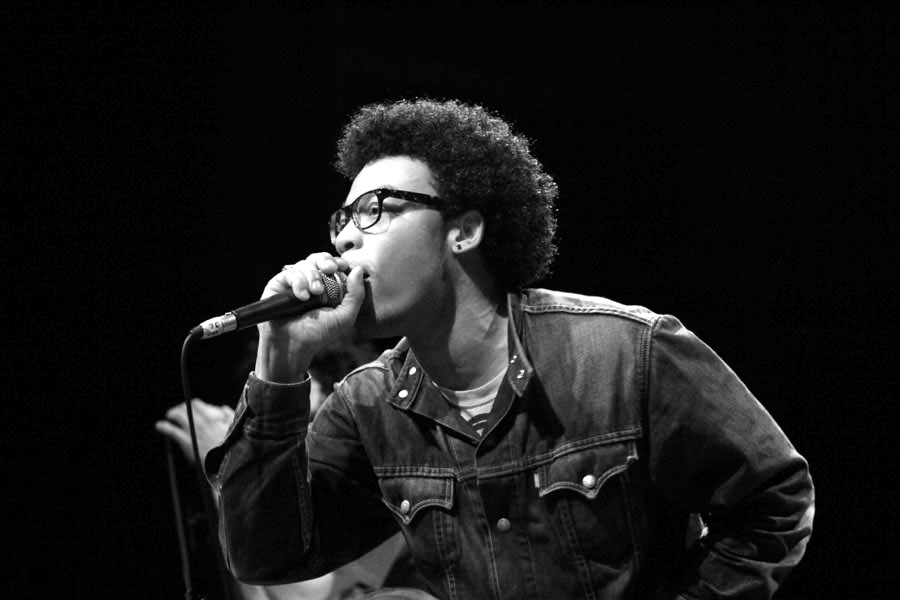
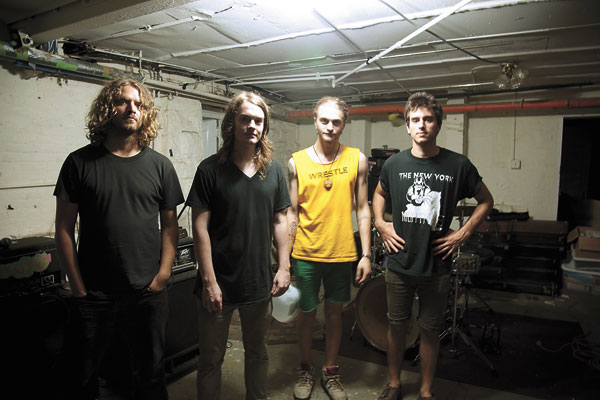
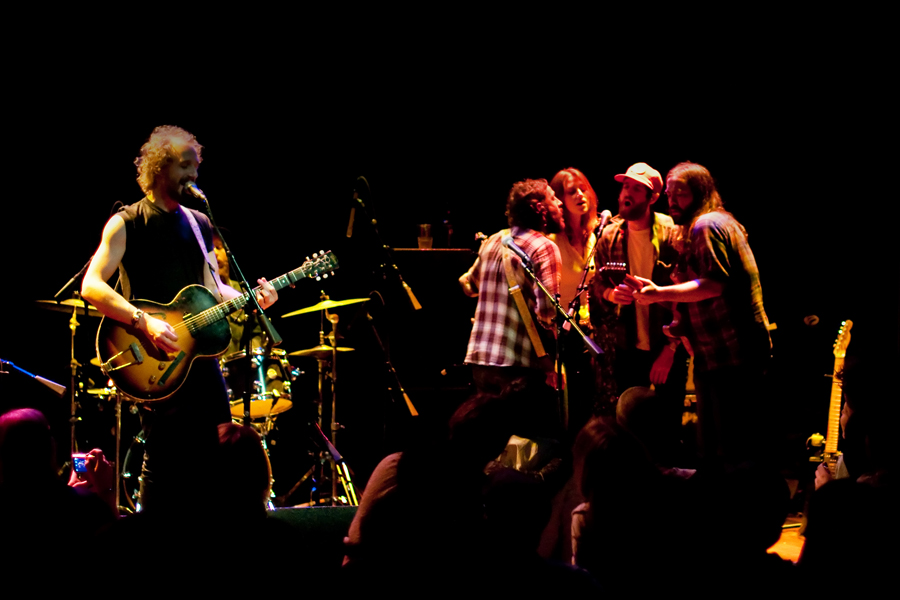
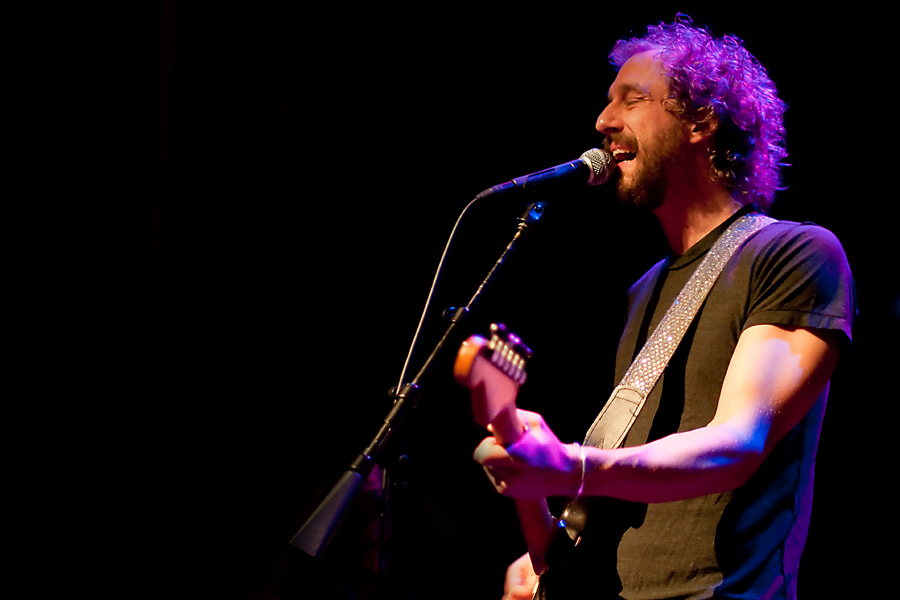
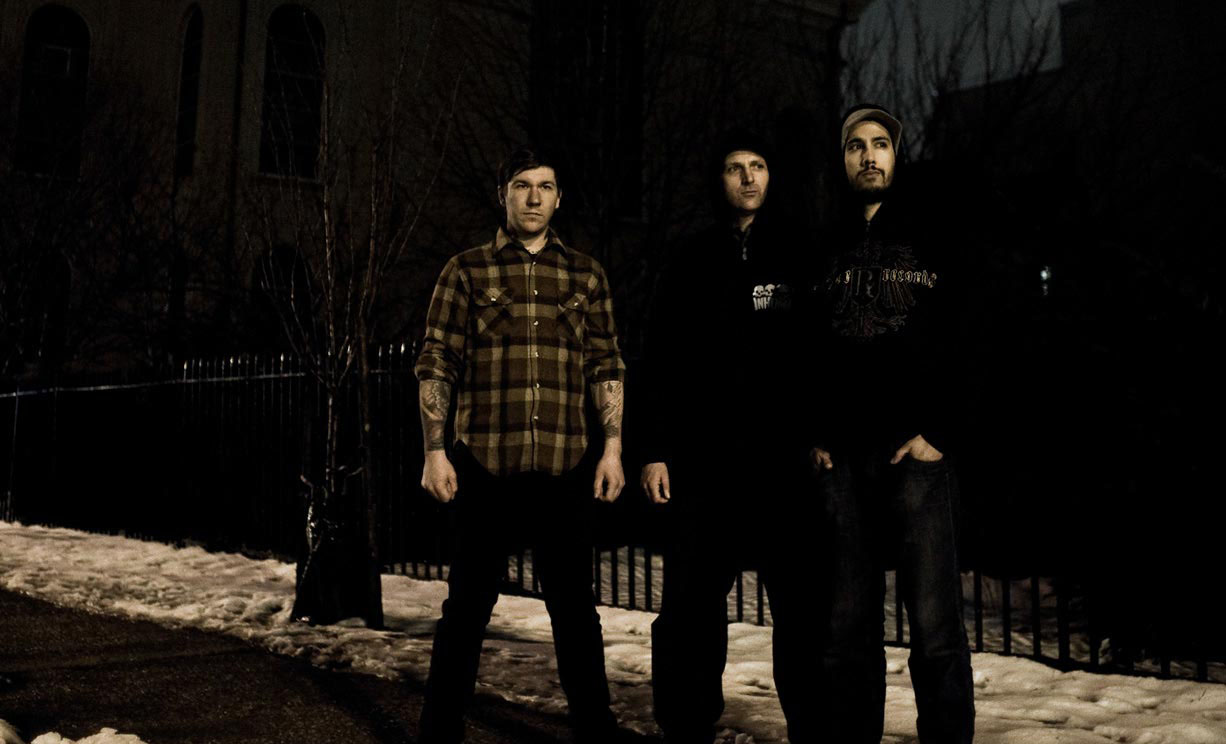
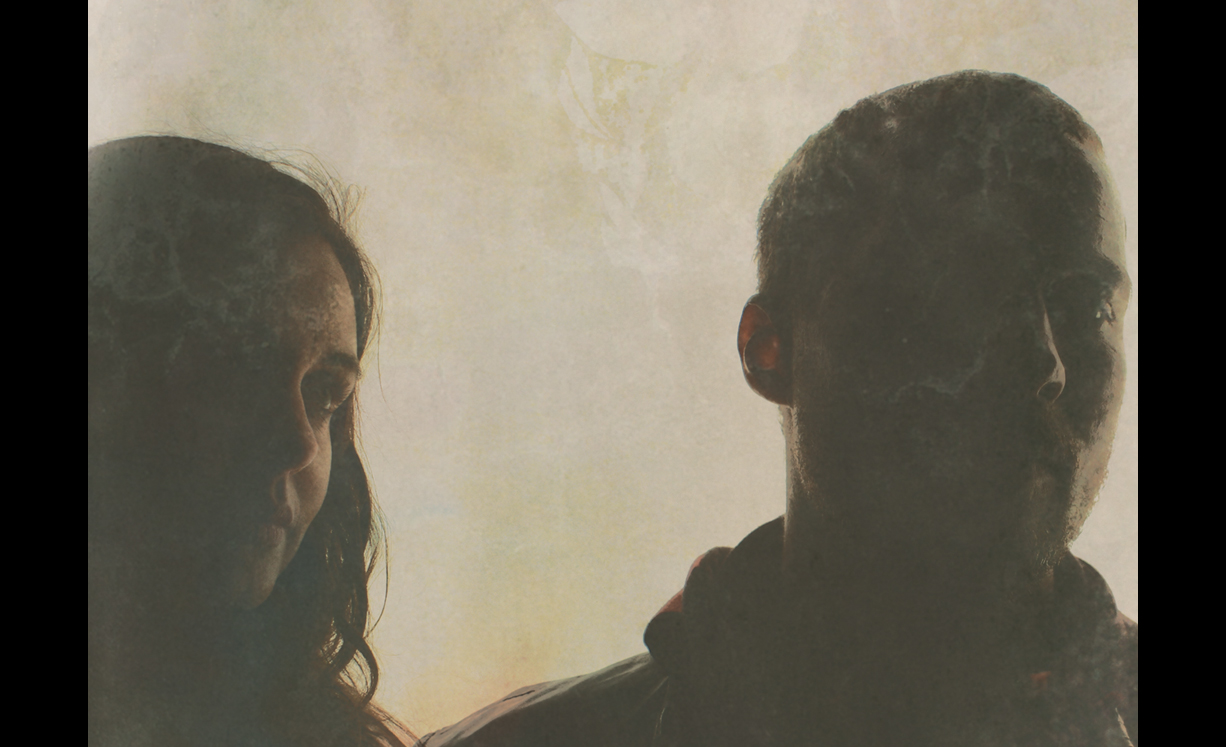
Seattle hip-hop trio Champagne Champagne teamed with Portland, Oregon-based indie-rock band Starfucker in a recent show at Lincoln Hall in Chicago. Champagne Champagne, composed of emcees Pearl Dragon and Sir Thomas Gray and multi-instrumentalist DJ Gajamagic (formerly of The Blood Brothers), stormed through a high-energy, punk-rap set culled largely from its self-titled album, released in 2009. Tracks like the twisted love song “Molly Ringwald” showcased the group’s unorthodox production and penchant for pop-culture allusion. ALARM staff member Kyle Gilkeson was there to capture the action.

Champagne Champagne

Alarm Will Sound

Q&A: Alarm Will Sound

Alarm Will Sound: 1969

By the end of the 1960s, The Beatles had been absent from any kind of live performance for years. This supposed retirement from commercial concerts, however, never fully quelled speculation that the group could return to the stage in some way. Of the various conjectured shows, none held more what-if potential than a rumored collaboration between the Fab Four and German avant-garde composer Karlheinz Stockhausen.

According to a vague report noted in a biography by author Michael Kurtz, Stockhausen was said to have arranged a meeting with one of The Beatles at his New York apartment in 1969 to discuss a joint concert, but a blizzard ultimately kept the two parties apart. Between Paul McCartney occasionally citing a fascination with Stockhausen’s “Gesang der Junglinge” in interviews, The Beatles including a image of him in the cover crowd of Sgt. Pepper’s Lonely Hearts Club Band, and John Lennon’s “Revolution 9” getting regular critical comparisons to Stockhausen’s Hymnen, The Beatles and Stockhausen maintained at least a shred of connectivity to make such a collaboration possible.

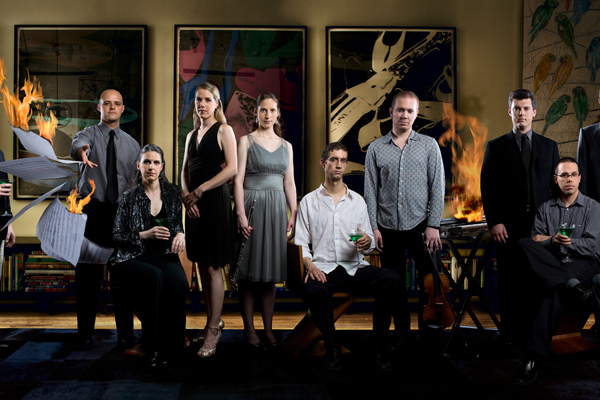
Though the rendezvous, like most hearsay, has been proven to be devoid of truth, fiction has never gotten in the way of inspiration. Such is the case with avant-garde ensemble Alarm Will Sound and its most recent work, 1969. Mixing musical composition, scripted acting, audio dialogue, and archival video, the group’s live production uses the myth of the would-be collaboration as a jumping-off point to examine a time period rife with political, artistic, and social change. ALARM recently spoke with the ensemble’s conductor, Alan Pierson, to discuss the new work, its combination of history and falsehood, and why the year of 1969 was such a big deal.

Let me ask you about 1969. How did this concept develop?

We had been working on this for a long time. In a way, it goes back to those composer portraits as one-composer concerts. Those sorts of concerts, we felt, were a really good way for us to be developing our reputation in New York. But at a certain point, we felt like we wanted to do something broader than that. What I liked about the composer portraits was that they were a way of creating a contemporary music concert that really felt like an event, rather than just a collection of pieces.

There was a really special kind of vibe that you got when you had people walking into a hall to experience an entire evening of Steve Reich or of György Ligeti. The question was “How [do we] create that kind of experience with a broader repertoire?” and “What is a way to bring together really different kinds of music in a coherent framework?”

We did a couple of things along those lines. We did a show called Odd Couples at Carnegie Hall in 2006, which I think was really successful. But as we started brainstorming ideas for concerts, one thing I started thinking about was this idea of doing music of a single year and using a period of time as a way to connect really different kinds of music. Nineteen sixty-nine just emerged pretty quickly in that process as a really interesting time to look at. In the process of looking at that more deeply, I stumbled on this story of the planned meeting between Stockhausen and The Beatles, and it just seemed like too great a story not to tell.

Low

Record Review: Low’s C’mon

Low: C'monLow: C’mon (Sub Pop, 4/12/11)

Low: “Try to Sleep”

[audio:https://alarm-magazine.com/wp-content/uploads/2011/04/8631.mp3|titles=Low: “Try to Sleep”]

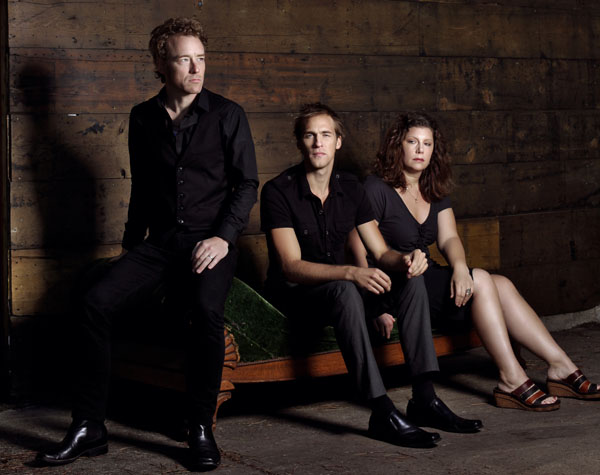
After more than 15 years of stringing together grim, minimalist lullabies that are equally at home on long walks through moonless winter eves or in well-lit churches, slowcore stalwart Low has begun to experiment a bit more with the trappings of, and opportunities created by, modern music. On its ninth record, C’mon, the band blends its signature brand of melancholia with bouncing, uptempo electronic textures, giving the 11 songs a lively, volatile feel.

In the third track, “Witches,” guitarist/singer Alan Sparhawk advises listeners to confront their problems with a baseball bat, and in the same spare voice, he tells guys who “are trying to act like Al Green” that they are weak. He sings this over drummer/vocalist Mimi Parker’s characteristically haunting “ooos” and “ahhs,” while a choppy, lighthearted guitar riff drifts over barely audible acoustic-guitar (or banjo?) plucking. Much like the song “Hatchet” on the band’s previous effort, Drums and Guns, “Witches” is a catchy number that adeptly references select facets of pop-music history and, in doing so, reveals a playful side of the band.

Liturgy

The Metal Examiner: Liturgy’s Aesthethica

Every Friday, The Metal Examiner delves metal’s endless depths to present the genre’s most important and exciting albums.

Liturgy: AesthethicaLiturgy: Aesthethica (Thrill Jockey, 5/10/11)

Liturgy: “Returner”

[audio:https://alarm-magazine.com/wp-content/uploads/2011/04/03-Returner.mp3|titles=Liturgy, “Returner”]

For a moment, Brooklyn-based quartet Liturgy seemed poised to steer black metal into a bold new direction. Renihilation, the group’s debut full-length from 2009, showed that even while employing the classic tenets of black metal, it was possible to push the genre forward and put it in a more efficient package. Yet whereas that album made a statement, the band’s follow-up, Aesthethica, turns many of those tactics into a mere reminder.

Liturgy comes armed once more with Hunter Hunt-Hendrix’s mostly indecipherable howl and quasi-anthemic guitar lines blasted with co-pilot Bernard Gann, both positioned over Greg Fox’s machine-gun drumming and Tyler Dusenbury’s frenetic bass lines. But rather than let its pieces work alongside each other, Liturgy places its components atop each other, turning its formidable wall of sound into an unfiltered onslaught.

By most standards, Liturgy still has a fairly forward-thinking vision of what black metal can be, reaching out of the genre playbook at will. Odd-pattern tremolo picking gives “Tragic Laurel” a progressive feel that leaves the door open for the sucker punch of its main section, and “True Will” stacks layers of screams over a seesaw chord progression, interrupted only by a skipping-CD breakdown.

Tombs

Tombs: Political, Apocalyptic Metal

The members of Brooklyn-based metal trio Tombs take pride in their work ethic and don’t bother worrying about what others might think. As for the band’s sound, front-man Mike Hill says, “The music itself is just intensity.”

Jono El Grande

Q&A: Jono El Grande

Jono El Grande: Phantom StimulanceJono El Grande: Phantom Stimulance (Rune Grammofon, 2/1/11)

Jono El Grande: “Borrelia Boogie”

[audio:https://alarm-magazine.com/wp-content/uploads/2011/02/Jono_El_Grande_Borrelia_Boogie.mp3|titles=Jono El Grande: “Borrelia Boogie”]

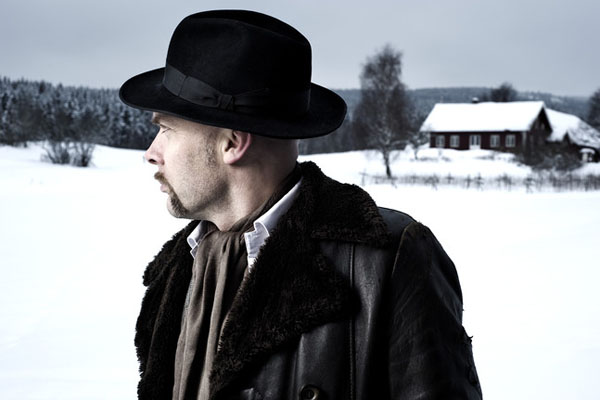
The off-kilter art rock of Norwegian bandleader, composer, singer, guitarist, and kazoo player Jono El Grande is like candy to fans of Frank Zappa and whimsical, progressive rock. In his 10 years of playing with The Luxury Band (née The Jono El Grande Orchestra), he has released four albums, including the multi-layered Neo-Dada in 2009 and the raucous Phantom Stimulance this winter.

Though he has enjoyed success in his native Norway, Jono’s delightfully eccentric music isn’t yet as well known overseas. Here he opens up about composing, why there’s no such thing as a “live favorite,” and how songs can take more than a decade to record.

According to your label, only one song on your newest record, Phantom Stimulance, is newly composed, with the rest being unreleased live favorites, compiled to commemorate your 10 years as a bandleader and 15 as a composer. Why did you decide to record these songs to celebrate this occasion?

There are two brand-new compositions on the album, not one — “Borrelia Boogie” and “Rise Of The Baseless Press-Base Toy.” The other songs are completely rearranged versions of songs that never reached an album and new arrangements of earlier-released songs that have evolved so much on stage during the years that they deserved to be released again, with new titles. “Live favorites” is a term that the record company came up with. Even if this record is presented as an anniversary, it is nevertheless the music that is most important. Always.

Why hadn’t the songs on Phantom Stimulance been recorded previously? Were they more suited to live performance than the studio? Are there any live favorites still yet to be recorded?

I am a composer who likes to develop compositions over time at live shows by adding new themes and parts to them. My working process is very often like this: I write the basic scores at home, then the band rehearses the music, and then we play the material live and mold it until I feel that it is ready to be recorded. And I never know exactly when each song is ready. The reason why these tracks haven’t been recorded previously is that, on earlier albums, there were other compositions that I felt were more ready than ones on Phantom Stimulance. You may call them “live favorites” — to me these tunes were the hard ones, the ones that I had to work a little extra with to make them worthy to be immortalized on an album. We used 40 to 60 tracks on each song. “La Dolce Vidda” contains 10 drum tracks, I think.

It was actually quite the same with Neo-Dada. Some compositions there date back to the ’90s. And to the last question: yes, there will be more “live favorites” to be released in the future. I just have to compose them first.

Morrow vs. Hajduch

Morrow vs. Hajduch: Fabric’s A Sort of Radiance

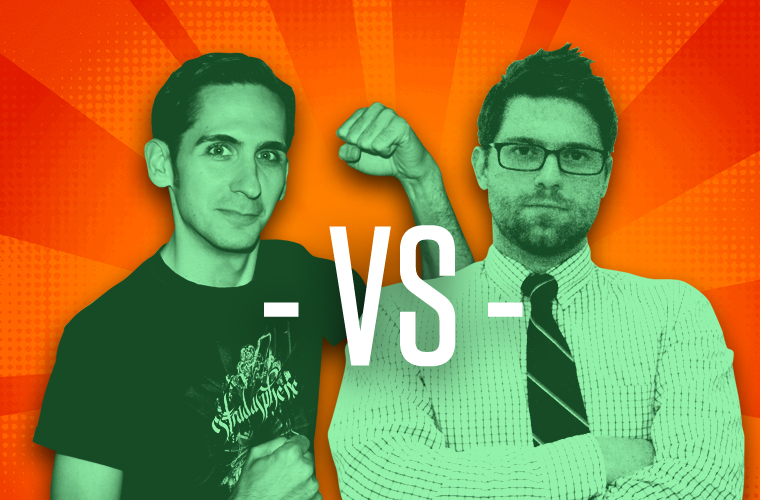
Scott Morrow is ALARM’s music editor. Patrick Hajduch is a very important lawyer. Each week they debate the merits of a different album.

Fabric: A Sort of RadianceFabric: A Sort of Radiance (Spectrum Spools / Editions Mego, 4/5/11)

Fabric: “Camera”

[audio:https://alarm-magazine.com/wp-content/uploads/2011/04/Fabric_Camera.mp3|titles=Fabric: “Camera”]

Hajduch: Having folded a few years back, experimental music label Mego has come back full force as Editions Mego.  Initially started as something of a reissue label (pressing remastered, deluxe editions from label faces such as Fennesz and Kevin Drumm), Editions Mego has begun cranking out brand-new releases, most notably the most recent releases from Emeralds and its guitarist, Mark McGuire.

The Emeralds working relationship continues with the formation of sub-label Spectrum Spools, headed by Emeralds member (and prolific solo artist) John Elliott. Spectrum Spools’ debut release is an LP by Chicago artist Fabric, who mines the same kosmische layered-synthesizer territory as many of the above artists with great success.

Syntaks

Syntaks: A Dream-Pop Love Child

Though started as a solo project by Jakob Scøtt, Danish dream-pop band Syntaks is now a duo, filled out by Scøtt’s muse and significant other, Anna Cecilia. As a result, the band’s most recent album, Ylajali, is a true labor of love.