Baths

Concert Photos: Baths @ Subterranean (Chicago, IL)

LA-based producer Baths, a.k.a. Will Wiesenfeld, released his debut album, Cerulean, last year on Anticon, and has been touring tirelessly ever since. His setup is simple, and his crew minimal: a laptop, an MPC, and himself. He doesn’t need much to make the magic happen; mountains of synth, heavy hip-hop beats, and fragile falsetto comprise his sound.

On paper, it sounds like what every other “producer” with a decent home-recording system is making. However, rather than merely aiming to impress with flashy tricks, Baths manages to make it sound fresh with palpable sincerity. Contributing photographer Drew Reynolds snapped these shots at a recent stop at Subterranean in Chicago.

Baths

Cursed

Cursed: Enemies with the Industry

Though it broke up following a serious tour robbery, Ontario-based hardcore band Cursed delivered three albums of ferocious hardcore punk, the last of which contained a particularly pointed message for the music industry.

Moses Supposes

Moses Supposes: Bon Voyage, Bon Jovi

Moses Avalon is one of the nation’s leading music-business consultants and artists’-rights advocates and is the author of a top-selling music business reference, Confessions of a Record Producer. More of his articles can be found at www.mosesavalon.com/blog.

Jon Bon Jovi says that Apple killed the music business.  Now he is public enemy number one on the blog-o-sphere. Does he deserve it?

Jon Bon Jovi has learned a lesson of the Internet age the hard way.  The lesson he learned is that the techies, who wave the freedom-of-speech flag when it comes to music being free and net neutrality, are not so cool about free speech when it criticizes one of their gods, like Steve Jobs. Indeed, they respond rather childishly to just about anyone, no matter how famous, if even the slightest opinion about Internet-related services is anything less than 1,000,000% positive. (Read what Bon Jovi said here.)

Now, in the before-time, no one cared what geeks thought.  They were in the back room.  But blogs have given them the big stick in the public debate.  And they want respect. They are getting it, but also proving the old adage: power corrupts. Using their new tools, they have silenced and intimidated those that are a threat.  If they agree with you, you are launched to the top of a mountain; if you disagree with their position, they can out-SEO you, out-blog you, and make you look ridiculous in a matter of seconds across the entire globe.

Most politicians and other public people learned this lesson years ago. Even I got a taste recently of how infantile some of these cats can get if you throw the slightest criticism at them. (I noticed an error in a Techdirt blog wherein it called IPS licensing fees a “tax” for music.  The guy freaked out on me and called me a “liar” all over Twitter.)

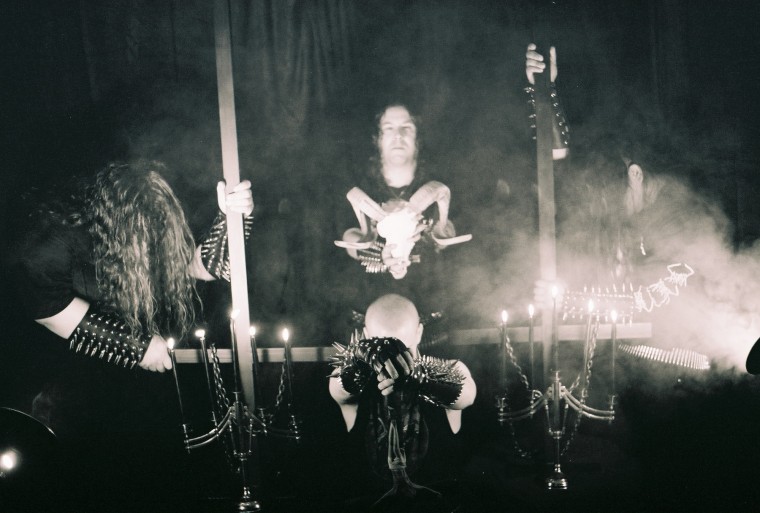
Blaspherian

The Metal Examiner: Blaspherian’s Infernal Warriors of Death

Every Friday, The Metal Examiner delves metal’s endless depths to present the genre’s most important and exciting albums.

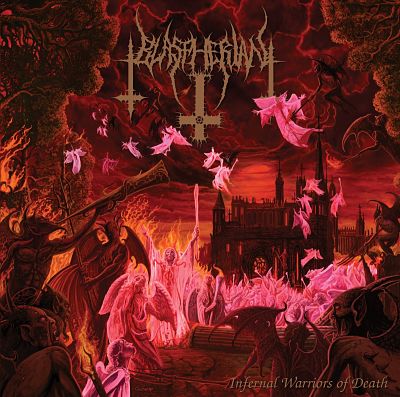
Blaspherian - Infernal Warriors of DeathBlaspherian: Infernal Warriors of Death (Deathgasm Records, 3/8/11)

Blaspherian: “Infernal Warriors of Death”

[audio:https://alarm-magazine.com/wp-content/uploads/2011/03/05.-Infernal-Warriors-Of-Death.mp3|titles=Blaspherian – Infernal Warriors of Death]

The cover art of Infernal Warriors of Death bears a striking resemblance to Dawn of Possession, so it’s no surprise that Blaspherian‘s debut full-length shares quite a bit with early Immolation. Although formed in 2004, Blaspherian is far from prolific, having only released a demo, an EP, and a few splits previous to this recording. Its 2007 EP was a respectable old-school death-metal release, but it was not enough of a unique statement to set it apart from the classic bands of the early ’90s and late ’80s.

However, with Infernal Warriors of Death, Blaspherian has claimed its spot in Texas’ long history of extreme metal. This is crowded territory, as the state has offered up one of the genre’s initial classics in Necrovore‘s Divus de Mortuus demo, underrated technical thrash bands in Rigor Mortis and Dead Horse, and two of the most compelling United States black-metal bands in Absu and Averse Sefira.

Chromatic: The Crossroads of Color and Music

Save 38% on Chromatic with limited-time pre-order

On February 22, ALARM Press launched a pre-order and fund-raising campaign to print our newest book, Chromatic: The Crossroads of Color and Music, profiling independent musicians and artists who use color in unorthodox ways. Pre-order a copy now for up to 38% off.

The Mountain Goats

Pop Addict: The Mountain Goats’ All Eternals Deck

Every Thursday, Pop Addict presents infectious tunes from contemporary musicians across indie rock, pop, folk, electronica, and more.
The Mountain Goats: All Eternals DeckThe Mountain Goats: All Eternals Deck (Merge, 3/29/11)

The Mountain Goats: “Damn These Vampires”

[audio:https://alarm-magazine.com/wp-content/uploads/2011/03/The-Mountain-Goats-Damn-These-Vampires.mp3|titles=The Mountain Goats: Damn These Vampires]

An old but proven adage is to write what you know. Though the maxim applies aptly to writers and poets, it doesn’t always play out so well for music. But when the The Mountain Goats surfaced in 2001, it decided to go with what it knew, and immediately made a name for itself as a masterful band of literary troubadours.

Through the years, it continued the trend, crafting such notable releases as Tallahassee in 2001, The Sunset Tree in 2005, and Life of the World to Come in 2009, among others. The trio of John Darnielle, Peter Hughes, and Jon Wurster (in addition to numerous guest appearances) arms itself with poignant and bookish lyrics, concrete imagery, and gut-wrenching pathos, all backed by a swath of indie-folk versatility and integrity. The band has established itself as an architect of musical design that is both sparse and minimalist, as well as explosive and frenetic. And more often than not, Darnielle and his cohorts pull it off without ever being contrived or hackneyed.


Gallery Spotlight: LMAKprojects

In 2005, art curator Louky Keijsers Koning created LMAKprojects in New York City in order to give emerging international artists a space where they could develop professionally while building connections with new audiences. LMAK — an abbreviation of Louky’s full name, Louky Marie Antoinette Keijsers — consisted of a main gallery in Manhattan’s Chelsea District as well as a supplementary project space in Williamsburg. The dual-space setup allowed LMAKprojects to simultaneously create innovative and engaging art shows while building a solid reputation within New York’s mainstream art scene.

In 2009, Louky’s husband and fellow art curator Bart Keijsers Koning began focusing on LMAK full time. That same year, the couple decided to relocate its gallery and project space to Manhattan’s Lower East Side, an area that was receptive to its intent of engaging audiences with thought-provoking conceptual art.

“The nice thing that the Lower East Side is doing is drawing crowds that are very serious about art and what to engage, and [they] really look,” Bart says.

Morrow vs. Hajduch

Morrow vs. Hajduch: Kronos Quartet, Kimmo Pohjonen & Samuli Kosminen’s Uniko

Scott Morrow is ALARM’s music editor. Patrick Hajduch is a very important lawyer. Each week they debate the merits of a different album.

Kronos Quartet, Kimmo Pohjonen & Samuli Kosminen: UnikoKronos Quartet, Kimmo Pohjonen & Samuli Kosminen: Uniko (Ondine, 2/1/11)

Morrow: In 2004, the unparalleled Kronos Quartet premiered a new commission of material written by Finnish accordionist Kimmo Pohjonen and sampler / electronic percussionist Samuli Kosminen.  Though it only was performed on a handful of occasions, it proved so resonant that the six performers finally recorded the seven-movement suite, which was released last month by independent classical label Ondine.

Kronos has always attained high marks for its diversity of projects.  Uniko, first and foremost, remains a contemporary chamber piece, but it’s most set apart by the electrified and effected sounds of Pohjonen’s accordion and the soft laptop beats of Kosminen.

Pohjonen also adds wordless vocals that at times resemble throat singing.  It’s another interesting element, but the movements’ structures are the real key to Uniko‘s success — whether building into a stirring Balkan folk melody in “I. Utu” or stacking pizzicato and staccato passages over buzzing percussive samples in “III. Sarma.”