Yann Tiersen

Concert Photos: Yann Tiersen @ Bottom Lounge (Chicago, IL)

Multi-instrumentalist / composer Yann Tiersen is currently in the midst of touring in support of Dust Lane, his new album that’s out now on Anti-. After finishing up in Los Angeles on March 11, Tiersen will take about a month off before playing another block of shows in his native country, France.

True to form, during his recent stop in Chicago at Bottom Lounge, Tiersen, backed by a full band, frequently swapped instruments, handling some vocal duties while playing everything from violin to keys to melodica. Check out ALARM contributing photographer David Summers‘ black-and-white captures below.

Yann Tiersen

Beans

Guest Spots: Beans on fiending for a good whodunit novel

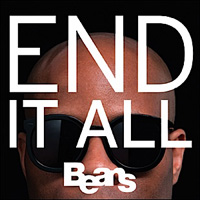
Beans: End It AllBeans: End It All (Anticon, 2/15/11)

Beans: “Mellow You Out”

[audio:https://alarm-magazine.com/wp-content/uploads/2011/03/beans-mellow-out.mp3|titles=Beans: “Mellow You Out”]

You probably know longtime indie rapper and producer Beans from his work in Antipop Consortium, a hip-hop group that he formed in 1997 with High Priest, M. Sayyid, and Earl Blaize. You might also know him from his extensive list of collaborations with artists like Vernon Reid, Holy Fuck, and DJ Shadow. Or maybe it’s his recently released album, End It All, featuring contributions from the likes of Four Tet, Son Lux, Sam Fogarino of Interpol, and Tobacco, among others.

What you probably don’t know him from is your local book club. But maybe you should. Beans loves mystery novels.

Why I Love Mysteries and Crime Fiction
by Beans

ALARM, I don’t know what it is, but there’s something about reading how an author can depict someone getting cleverly murdered that really fascinates the shit out of me. Ask anyone who has ever toured with me, and they’ll probably say that I drink too much, but I’m also a voracious reader of mysteries and crime fiction.

The more gruesome and menacing, the merrier, I say. Bring it on! Personally, I don’t even remember how I got started reading mysteries. My father was the same way about reading, so I guess it runs in the family. As I was growing up, my dad used to read a book a night, but his genre of choice was science fiction. At the end of the day, I’d kill for a great whodunit.

In my reading taste, I tend to follow various authors and characters in a series that they’ve created. Currently, I’ve been reading Lee Child‘s ex-military, policeman-drifter Jack Reacher series. The series is both exciting and a constant page turner, as the character’s past is always catching up with him.

Does It Offend You, Yeah?

Q&A: Does It Offend You, Yeah?

Does It Offend You, Yeah?: Don't Say We Didn't Warn YouDoes It Offend You, Yeah?: Don’t Say We Didn’t Warn You (The End / Cooking Vinyl, 3/15/11)

Does It Offend You, Yeah?: “We Are The Dead”

[audio:https://alarm-magazine.com/wp-content/uploads/2011/03/We-Are-The-Dead.mp3|titles=Does It Offend You, Yeah?: “We Are The Dead”]

Following its debut in 2008, Does It Offend You, Yeah? challenged Virgin Records’ ideas for its music, and the frustration caused by demanding executives and mainstream models is evident in the band’s outspoken nature today. Although it took nearly three years to release its second album, the five-piece outfit from Reading, England has ditched its major-label constraints, disregarded boundaries, and comfortably created a musical adventure titled Don’t Say We Didn’t Warn You.

The album fuses psychedelic acoustic interludes, electro-pop attacks, dirty-grime raps, and one synth-free ballad into a single collection. One of the band’s founders, synth player Dan Coop, recently took some time while touring the States to answer our questions.

First and foremost, your animosity towards the mass-music media, major record labels, genre tags, etc. is justifiable. But if you believe that mainstream musicians have simply found an obvious “formula,” can you explain how your approach to music is different?

Well, I think we just write tunes that we like and run with them. We’ve got a bit of a love-hate relationship with the first record. We were getting a lot of pressure from our ex-major label to do stuff we weren’t comfortable with, so in that way, we see it as a quite naïve and pretty disjointed album.  At one end, you’ve got ’80s synth pop, and then at the other, you’ve got produced dance-floor tracks. Luckily, I think it kind of worked out, as we’ve got fans coming at us from lots of different “scenes” so to speak, be it the metal scene who liked “Heavy Heart” and “Let’s Make Out,” the electro crowd who liked “Rockstars” and “Weird Science,” or the indie kids who liked “Dawn of The Dead.”

It’s a bit of a cliché, but it really pains us to be just dumped in a pigeonhole. The UK press really tried to put us into the whole “new rave” debacle, which was pretty funny as there really was no such thing as new rave until some journo thought of it, and, of course, since we use a synth in our songs, it was automatically assumed we were part of it. The only thing we want to do with our band is play sold-out shows and write songs we would like to hear on the radio. Scenes are fine if you want stereotypes; we just want to do our own thing.


Kurt Vile

Record Review: Kurt Vile’s Smoke Ring For My Halo

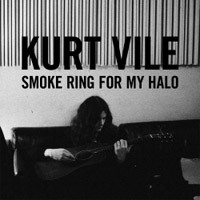
Kurt Vile: Smoke Ring For My HaloKurt Vile: Smoke Ring For My Halo (Matador, 3/8/11)

Kurt Vile: “Baby’s Arms”

[audio:https://alarm-magazine.com/wp-content/uploads/2011/03/KurtVile-BabysArms.mp3|titles=Kurt Vile “Baby’s Arms”]

During the few years that he’s been putting out proper records, Philadelphia’s Kurt Vile has played equally the singer-songwriter and the free-form sonic tinkerer. He seems unwilling to force too much to happen in either capacity. He’s sincerely catchy but shy of being blatantly earnest. He’s tempted by the inviting fizzle of tape hiss, reverb, drum machines, and Casios, but can put a simple guitar part at the front when it suits him.

His new album, Smoke Ring For My Halo, is a lot more orderly than Constant Hitmaker (2008) or Childish Prodigy (2009). The frequent, fun instrumental twiddling of Hitmaker is just about entirely gone, and Prodigy‘s push toward rocking clarity continues in a mellow acoustic vein. It no longer sounds like each song was patched together in slightly different circumstances and varying qualities of tape. He achieves a new consistency on Smoke Ring and doesn’t strain himself to get there.

Moses Supposes

Moses Supposes: BS chart of the weak

Moses Avalon is one of the nation’s leading music-business consultants and artists’-rights advocates and is the author of a top-selling music business reference, Confessions of a Record Producer. More of his articles can be found at www.mosesavalon.com.

Boy, it pains me to have to agree with Bob Lefsetz, but his take on this “Chart of the Day” business is on the money.  The chart is pure nonsense. And no, my use of the pun “weak” in the banner is not one of my common misspellings.

For those catching up, a chart on Silicon Alley Insider of unspecific authorship titled “The Death of the Music Industry” has gone viral.  Most of the sites re-posting and re-Tweeting it as “fact,” no surprise, are those that cater to the technology industry. If you’re a reader of mine, you’ll be able to see the flaws in its logic at first glance.  As the tech industry loses its grip on its insidious campaign to devalue music, biased stories of the “dying music biz” become more and more transparent.

In essence, the chart shows the decline in CD shipments and how digital sales have not made up the difference.  Duh. Everyone knows that, but how is a decline in CD unit shipments equal the “death” of an industry that still brings in $10 billion per year domestically, and has been growing in revenue consistently over the past five years (albeit slowly) while everything else in the Western world is falling apart?

ASCAP, BMI, and SESAC all have posted record-breaking revenue year after year, and though it’s true that EMI is headed for the auction block, Universal and Sony don’t seem to be selling their corporate jets anytime soon.

The chart bases its logic by showing a decline in units shipped as reported by the RIAA.  It’s no secret to my readers that not only does RIAA shipping data not demonstrate the entire music-revenue picture, it doesn’t even give you enough pieces of the puzzle to render the outline.  Why?

You want the charts? Here are the charts. (See my chart of the week.)

The Rural Alberta Advantage

Pop Addict: The Rural Alberta Advantage’s Departing

Every Thursday, Pop Addict presents infectious tunes from contemporary musicians across indie rock, pop, folk, electronica, and more.

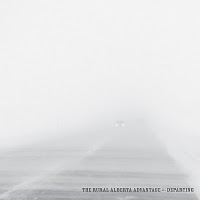
The Rural Alberta Advantage: DepartingThe Rural Alberta Advantage: Departing (Saddle Creek, 3/1/11)

The Rural Alberta Advantage: “North Star”

[audio:https://alarm-magazine.com/wp-content/uploads/2011/03/05-North-Star.mp3|titles=The Rural Alberta Advantage: “North Star”]

The Rural Alberta Advantage made a name for itself the old-fashioned way: by being good. In 2007, the Toronto-based trio self-released an impressive concoction of frenzied indie-folk rock with Hometowns. Set to a backdrop of erratic drum work, fuzzed-out electrics, and heart-strumming acoustics, as well as a flutter of harmonies from singers Nils Edenloff and Amy Cole, Hometowns explored themes of growing up, going out, moving away, and coming home. Perhaps most striking is Edenloff’s nasally, Jeff Mangum-like howl, evoking Neutral Milk Hotel’s gritty arrangements and lo-fi production.

After touring the hell out of the album in North America and Europe, some buzz began to build on the blogosphere, and it didn’t take long for people to notice that the Canadian band was indie’s newest best-kept secret — one well worth discovering. And so, in 2008, the band signed to Saddle Creek and re-released Hometowns with widespread distribution and to critical acclaim.