Beats & Rhymes: Sims’ Bad Time Zoo

Each Monday, Beats & Rhymes highlights a new and notable hip-hop, rap, DJ, or electronic record that embraces independent sensibilities.
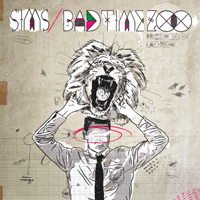
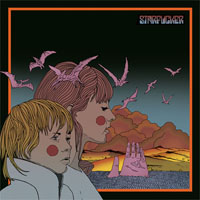
Sims: Bad Time ZooSims: Bad Time Zoo (Doomtree, 2/15/11)

Sims: “Burn It Down”
[audio:https://alarm-magazine.com/wp-content/uploads/2011/02/Sims_Burn_It_Down.mp3|titles=Sims: “Burn It Down”]

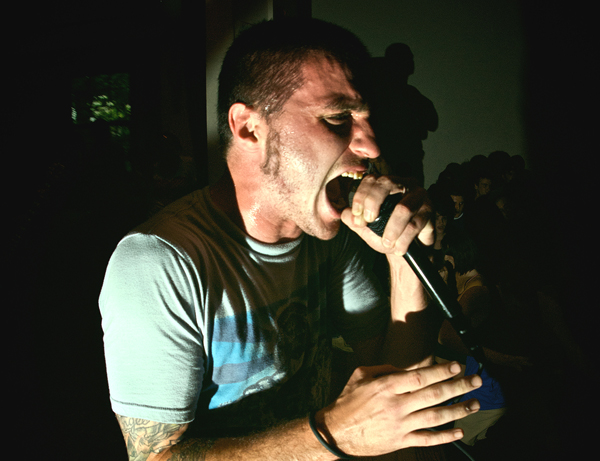
Anyone who has seen Twin Cities rapper/producer P.O.S live between the gradual success of Audition in 2006 and Never Better in 2009 has also had the chance to sample the Doomtree crew of which he’s a part. One of the stronger presences at these shows has been Sims, who’s by no means exactly like P.O.S, but is a worthy kindred spirit who gets the crowd in a similar, righteously agitated state of mind.

The lean-built MC is as averse to laid-back songs as his half-rapper, half-hardcore-dude friend. He’s strong through the shoulders and busy with gestures, a good frame for his sharp, often-terse flow. Another vital presence, less obvious onstage but still essential, is producer Lazerbeak, who has made beats for nearly every Doomtree release and doesn’t hear much of a border between catchy synth-based production and scratchy horns-and-soul-vocal melts.

The strength of Doomtree is that no two artists are too terribly alike (see the crew’s self-titled, all-member-pile-on album from 2008). The spectrum runs from the pugnacious Mike Mictlan to the patient density of Dessa‘s 2010 release, A Badly Broken Code. The group supports its members’ identities without intruding on them, something that holds true on Sims’ second proper solo album, Bad Time Zoo.

Sims goes it alone for nearly an entire hour, with just one guest verse during the whole thing (from P.O.S, on “Too Much”). Lazerbeak produces every beat here, making for a collaborative but focused feel. The identity that emerges for Sims, at first, has a lot to do with his opening verse on Never Better‘s “Low Light Low Life.”  His specialty is creating the feeling of being sealed into a living nightmare of isolation, reckless corporate domination, and hopeless social ignorance. What comes out over time, though, is that Sims is a straightforward MC who’s brave enough to work through the contradictions of his own emotions.
Tortoise

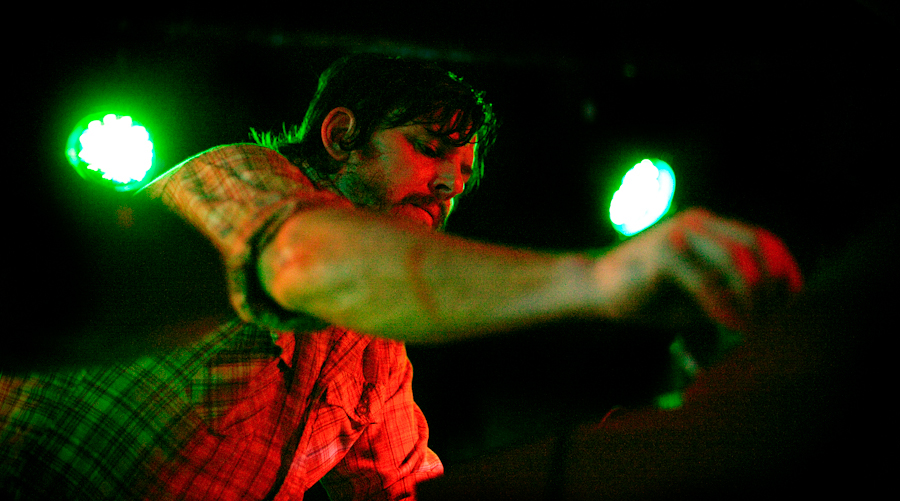
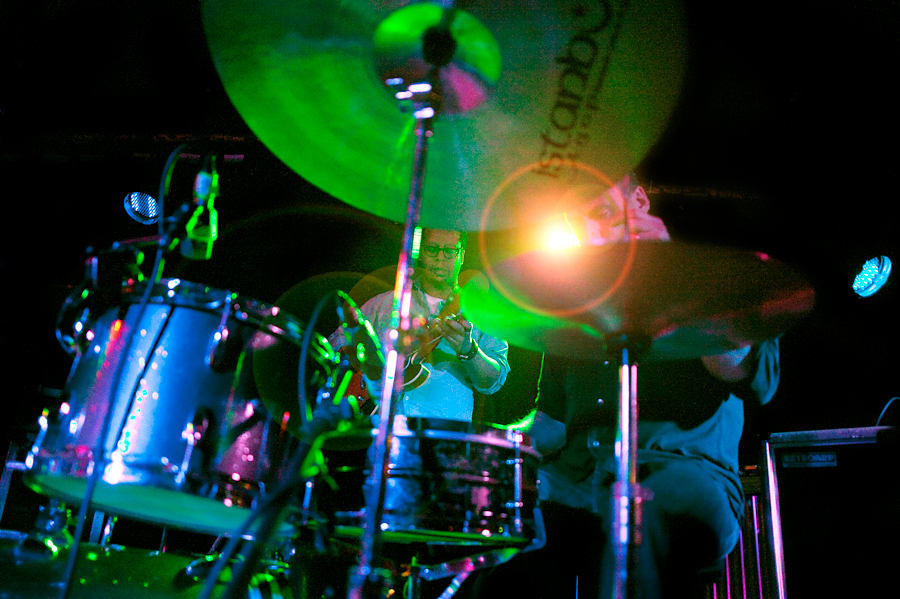
Concert Photos: Tortoise @ Empty Bottle (Chicago, IL)

Experimental instrumental quintet Tortoise played a pair of hometown shows recently, performing in front of welcoming crowds at the Empty Bottle in Chicago. The incomparable rock-dub-jazz shape-shifter garnered a “This Week’s Best Albums” tag for its 2009 release Beacons of Ancestorship (Thrill Jockey). Since then, it has released a 13-minute single (Ice Ice Gravy) and a Japan-only CD (Why Waste Time?).

As you wait for a new Tortoise full-length, check out photographer Drew Reynolds‘ captures from the performance, and then click on over and revisit guitarist Jeff Parker‘s late-2010 show with Andrew Bird right here.

Tortoise

Starfucker

Guest Spots: Starfucker’s cell-phone-picture tour diary

Starfucker: ReptiliansStarfucker: Reptilians (Polyvinyl, 3/8/11)

Starfucker: “Bury Us Alive”

[audio:https://alarm-magazine.com/wp-content/uploads/2011/02/03-Starfucker-Bury-Us-Alive.mp3|titles=Starfucker: “Bury Us Alive”]

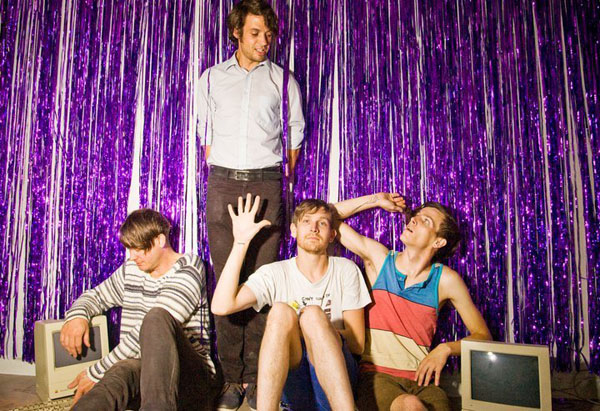
Portland, Oregon-based Starfucker (or STRFKR, if you’re into the whole no-vowels thing) has made a name for itself by crafting consistently catchy, effervescent electronic pop. Since its inception as a solo project, founding member Josh Hodges has added three members, and the band inked a record deal with Polyvinyl last summer.

With a new album, Reptilians, set for an early March release, the band is on the road, plying its trade. We caught up with multi-instrumentalist Keil Corcoran, and he gave us a grainy, lo-res glimpse into the wild world of STRFKR.

Starfucker’s Cell-Phone-Picture Tour Diary
by Keil Corcoran

My name is Keil. I play drums for Starfucker. I have a piece-of-shit phone called the Motozine ZN5. I have this phone because:

1. It was free
2. It has a five-megapixel camera
3. I am broke
4. It was free

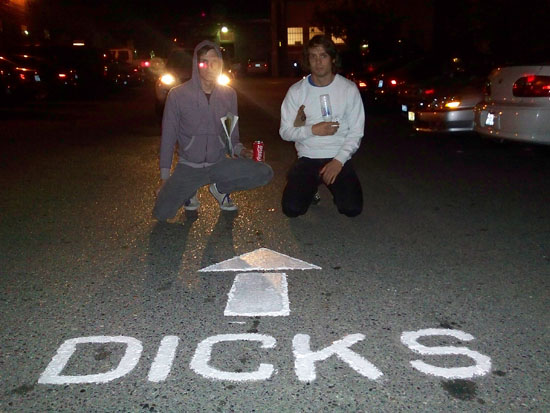
This camera is by no means fit to photograph anything of true consequence. It is, however, terribly handy on tour when awesome things happen/appear.

Starfucker

Ryan [Bjornstad] and Shawn [Glassford] in Seattle looking fine.

True Widow

Q&A: True Widow

True Widow: As High As The Highest Heavens And From The Center To The Circumference Of The EarthTrue Widow: As High as the Highest Heavens and From the Center to the Circumference of the Earth (Kemado, 3/29/11)

True Widow: “Skull Eyes”

[audio:https://alarm-magazine.com/wp-content/uploads/2011/01/04-Skull-Eyes.mp3|titles=True Widow: “Skull Eyes”]

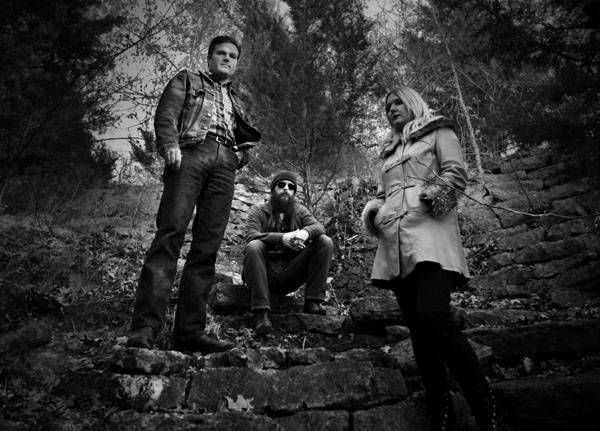
Following the dissolution of his punk band Slowride, guitarist and vocalist Dan Phillips could have spent his two years living in Massachusetts solely focusing on his art and woodworking. But his creative expression didn’t limit itself to his small, New England quarters. After returning to Dallas, Texas, Phillips crafted a new brand of heavy, melodic material with the help of bassist and vocalist Nicole Estill and drummer Timothy (Slim) Starks, in the trio known as True Widow.

The stonegaze outfit is set to release its second album, As High as the Highest Heavens and From the Center to the Circumference of the Earth, through Kemado Records at the end of next month. The new album merges heartfelt melodies that drip over distorted guitar chords with heavier rock interludes. Here, Philips explains his passion for visual art, True Widow’s approach to music, and the process of writing and recording deep in the Texan woods.

After the disbandment of your previous band, Slowride, you had a brief stay in Massachusetts where you trained in woodworking and some other forms of art. Can you describe a little about your move and your developments in painting, woods, and drawing?

I moved to Boston to go to the furniture-making program at The North Bennet Street School. It was a two-year program, and during those two years, that was all that I was concerned with. I spent every minute that I could at the school. The curriculum included several visits to museums and American furniture collections in New England. Being a person who draws and paints, I was very interested in the whole gamut of early American decorative arts — not only the furniture that I was there to see.

While immersed in research, I found myself exploring the themes and aesthetics of all of the art forms of colonial America up through the Federal period. Unconsciously, the influence of all of this stuff found its way into my drawings and paintings. My approach is simple: I like that; I want to make one too. The things I make are often based on or rooted in something that has existed before, or a variation of a theme — never a reproduction.

Parts & Labor

Record Review: Parts & Labor’s Constant Future

Parts & Labor: Constant FutureParts & Labor: Constant Future (Jagjaguwar, 3/8/11)

Parts & Labor: “Constant Future”

[audio:https://alarm-magazine.com/wp-content/uploads/2011/02/constantfuture.mp3|titles=Parts & Labor: “Constant Future”]

In 20 years, we will wistfully misremember that all of indie rock sounded like a handful of reliable, definitive bands. It will be tempting to include Parts & Labor in that pleasant exercise of self-delusion. Then again, it wont make our memories any easier to process or simplify.

The electro-rock group’s co-founders, Dan Friel and BJ Warshaw, write lots of lyrical phrases that don’t express a simple opinion or definite image but are tempting to repeat like aphorisms. On the chorus of “A Thousand Roads,” one of the best songs and finest examples of what they’ve achieved on the new album Constant Future, they conjure up one of many fragmentary but astutely realized landscapes: “Come on, praise the progress made, the sharpened grays of a thousand roads / all delays, no lazy days, the latent phase of a thousand roads.”

It may be about touring-band life, or how America seems to measure its worth in paved surfaces. Because it’s not didactic or preachy, though, it can gradually sink in and play with your head, with the internal rhymes and alliterations indicating that there’s some coherent thought running through it that can’t wait to get out.

Parts & Labor’s music also sounds like it reads. Friel’s electronics crawl through the songs like power-line hum given life and dimension, but the hooks, punk-shout-along-worthy choruses, and Joe Wong‘s drums keep insisting that it’s going to make sense to your instincts.

New Lows

The Metal Examiner: New Lows’ Harvest of the Carcass

Every Friday, The Metal Examiner delves metal’s endless depths to present the genre’s most important and exciting albums.

New Lows: Harvest of the Carcass

New Lows: Harvest of the Carcass (Deathwish Inc., 1/18/11)

New Lows: “Anguish”

[audio:https://alarm-magazine.com/wp-content/uploads/2011/02/8.-Anguish.mp3|titles=New Lows – Anguish]

In the early 2000s, members of New Lows were cutting their teeth in Think I Care, playing in Sheer Terror’s tradition of Celtic Frost-worshiping hardcore punk. After the demise of Think I Care, New Lows appeared with an ugly, punishing demo and a similarly aggressive seven-inch record.

The band recorded an LP with CC from Mind Eraser that was initially shelved due to inner turmoil and a near breakup. However, New Lows resumed activities as a band, and Harvest of the Carcass, its proper debut, now sees the light of day, taking the Boston metalcore tradition into a raw and primitive place.

New Lows plays in a style that recalls the crushingly heavy and simplistic late-1980s punk/death-metal hybrid of bands like Asphyx and Bolt Thrower. Bands affiliated with the hardcore scene, like Ringworm and Merauder, have been blending these sounds since the early 1990s. Recently, several hardcore bands have risen to prominence with sounds that are much more death metal than they are Bad Brains. This new crop of bands includes New Lows as well as Nails, Harms Way, and Mammoth Grinder.

João Orecchia

João Orecchia: Eclectic Electro-Acoustic Collage

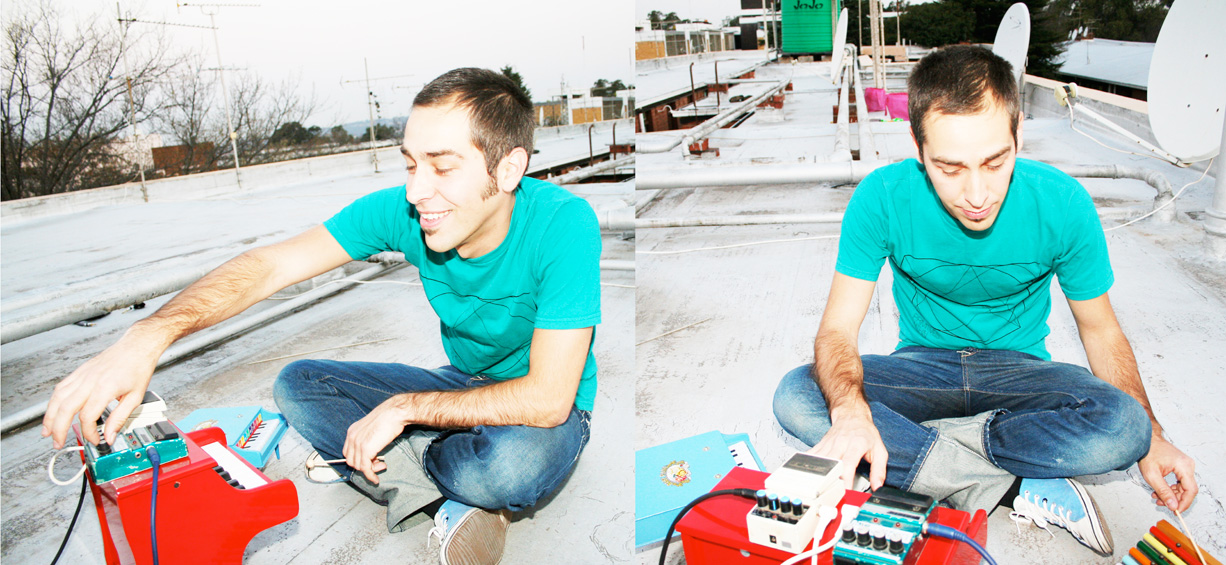
Toy instruments, synths, and children’s voices, mixed with musique concrète and samples of his father’s recordings from the 1960s, are some of the elements that comprise Peruvian-Italian artist João Orecchia‘s spirited Hands and Feet.