
Moses Supposes

Moses Supposes: RIAA and SoundScan clash on sales stats

Moses Avalon is one of the nation’s leading music-business consultants and artists’-rights advocates and is the author of a top-selling music business reference, Confessions of a Record Producer. More of his articles can be found at www.mosesavalon.com.

The following includes slides and facts presented at my NAMM 2011 panel presented by H.O.T. Zone as well as reprinted material from a 2004 article.

In April of 2004, I was working on a piece for Keyboard magazine about bar codes. I was trying to determine if the “free” bar code that many CD replicators provide is a real added value to the indie artist, or just a bogus premium.  But what evolved was a much bigger and more important story.  Talking to SoundScan revealed a massive untruth disseminated by the RIAA about the reality of declining record sales.

SoundScan (owned by Nielsen) uses the bar codes on CDs to register sales at record stores.  The correlated data contributes to the Billboard chart listings, as well as much of the market research used by record companies.  Through my investigation, I learned things that would contradict reported statements by the RIAA — mainly that US labels had a significant reduction in sales from 2000-2004.

My panel at the 2011 NAMM show this year is all about getting to the bottom of the fallacy that the music business is in disarray, and this means understanding why SoundScan can say that sales are stable yet the press — the RIAA — can say that sales are plummeting.

So to facilitate that, I’ve reprinted the key portions of that April 2004 article in this piece.
Thank You

Record Review: Thank You’s Golden Worry

Thank You: Golden WorryThank You: Golden Worry (Thrill Jockey, 1/25/11)

Thank You: “1-2-3 Bad”

[audio:https://alarm-magazine.com/wp-content/uploads/2011/01/01-1-2-3-Bad.mp3|titles=Thank You: “1-2-3 Bad”]

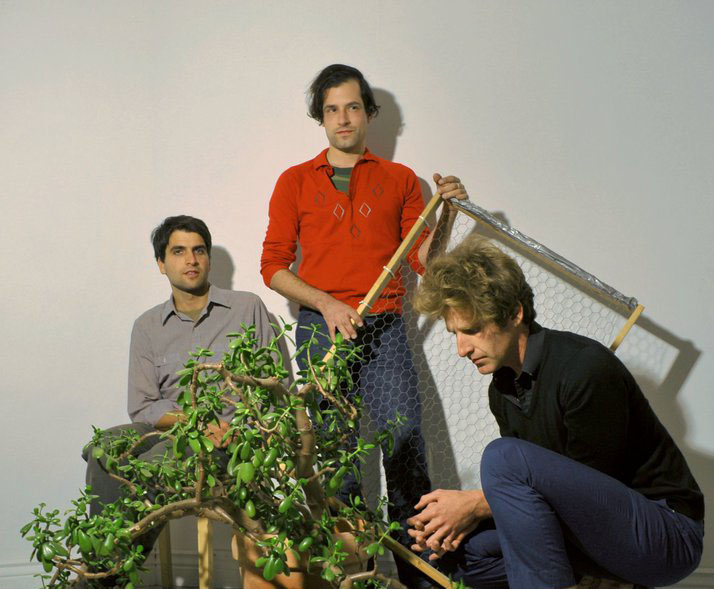
Thank You‘s third album, Golden Worry, proves that the Baltimore trio is a band worth rooting for, and one that’s a step closer to making clear what it wants.

Like a few other recent albums to come out of Baltimore — namely, Pontytail‘s Ice Cream Spiritual and Dan Deacon‘s Bromst Golden Worry stages a good-faith meeting between experimental impulses and an enthusiasm for amiable hooks. This hasn’t always been the case with Thank You. On the band’s last album, Terrible Two, its obsession with rhythm threatened to dry up the guitars, keys, and vocals into a tuneless murk.

Thank You has a compact feel that sometimes works for it and sometimes against it. The drums clamber actively on top of the song, often taking the lead but not always filling up the low end, and the guitars work up a noise-rhythm complement that, while often aggressive, doesn’t pursue a lot of fun back-and-forth with the percussion. As for vocals, only sometimes there and only sometimes coherent, they’re another constant variable in an open-ended format. It might help to know that Thrill Jockey’s bio for Thank You credits each member simply with “everything.”

Dianogah

Dianogah: Dueling Basses and Melodic Distortions

On its most recent album, Chicago’s Dianogah ventures into harsher sounds, while simultaneously collaborating with local artists Andrew Bird and Stephanie Morris to incorporate melodic, subtle sounds.

DeVotchKa

DeVotchKa: New Direction from Rejection

Led by songwriter Nick Urata, DeVotchKa takes its wildly inventive Balkan pop in new directions on 100 Lovers — an album born of filmic discards and endless tinkering.

Generation Bass

World in Stereo: Generation Bass Presents Transnational Dubstep

Each week, World in Stereo examines classic and modern world music while striving for a greater appreciation of other cultures.

Various artists: Generation Bass Presents Transnational Dubstep (Six Degrees Records, 2/1/11)

Fleck & Fish Finger: “Rude Profile” (Pan Agnostix flamenco-step remix) [bonus cut, not available on album]

[audio:https://alarm-magazine.com/wp-content/uploads/2011/01/rude-profile-fleck-fish-finger-pan-agnostix-flamenco-step-remix_320k.mp3|titles=Fleck & Fish Finger: “Rude Profile” (Pan Agnostix flamenco-step remix)]

Originating in East London at the turn of the century, dubstep loosely teeters between the electronic styles of garage, dub, and drum-and-bass.  Distinct in its aggressive, bass-heavy qualities, it’s a fascinating genre that has blown subwoofers on both sides of the Atlantic.  Though the music’s meditation on complex rhythms and cerebral twists make it all the more attractive, it is dubstep’s grimy, low-frequency synths and wobbly, soul-shaking bass riffs that have made it a movement.

Transnational Dubstep, a compilation by Generation Bass blog co-founders / editors DJ UMB and Vincent Koreman in conjunction with Six Degrees Records, is one of the first major releases to document the fusion of dubstep and global roots music.  As something of an infant genre, a surge of electronic producers and DJs from all over the world are taking it in all kinds of different directions.  From Latin American to Balkan, Chinese to Indian, and Middle Eastern to Japanese — the sounds are extremely diverse, giving first-time listeners an amazing introduction and long-time fans a mine full of new gems.

Smith Westerns

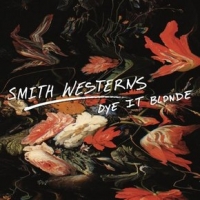
Pop Addict: Smith Westerns’ Dye It Blonde

Every Thursday, Pop Addict presents infectious tunes from contemporary musicians across indie rock, pop, folk, electronica, and more.

Smith Westerns: Dye It BlondeSmith Westerns: Dye It Blonde (Fat Possum Records, 1/18/11)

Smith Westerns: “Weekend”

[audio:https://alarm-magazine.com/wp-content/uploads/2011/01/Weekend.mp3|titles=Smith Westerns: “Weekend”]

Known primarily for its lo-fi blend of ’70s glam and Nuggets-era garage rock, Smith Westerns has discovered a sweeter, cleaner sound on Dye It Blonde, its sophomore LP on Fat Possum Records.

A hearty leap in production value is the most significant shift from the band’s 2009 self-titled debut. Gone are the fuzzy, washed-out melodies and underwater vocals of early recordings. Yet Dye It Blonde feels just as youthful and energetic as anything the band has released to date.

Though Smith Westerns has largely abandoned the murky, homespun sound that ignited the blogosphere only two years ago, fans of the band need not worry – Dye It Blonde is filled with jangly guitar hooks and young heartbreak. With the help of producer Chris Coady and an increased studio budget, however, Smith Westerns delves even further into the Brit-pop canon, culling inspiration from the likes of Suede, David Bowie, and T. Rex.