
Moses Supposes

Moses Supposes: SOPA opera and the anti-music media bias

Moses Avalon is one of the nation’s leading music-business consultants and artists’-rights advocates and is the author of a top-selling music business reference, Confessions of a Record Producer. More of his articles can be found at www.mosesavalon.com.

With piracy affecting all areas of commerce, why does it seem like only the music biz is whining? Well, because the mainstream media is only “reporting” about them and ignoring the massive extra-music industry support for SOPA. But why? Is SOPA really such a huge threat to media outlets’ revenue that they would sell out on a bill that is designed to keep themselves alive?

The other day I read a story about how the E-book trade is being rifled by piracy. The journalist postulated that the reason pirates have been ripping and burning E-books is because the public doesn’t want to pay the “high price” offered by Kindle, Nook, Kobo, etc. A reader posting in the comments section sympathized, hoping that the “fledgling” E-book trade would not be too badly hurt by piracy. Then a lawyer for a website that sells counterfeit designer handbags and is presently under indictment was quoted. He defended his client with intimations that the world is entitled to designer style without paying designer prices.

High prices causing piracy? Entitlement to quality goods and services? It all started to sound familiar. Where had I heard these defenses to theft before?

That’s it!! The music business! According to just about every paper and blogger, those bastards are charging $15 for one song. No, wait, it was $15 for 12-15 songs, but only one song is good, right? No, wait, it’s the record company’s greed that makes artists release only one good song on an album. Wait, I’m starting to get confused again, because someone smart once taught me that theft had little to do with the quality of content; people steal bad records too, right? (Britney Spears was one of the most illegally downloaded artists at one time.)

I thought theft was caused by a person not wanting to pay for something they perceive they have a need for, or a right to. Yeah, that rings true.

Now, can you imagine these same absurd arguments of “high price = theft” being printed about any other industry but music?
Pop Addict: Nada Surf’s The Stars are Indifferent to Astronomy

Every other Thursday, Pop Addict presents infectious tunes from contemporary musicians across indie rock, pop, folk, electronica, and more.

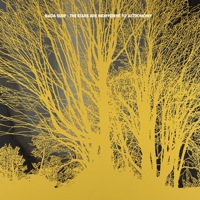
Nada Surf: The Stars are Indifferent to AstronomyNada Surf: The Stars are Indifferent to Astronomy (Barsuk, 1/24/12)

Nada Surf: “Waiting for Something”

[audio:https://alarm-magazine.com/wp-content/uploads/2012/01/Nada_Surf_Waiting_for_Something.mp3|titles=Nada Surf: “Waiting for Something”]

The first thing that people usually think of when they hear the words “Nada Surf” is the mid-’90s post-grunge gem “Popular.” The track seemed to encapsulate everything that alternative rock in the ’90s stood for into a three-minute radio hit: humor, irony, hooks, cheekiness, and distortion. (It also helped that MTV played the music video nonstop.) And the band deserved the, well, popularity. The song was clever and catchy as hell. But, as is the case with many bands of that era who still had good songs/albums besides their hit (see: Superdrag, Better Than Ezra), Nada Surf has spent the rest of its career trying to get as far away as possible from that song.

To belittle the entire career of Nada Surf to a mere three minutes of one hit in the ’90s is completely unfair, though. Even though the band has lived in the shadow of “Popular” for the majority of its career, Nada Surf has quietly and steadily been putting out an array of solid garage-rock/power-pop-infused records. The Proximity Effect, from 1999, still hinted at the humor that “Popular” touched upon, but the album showed natural growth, with lyrics revolving around more “adult” problems, like seeking out a therapist or the emotional bankruptcy of living too fast. The album’s lyrical honesty and vulnerability is on par with Weezer’s Pinkerton.

By the time Let Go rolled around in 2003, Nada Surf had completely detached itself from the snot-nosed teenage angst of its lone hit single. Instead, a matured, weathered, broken, and fixed Nada Surf was at the helm, endorsing the same power-pop sensibilities it had on previous records, but now with added layers of acoustics, synthesizers, harmonies, and deeper, more meaningful songwriting. The Weight Is A Gift (2005) and Lucky (2008) followed in a similar (though slightly more watered down) fashion.

Zine Scene: Phase 7

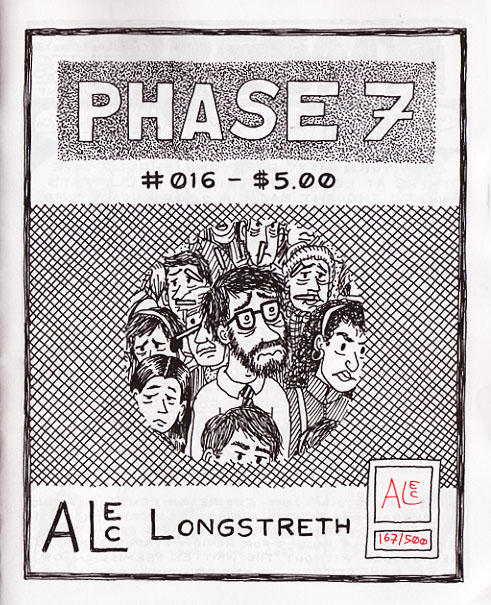
Alec Longstreth: Phase 7Alec Longstreth: Phase 7

The personal zine or “perzine” genre is one of the most popular in independent publishing (we’ve covered a few here, like EmiTown and King-Cat). It can be hard to distinguish yourself in such a crowded field, but Alec Longstreth’s Phase 7 stands out. Published by the author since 2002, Phase 7 is a series of minicomics, most recently alternating between five-issue adventure story “Basewood” and sketchbook issues on the artist’s life. It’s personal, funny, and, incredibly, quite original.

Despite its most recent form, Phase 7 is much more than “Basewood” and even departs frequently from personal stories. As Longstreth says, “The subject matter of each issue of Phase 7 varies widely, depending on what kind of stories I want to tell. I’ve done auto-bio, attempts at serious fiction, humor, comics essays, stick-figure diary comics, and sketchbook issues.” Variety is the key to Longstreth’s longevity, but it also seems like the outgrowth of a natural impulse to continue experimenting and learning.

Issue #16 in particular covers Longstreth’s years in New York, struggling to make a living and forget old loves while pursuing new ones. He also includes plenty of absurd and charming interactions with New Yorkers on the subway or in parks. Random denizens of the city approach him to offer encouragement on his drawing, or simply to yell at him. We see Longstreth at work, out with friends, on dates, and in a wide variety of ways, adjusting to life in New York.

Alec Longstreth: Basewood