Shuteye

Zine Scene: Shuteye

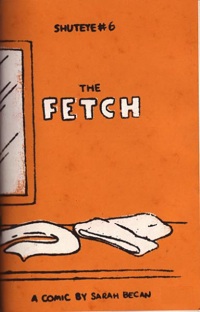
Shuteye #6Sarah Becan: Shuteye (Shortpants Press, 9/26/11)

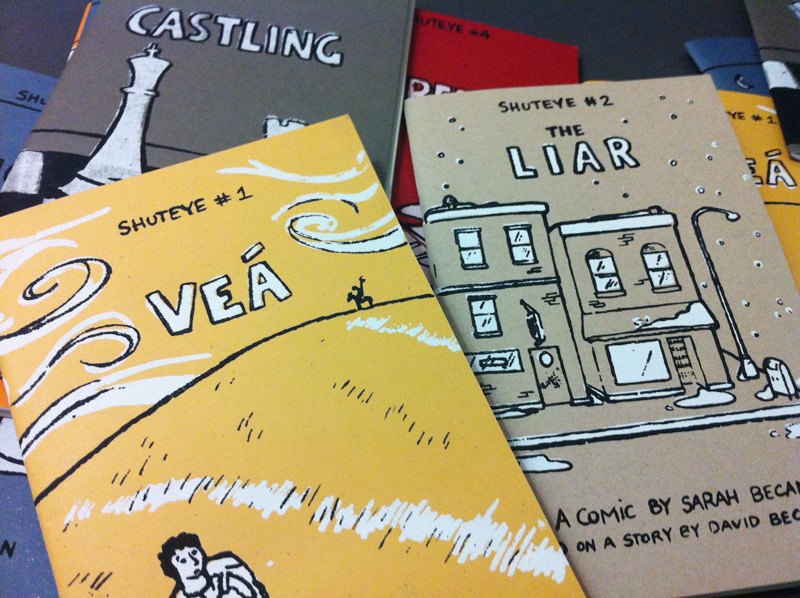
Sarah Becan’s comic book series Shuteye is, appropriately enough, about dreams. In the dream world of the comic book, logic becomes symbolic, coincidences become fateful, and characters learn about themselves in surprising ways. Readers are teased as well; strange things happen in comic books all the time, so how are we to know that this isn’t real? For Becan, the dream state becomes a narrative and stylistic testing ground.

Becan published the first issue of Shuteye in 2005, when her brother had been trying to get some of his stories published. Instead, Becan transformed them into comic narratives, and the first two issues of Shuteye were born. Several more issues followed, each with a silk-screened cover and zine-style binding. The final issue was completed in 2011.

In Shuteye’s sixth and final issue, The Fetch, overworked waiter and boyfriend Jan finds an answer to all of his problems in a mysterious doppelganger. After complaining of a bizarre dream in which his phone call to his mother was answered by Jan himself, Jan’s dream plays out exactly in a Christmas-themed miracle that allows him to be with his mother and girlfriend for the holiday. Soon, the two Jans have a system worked out to their mutual benefit (with doppelganger Jan doing most of the chores), and everything seems fine – until Jan’s girlfriend learns the truth. A surprisingly poignant ending rounds out an entirely unexpected and interesting narrative.
Calexico

Q&A: Calexico

Calexico: Selections from Road Atlas 1998-2011Calexico: Road Atlas 1998–2011 limited-edition vinyl box set and Selections from Road Atlas 1998–2011 CD (Quarterstick, 11/22/11)
Calexico: “Griptape”

[audio:https://alarm-magazine.com/wp-content/uploads/2011/11/Calexico_Griptape.mp3|titles=Calexico: “Griptape”]

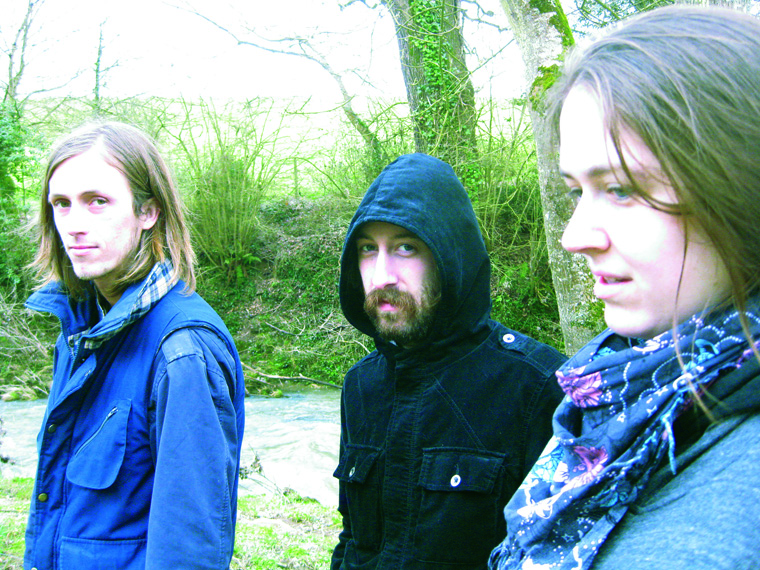
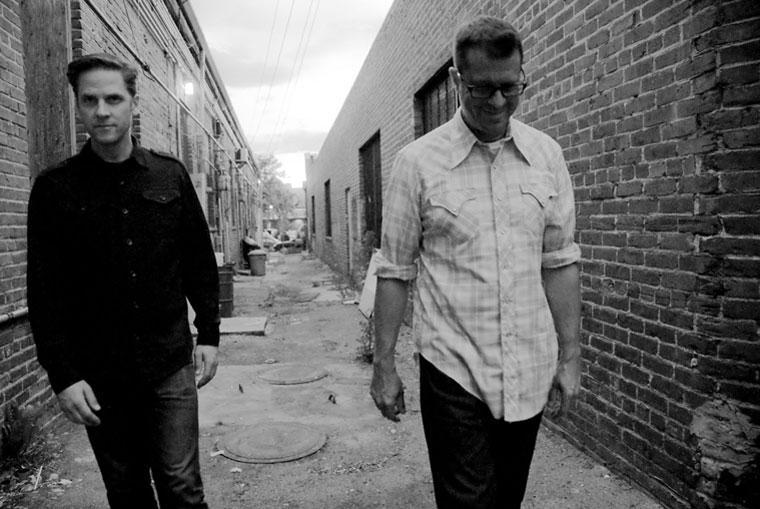
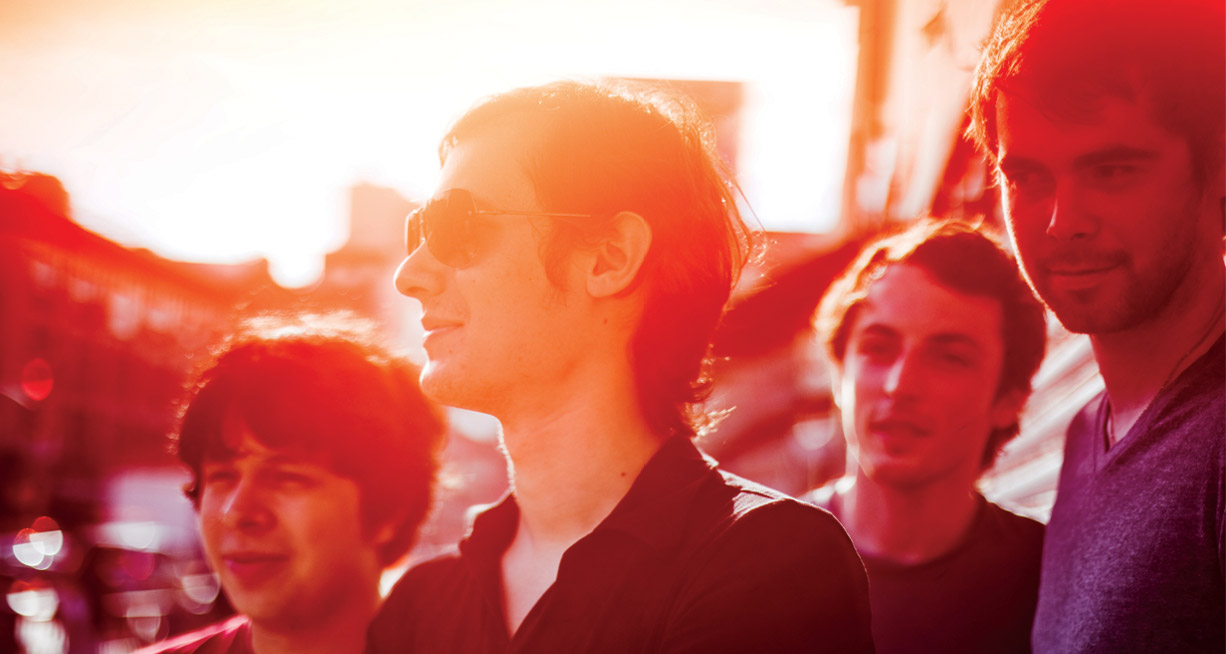
In their 15 years as a band, Calexico’s Joey Burns and John Convertino have built their music around being on the road. It’s as evident in their thematic lyrics as it is in their sound — which, though it’s been described as Southwestern or “desert noir,” really can’t be pinned to one region. The two have drawn musical influences from around the globe because that’s exactly where they’ve been.

With Road Atlas, Calexico compiles eight of its off-the-map recordings from the past 13 years, including live sets and self-released tour albums. Selections from Road Atlas, its mini-edition, combines 16 of those live cuts, exclusively available tracks, and film-score vignettes.

Latin American influences permeate throughout, especially in the musical snippets from the documentary Circo and several other tunes with Mariachi-tinged guitars. But there’s also plenty of the band’s balladry (“Griptape”) to go with lap-steel guitar swells (“All the Pretty Horses”), Italian Western motifs (“Glowing Heart of the World”), and jazzy post-rock (“Cachaça”).

In a sense, the band has mapped out the detours in its history, taking listeners to places where few have been.

ALARM spoke with Burns to discuss the band, where it has been, and where it wants to go.

Why did you decide to re-release these albums? How much of the material never has been released in some form?

All of the music has been released previously on CD in small numbers, which we’ve sold while out on tour, hence the “tour only” title. However, almost all of the albums are made from studio recordings and not live-show recordings.

Your music is often described as “desert noir.” To what extent do your surroundings shape your music?

That’s an interesting term, and oddly enough our friend and journalist Fred Mills came up with the term while living in Tucson, Arizona. I think it taps into an important part to the music we make, but there’s a lot more that defies the description. We love changing things up stylistically and instrumentally, so much so that the band name has come to mean more than a regional influence and more about an aesthetic and openness in philosophy.

Where do you find your inspiration on the road?

There’s a lot of stories and inspiration passed on from speaking with people that we meet on tour. I love talking with workers, café owners, people on the street or who work at the venues. If we can get away from the venue and get into town or to museums, it always seems to have a positive influence on the show that same night. It may inspire a new song to be made up on the spot. Those improvisations during the live show and in the studio are some of the more interesting moments as a band.

Morrow vs. Hajduch

Morrow vs. Hajduch: Jacaszek’s Glimmer

Scott Morrow is ALARM’s music editor. Patrick Hajduch is a very important lawyer. Each week they debate the merits of a different album.

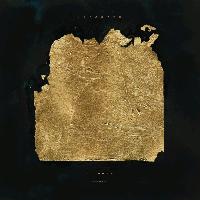
Jacaszek: GlimmerJacaszek: Glimmer (Ghostly International, 12/6/11)

Jacaszek: “Dare-gale”

[audio:https://alarm-magazine.com/wp-content/uploads/2011/11/Jacaszek_Dare-gale.mp3|titles=Jacaszek: “Dare-gale”]

Hajduch: I first heard Polish composer Michał Jacaszek when his music shuffled onto my headphones at an ungodly early hour while walking through a very crowded airport, and it was all at once calming and perfectly fitting. Jacaszek’s compositions make moody, atmospheric ambience using a classical palette, with bowed strings, operatic voices, and chimes to construct a brooding build.

His new album, Glimmer, is his first for Ghostly International, whose ambient compilation SMM: Context featured Jacaszek alongside like-minded modern/gloom/ambient merchant (and MvsH alumnus) The Fun Years, among others.

Morrow: Though this might be misclassified as an electronic album — partly due to its affiliation with Ghostly — it’s almost entirely an ambient classical release. There’s enough digital treatment and rearrangement to warrant a partial electronic tag, but it’s otherwise a very organic album. Jacaszek wrote and recorded the acoustic-guitar and mellotron passages, and then he enlisted a number of other Polish musicians to play the harpsichord and clarinet parts. It’s all a very stirring mix, with the harpsichord, bass clarinet, guitar, and vibraphone — not to mention the washes of fuzz — creating a richness of texture.