Trash Talk

Trash Talk: Living Hardcore at Breakneck Speed

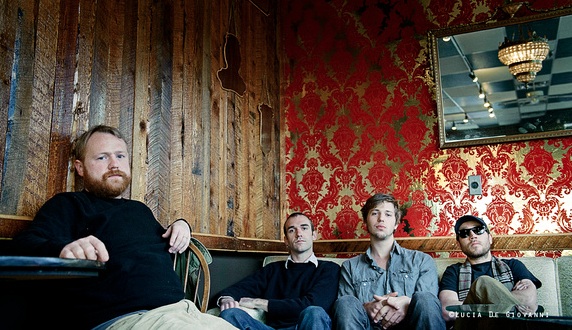
In 2008, Sacramento-based hardcore band Trash Talk recorded an album with legendary producer Steven Albini. That record, a self-titled, 12-song, 14-minute barnstormer was the first to be released after the band separated from its former label and launched its own: Trash Talk Collective.

Little Dragon

Pop Addict: Little Dragon’s Ritual Union

Every Thursday, Pop Addict presents infectious tunes from contemporary musicians across indie rock, pop, folk, electronica, and more.

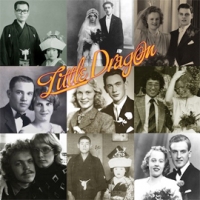
Little Dragon: Ritual UnionLittle Dragon: Ritual Union (Peacefrog, 7/26/11)

Little Dragon: “Ritual Union”

[audio:https://alarm-magazine.com/wp-content/uploads/2011/07/Little_Dragon_Ritual_Union.mp3|titles=Little Dragon: “Ritual Union”]

In the early 2000s, music exported from Sweden was notorious for its rock-n-roll demeanor. With acts like The Hives, The Sounds, and The Caesars coming of age in the earlier part of the last decade, the Scandinavian country quickly became associated with fast, raucous, danceable, and sometimes absurd music. But in the last five years or so, a new sensibility has emerged from Sweden. More soft-spoken, musically inclined acts, like Jose Gonzales or The Tallest Man on Earth, have emerged, and with them, a new style has been established. Among this new wave of Swedish exports is the highly acclaimed mellow-wave act, Little Dragon.

With its debut in 2007, the band made a name for itself in its home country as a digital minimalist. Its 2009 effort, Machine Dreams, garnered a bit more attention, but it wasn’t until Little Dragon collaborated with Gorillaz on Plastic Beach that much of the indie scene started paying attention. And now, with Ritual Union, the band has managed to release its best effort yet.

Serengeti

Guest Playlist: Serengeti

Serengeti: Friends and FamilySerengetiFamily and Friends (Anticon, 7/19/11)

Serengeti: “Ha-Ha” (f. Otouto)

[audio:https://alarm-magazine.com/wp-content/uploads/2011/08/04_Ha-Ha.mp3|titles=Serengeti: “Ha-Ha” (f. Otouto)]

Native Chicagoan rapper Serengeti, a.k.a. David Cohn, has built a small but rabid following thanks to a unique, occasionally farcical style and a tireless work ethic. His latest album, entitled Family and Friends (out now on Anticon), enlists some notable producers: Yoni Wolf of Why? and Owen Ashworth of Casiotone for the Painfully Alone. The result is a hop-hop album free of undue posturing — operative beats stripped of excess ornament, a rapid, clear cadence — that captures the oft-neglected storytelling aspect of rhyming.

As his unorthodox sound suggests, Serengeti’s musical background is littered with non-rap milestones. And, as many of us can relate, his early musical education was composed of the stuff his parents played in the car and at home. We had him compile a playlist of such tunes. Without further ado:

Songs My Parents Liked That Stuck With Me
by Serengeti

Father and mother and I recently drove to NYC from Chicago. I was the first time I was in the same car as both of them in about 30 years. We listened to these songs a lot. I knew them all; it was great.

1. My parents split when I was very young. Mother would pick me up some weekends, and she’d always play this Mabel Mercer song, “Did you Ever Cross Over to Sneden’s.” Great song about longing to live on the other side. Alec Wilder wrote the tune.

“Did you ever cross over to Sneden’s / Where the white houses cling to the hill? / Did you ever cross over to Sneden’s? / Do you think that you ever will?”

2. Carmen McRae: “I’m Coming Home Again”

“The poets cried for dreams they never saw / The only certainty is nothing’s sure / And most things stay the same / Or go back where they came”

Written By Carole Sager and Bruce Roberts. Her voice is my favorite.

Melvins

Guest Spots: The Melvins relive the highlights of the Endless Residency Tour

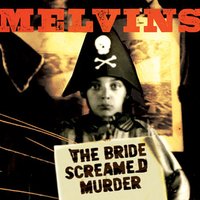
Melvins: The Bride Screamed MurderMelvins: The Bride Screamed Murder (Ipecac, 6/1/10)

Melvins: “The Water Glass”

[audio:https://alarm-magazine.com/wp-content/uploads/2011/07/melvins_thewaterglass.mp3|titles=Melvins: “The Water Glass”]

Last year, sludge-rock band the Melvins released its 20th album (and third since linking up with Big Business members Jared Warren and Coady Willis). That album, entitled The Bride Screamed Murder, is emblematic of what the band has done its whole career: tweak its signature sound — part anthemic classic rock, part avant-garde heaviness — to present something entirely new yet quintessentially Melvins. That willingness to shake things up has been a major factor in the band’s longevity.

After last year’s release, the band undertook a tour in early 2011, playing a different album from its back catalog each night. As the saying goes, you get what you give, and in this case, the Melvins’ 30-year history of experimentation has continually rewarded the band with new experiences. Dale Crover, drummer and founding member, recounts the band’s some of the most memorable recent experiences below.

Endless Residency Tour
by Dale Crover

The Melvins did a residency every Friday night last January in Los Angeles. To make each show unique, we decided to play a different record from our ever-growing catalog of releases. It seemed to go over really well, and since we took the time to learn all these records, we decided to take it on the road. Here are some highlights from the “Endless Residency” tour.

Austin Texas: Austin shows are always great, except for the heat. It’s 100 degrees out, and of course we’re playing outside! The show goes well, but by the end, the “costume” that I’m  wearing feels like a soaking-wet sleeping bag. The next day we meet up with our friends from the band Honky to get lunch. Everyone I know that lives in Austin says that the BBQ downtown is average, and they know where the best is. We drive miles out of town to a place in Spicewood, Texas, called Opie’s BBQ. We’re greeted by a guy who opens a large trough with 10 different kinds of smoked meat. We let the Honky boys order for us, then sit down to stuff our faces. It was certainly worth the trip, and I highly recommend the spicy corn! After the feast, we stop by Willie Nelson‘s recording studio. Honky just recorded there. No Willie, but we  got the full tour, including seeing the tape vault with Red Headed Stranger master tapes! I was also highly impressed by the nine-hole golf course next door. Maybe we’ll do our next record there!

Sole & The Skyrider Band

Q&A: Sole & The Skyrider Band

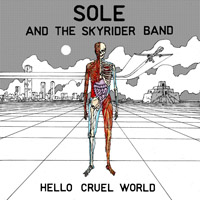
Sole & The Skyrider Band: Hello Cruel WorldSole & The Skyrider BandHello, Cruel World (Fake Four Inc., 7/19/11)

Sole & The Skyrider Band: “Hello, Cruel World”

[audio:https://alarm-magazine.com/wp-content/uploads/2011/07/Sole__the_Skyrider_Band_Hello_Cruel_World.mp3|titles=Sole & The Skyrider Band: “Hello, Cruel World”]

Citing differences in vision for his label and a desire to release music independently, Tim Holland split in 2010 with the Anticon collective that he helped to found. Now, with his faithful Skyrider Band at his side, Holland has released his first official release as Sole since the departure, and it’s another bold chapter in a bold career.

Skyrider, which has been the force behind Sole’s sonic development over the past few years, now sets a surprisingly mainstream and orchestral backdrop for Holland’s rhymes, which have slowed and become more decipherable — but no less potent in criticism. As he explains below, Holland wanted Hello, Cruel World to sound more like a “big rap album,” and it accomplishes the feat with club beats, vocoder-inspired choruses, and a posse of collaborators (Sage Francis, Xiu Xiu, Lil B, and many more). But the musical backdrop also is more cerebral and beautiful, thanks in part to the talents of band member and film-score composer William Ryan Fritch (a.k.a. Vieo Abiungo).

Holland also is keeping busy with DIY videos and his Nuclear Winter mixtape series, which employs the Situationist détournement technique of “turning expressions of the capitalist system against itself.” In this case, it’s taking hits by Lil Wayne, Rihanna, and the like and dropping politically current themes on them. Here Holland explains this mixtape concept while discussing the state of the world and the Sun Tzu-inspired direction of his new album.

Now three albums into recording with Skyrider, how do you feel that your sound has evolved since joining forces?

It’s pretty crazy, really. When we started out, all I wanted was to be a hip-hop version of Godspeed You! Black Emperor, and somehow along the way, we listened to way too much Young Jeezy and Lil Wayne in the car. The rest is history, I guess! For a while, The Skyrider Band was living in LA and working a lot with Telephone Jim Jesus, and Skyrider really came into its own on the production tip.

A member of Skyrider (William Ryan Fritch) has experience scoring films. How much did he influence the orchestral accents of Hello, Cruel World?

Ryan has always been way too talented for his own good. On our past work, we weren’t experienced enough with how to make the band aesthetic work for a hip-hop album, and I feel like through all of Ryan’s work with real composers, doing film scores, working with Asthmatic Kitty, and branching out on his own, he has a really solid grasp of what to add to Skyrider’s beats to take them over the top. The big surprise on this album is his vocal contribution; he’s able to layer my off-key singing with his beautiful crooning and really make stuff sound great.

Hello, Cruel World has a much more radio-friendly sound and even features Melodyne software (similar to vocoder software) in many choruses. Was there any deliberate decision to target a broader audience to get your messages across?

Yes, there was. In Sun Tzu’s Art of War, he says you can’t keep attacking using the same method; in order to succeed, you have to surprise your opponents. I had listened to gangster rap so much that its influence and aesthetic had taken over what I did, and coincidentally, that is what the hip-hop people are listening to right now. It wasn’t so much an opportunistic move as it was a natural evolution. So we thought it would be an interesting gamble to try to make an album that would be an SSRB take on Jay-Z or TI — a big rap album. What I like about those albums is that they all collaborate with their homies and put each other on. After years of mainly writing music alone, it was really fun to try to collaborate with some of my favorite artists. Usually, when people use these styles, they try to be ironic, but we take rap music very seriously.


Moses Supposes

Moses Supposes: Why you should think twice before joining ASCAP, BMI, or SESAC (Part I)

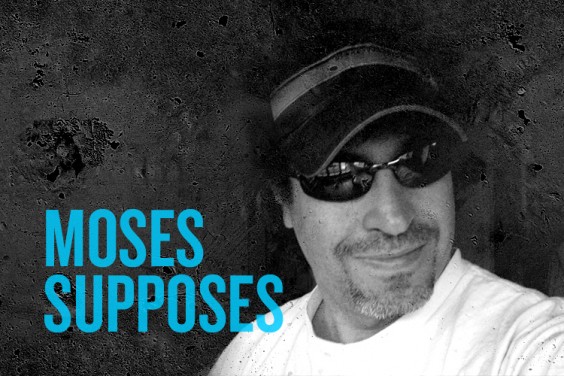
Moses Avalon is one of the nation’s leading music-business consultants and artists’-rights advocates and is the author of a top-selling music business reference, Confessions of a Record Producer. More of his articles can be found at www.mosesavalon.com.

It’s one of the top-10 questions that I’m asked: ASCAP, BMI, or SESAC — which one should I join? Here’s a rock-‘n’-roll answer: How about none of them? At least not right away.

All of these competing performing-rights organizations (PROs) spend a great deal of their members’ money selling “belonging,” as if there is an immediate benefit to membership, like collecting money that they have been holding for you. But experience indicates that you’d be better off waiting to sign with any of them. Wonder why? Here’s the truth about PROs in this three-part series taken from Moses Avalon’s latest book, 100 Answers to 50 Questions on the Music Business.

ASCAP (American Society of Composers, Authors, and Publishers) and BMI (Broadcast Music, Inc.) — often called the “Coke and Pepsi” of performing-rights organizations — will both tell you that it is irrational not to join one of their organizations. They collect the bulk of all the performance royalties in the US, and will assure you that you cannot get your share unless you are a member.

In their pitch, they will make it sound as if your music is already out there earning money, and the PRO is just holding it for you, like a bank, waiting for your application. But the truth is that unless you write a hit song or a soundtrack for a TV show like The Simpsons, you are unlikely to see any significant royalties, even if you are a member.

That said, the real question is not whether to join, or which one to join, but rather when the right time to join either ASCAP or BMI is. (SESAC is by invitation, and so the pros and cons outlined here are not really applicable.)

Many people who are new to the industry think that they should sign with one or the other as soon as they can. The lavish events that both ASCAP and BMI host make one think that joining means there is an immediate chance to collect money. This is not true. Even if you are a member, you only get paid if:

1. There is money to collect for your musical works, and more importantly…

2. You meet their requirements to receive money after you join.