Q&A: Spindrift

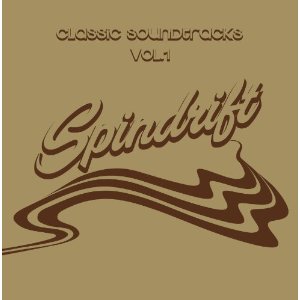
Spindrift: Classic Soundtracks Vol. 1 (Xemu, 5/10/11)

Spindrift: “Theme From Confusion Range”

[audio:https://alarm-magazine.com/wp-content/uploads/2011/04/04-Theme-from-Confusion-Range.mp3|titles=Spindrift: “Theme from Confusion Range”]

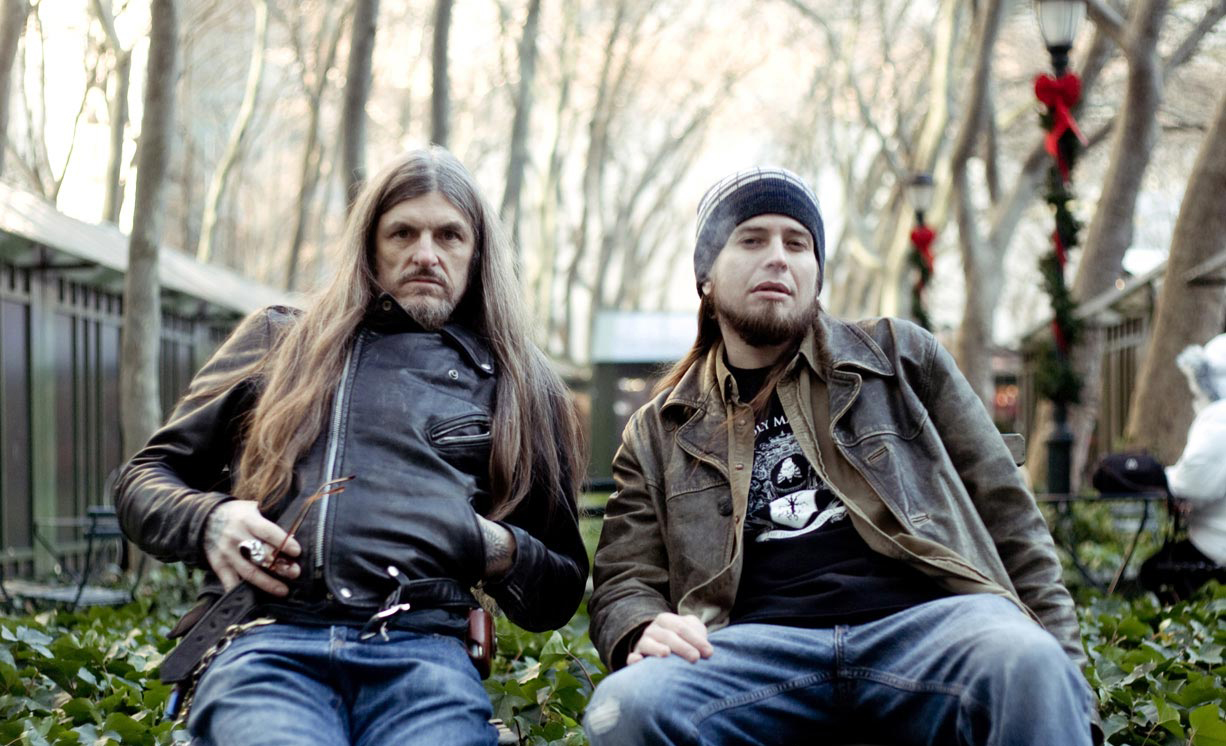
Mixing influences from Italian-western composers like Ennio Morricone with elements of psychedelic rock, Spindrift has pioneered its own brand of western music. Its style is manifested through a diversity of sounds, including guitar, organ, pedal steel, flute, autoharp, sitar, tabla, and bass, but its musical résumé is more than merely instruments.

After a successful Kickstarter campaign, Spindrift recently recorded an album of unreleased movie themes and new material.  That album, Classic Soundtracks Vol. 1, captures the band’s eclectic nature and cinematic tendencies. Here, founder Kirpatrick Thomas elaborates on the forthcoming album, the impact of the desert environment on the band’s music, and the similarities between western scores and psychedelic rock.

What inspired you to use Kickstarter for Classic Soundtracks‘ fundraising as opposed to other, more traditional means of establishing a budget?

For us, Kickstarter was a great way to raise a recording budget and get friends, fans, and family directly involved in the making of our next album. We realized that we needed $5,000 and had a seven-week US tour ahead of us, so, along with touring and promotion, we created awareness about our upcoming project. At every show, we performed the new songs, then, after seven weeks, we had our goal and jumped into the studio to record. We had the time of our lives recording this record, and we wanted it to translate.

Classic Soundtracks was recorded in Hicksville Trailer Palace, and Spindrift was the first band to record a full-length album there. Can you explain why you chose this particular setting for recording?

Many of the songs that we’ve written for Classic Soundtracks were birthed in the desert. Thus we wanted to lay them to rest (as in the final recorded track) in the desert as well. We actually would write and rehearse for a bit in the Gram Parsons death room at the Joshua Tree Inn. Keeping true to faith, Hicksville is a stupendous facility for being relaxed, isolated, productive, and creative. It’s a beautiful place, and recording in Joshua Tree was a dream come true. Highly recommended!
Charles Bradley

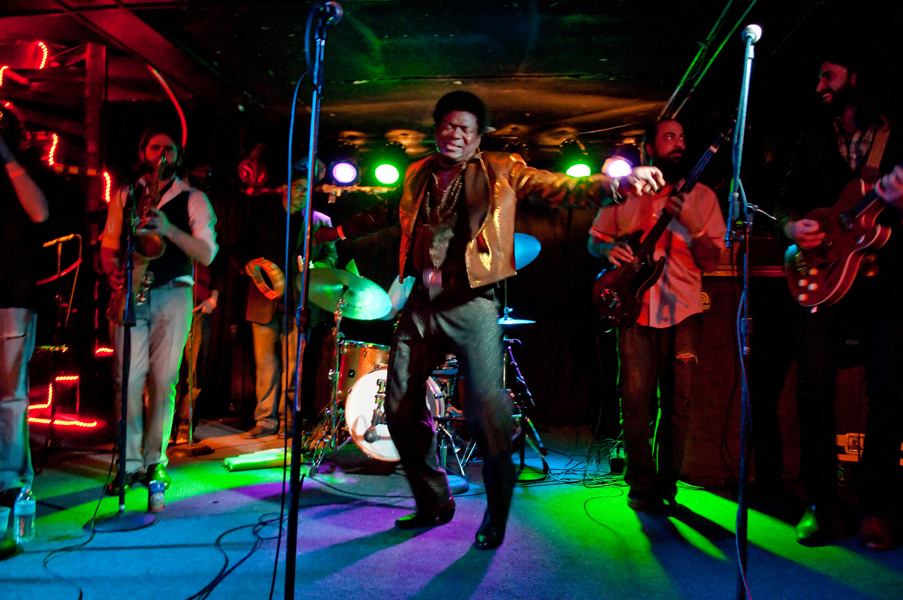
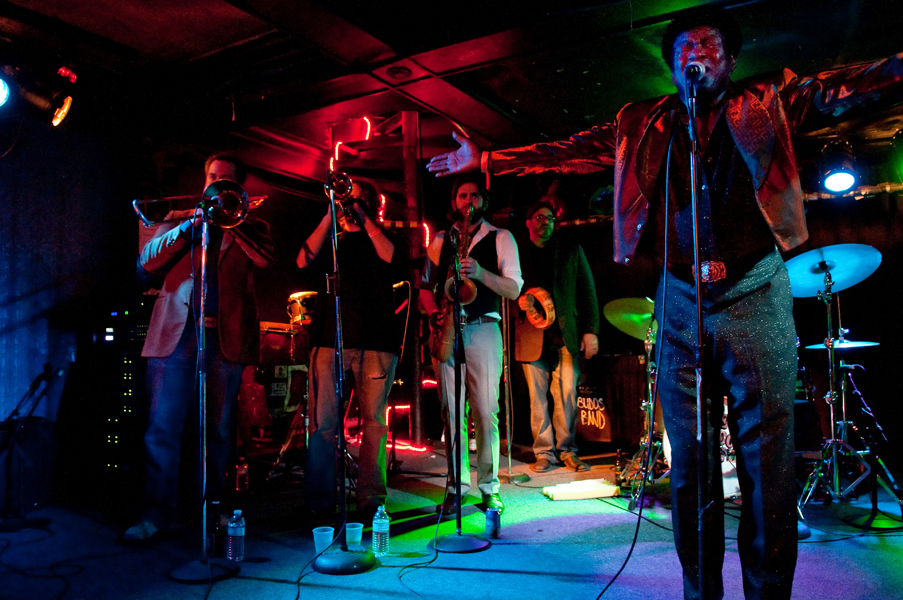
Concert Photos: Charles Bradley & The Budos Band @ Subterranean (Chicago, IL)

Much has been made of Charles Bradley‘s sudden emergence in the limelight, after many years of performing a James Brown tribute act under the name Black Velvet. In this rare instance, the hype is matched by the music — and then some.

Bradley’s acclaimed new album, No Time For Dreaming, is out now on Daptone imprint Dunham. Earlier this year, the soul singer joined Sharon Jones and the Dap-Kings on a US tour, then teamed with The Menahan Street Band for a few European dates, and he just completed a Midwest leg with The Budos Band. These shots, from photographer Tammi J. Myers, are from the recent, sold-out show at Subterranean in Chicago.

Charles Bradley

Moses Supposes

Moses Supposes: 19 Music Conferences Ranked

Moses Avalon is one of the nation’s leading music-business consultants and artists’-rights advocates and is the author of a top-selling music business reference, Confessions of a Record Producer. More of his articles can be found at www.mosesavalon.com.

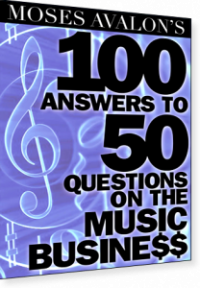
Moses Avalon: 100 Answers to 50 Questions on the Music BusinessMoses Avalon: 100 Answers to 50 Questions on the Music Business (Hal Leonard, 12/15/10)

With more than 100 music-business conferences in the US alone and most emerging musos on a limited budget, which ones are really worth the investment? The following is an excerpt/sample chapter from the revolutionary new book on music-business survival,
100 Answers to 50 Questions on the Music Business, by industry veteran Moses Avalon. Enjoy.

Maybe for many, the idea of spending thousands of dollars to schlep through airports and hotels for several days, only to end up with a handful of cards/CDs from people in the music business that they will never remember, is dumb. Or maybe it’s worth every dollar and minute that you can spare.

They say that you have to kiss a lot of frogs to find a prince. If you think so, there are a bevy of music-business functions that serve this philosophy. There are medium-grade ones geared towards the college-music scene, like CMJ, as well as high-end ones, like MIDEM, where people with far more dollars than sense fly to the south of France and stay in four-star hotels just to mingle with French lingerie models. (Wait, that’s starting to sound kinda cool.)

Some of these conferences are very useful, but most have become showcases for already-financed acts, not places where true “emerging” artists can get a fair shake — despite what they advertise. The panels often are a disappointment, filled with self-serving pitchmen from unions, PROs, and “indie services,” making it very hard to extract any objective information.

Okay, enough of the dark side. What’s the appeal?

Because the music business is about connections, you need to make as many as you can. Given this reality, I’d say that conferences are a must — as many and as often as you can. But with limited resources, how do you discriminate?

Eskmo

Eskmo: Hypnotic Electronics Guided by Intuition

Eskmo, a.k.a. San Francisco-based electronic musician Brendan Angelides, isn’t big on descriptions; he prefers to have his music speak for itself. And speak it does, with clear-eyed synth melodies and crunchy dubstep polyrhythms.

The Waitiki 7

World in Stereo: The Waitiki 7’s Waitiki in Hi-Fi

World in Stereo examines classic and modern world music while striving for a greater appreciation of other cultures.

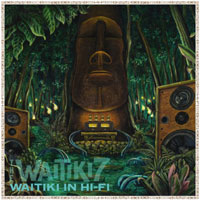
The Waitiki 7: Waitiki In Hi-FiThe Waitiki 7: Waitiki in Hi-Fi (Pass Out, 4/12/11)

The Waitiki 7: “Ouanalao”

[audio:https://alarm-magazine.com/wp-content/uploads/2011/04/06-Ouanalao.mp3|titles=Waitiki 7: “Ouanalao”]

When Dwight Eisenhower signed the bill admitting Hawaii into statehood in 1959, Americans were living in a post-WWII United States, ready to forget and eagerly optimistic to start anew.  Though a standard history book will tell you that everyone was consumer-crazy and making a lot of babies, it won’t tell you that a large percentage of the populace was listening to exotica.

Borne out of Hawaii’s post-war music scene, exotica is marked by its lounge-like feel, a tropical summation of Pacific, Caribbean, and Latin sounds fused with American pop and jazz.  As a precursor to the modern world-music movement, artists like Martin Denny and Les Baxter introduced stateside audiences to new sounds and rhythms.  By the 1970s, exotica was snooze-worthy, stock-heavy pop, but a listen to the golden-era recordings exposes some groove-heavy material with plenty of progressive rhythms and dreamy, vibraphone-drenched melodies.

Fortunately, Oahu-based The Waitiki 7 has managed to steer clear from contrived kitsch to bring modern sensibility to exotica’s late-’50s to mid-’60s pinnacle sound.  As heard on its 2009 debut, Adventures in Paradise, and on the 2010 follow-up, New Sounds of Exotica, the septet builds on Latin-jazz foundations with an ear for vintage and retro qualities.  Now the band is releasing a set of alternative studio takes from both records with Waitiki in Hi-Fi, a vinyl-only release that will have you dusting off that vintage Crosley record player.

TV on the Radio

Pop Addict: TV on the Radio’s Nine Types of Light

Every Thursday, Pop Addict presents infectious tunes from contemporary musicians across indie rock, pop, folk, electronica, and more.

TV on the Radio: Nine Types of LightTV on the Radio: Nine Types of Light (Interscope, 4/11/11)

TV on the Radio: “Caffeinated Consciousness”

[audio:https://alarm-magazine.com/wp-content/uploads/2011/04/TV-On-The-Radio-Caffeinated-Consciousness.mp3|titles=TV on the Radio: “Caffeinated Consciousness”]

In 2009, TV on the Radio announced that it was taking a break. After years of crafting futuristic, genre-bending soundscapes, the band had decided to take a step back, take a breather, and entertain other endeavors. However, after several critically acclaimed albums, the decision to split seemed sudden and a bit disappointing. After all, the hiatus was announced not too long after the release of the band’s arguably best achievement, Dear Science, a showcase of everything from relentless outer-space indie to beat-infused dance pop, computerized schizophrenia, and soft atmospherics. But it actually looks as though the break did some good: the band has returned rejuvenated and self-assured with its latest effort, Nine Types of Light.

From the onset of the new album, TV on the Radio comes off as revitalized and refreshed. Downplayed is the frantic, fast-paced rock gems that usually sit atop the track lists of albums past. Instead, the band ushers in softer, sophisticated melodies — more mindful of arrangements than how many different noises can be jammed into a track. The first three songs are lighter and more delicate (but still showcase the band’s signature multi-instrumental tendencies), as if the band was in a very good place when the songs were written. But TV on the Radio’s strongest suit has always been molding all of its musical differences together and shaping them into one cohesive sound. Nine Types of Light continues that trend seamlessly.