

Marissa Nadler

Review: Marissa Nadler’s The Sister

Marissa Nadler: The Sister

Marissa Nadler: The Sister (Box of Cedar, 5/29/12)

“The Wrecking Ball Company”

[audio:https://alarm-magazine.com/wp-content/uploads/2012/05/Marissa_Nadler_The_Wrecking_Ball_Company.mp3|titles=Marissa Nadler: “The Wrecking Ball Company”]

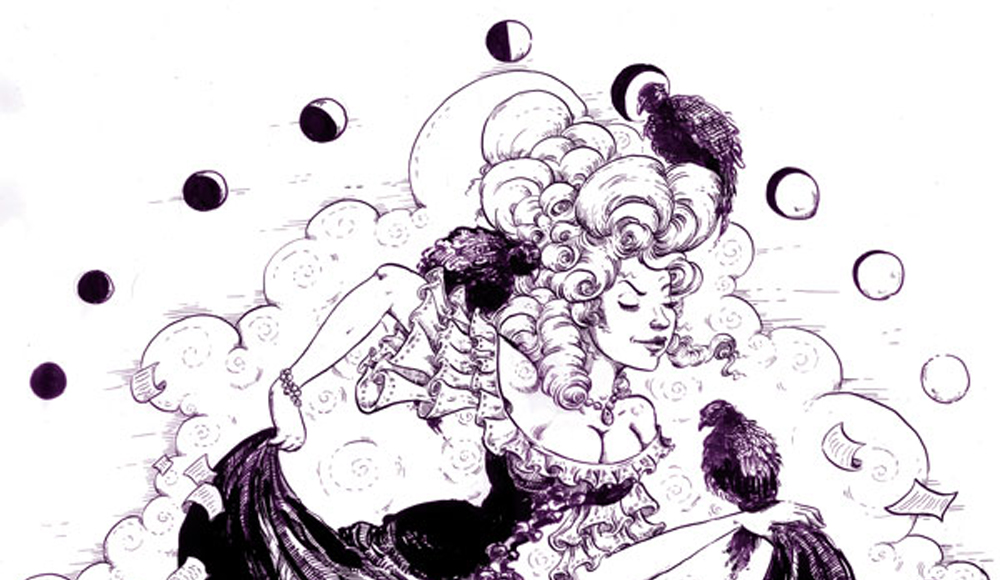
Last year, Boston-based singer-songwriter Marissa Nadler released an album that oozed with sad-stringed lamentations and haunting folk dreamscapes. The self-titled release solidified Nadler’s brand of elegant and convoluted spook-folk. Each track let listeners delve a little deeper into her mysterious songwriting realm: part fairy tale, part dirge, part diary entry. The album was readily equipped with intricate acoustic finger-picking, sonorous harmonies, and melancholic modishness. More importantly, though, it established Nadler’s voice as a dominant force in indie folk, giving her a leg up on many of her peers.


A Place to Bury Strangers

Video: A Place to Bury Strangers’ “You Are the One”

New York-based noise-rock trio A Place to Bury Strangers is releasing its third full-length album, Worship, via Dead Oceans on June 26. Together since 2003, the band is characterized by wailing guitar and fuzz, causing it to be called on more than one occasion “the loudest band in New York.”

“You Are The One” certainly is loud, but its atmospheric qualities set the mood for its grindhouse-inspired video. Filming on 16mm helps complete the ’70s B-movie vibe, while particularly dark Blue Velvet-esque moments assure that it’s NSFW.

Tim Fite

Video: Tim Fite’s “Bully”

Tim Fite is a particularly unique artist, one whose indefinable catalog has ranged from alt-country to hip hop. Notorious for his ironic lyrics, graphic artistry, and atypical fashion sense, he remains an authentic voice in independent music with a bevy of solo albums.

Sigur Rós

Review: Sigur Rós’ Valtari

Sigur Rós: ValtariSigur Rós: Valtari (XL, 5/29/12)

“Ekki Múkk”

[audio:https://alarm-magazine.com/wp-content/uploads/2012/05/Sigur_Rós_Ekki_Múkk.mp3|titles=Sigur Rós: “Ekki Múkk”]

Things haven’t looked good for Icelandic “post-rock” act Sigur Rós in recent years. In light of the front-man Jónsi’s well-received solo album Go and massive world tour, an “indefinite hiatus” looked more like an end. The band even scrapped an entire album that it recorded in 2009. Speculation about the band’s future has been intense: when it announced its sixth studio album, Valtari, rumors ranged from the overly optimistic (that it was one of two new albums) to the dire (that the quartet was splitting up for good).

The truth turned out to be a bit muddier. The band wasn’t breaking up, but multi-instrumentalist string arranger Kjartan Sveinsson was sitting out the forthcoming tour. In other news, the band is releasing a “mystery film” for each song — videos made by directors working independently of one another. As for Valtari, the band’s new album, it makes a statement of its own.

Spindrift

Video: Spindrift’s “Theme from Ghost Patrol” (colorized)

Psychedelic-rock band Spindrift formed in 1992, but only after the passing of numerous years and considerable line-up changes did the group become successfully settled in the stylized western sound that it possesses today. Having been inspired by, as well as a part of, numerous film scores, its newest album, Classic Soundtracks, Vol. 1 (Xemu), reflects the group’s preoccupation with surrealism and classic cinema.

The Graphic Canon, Vol. 1: Dangerous Liasons

Book review: The Graphic Canon Vol. 1

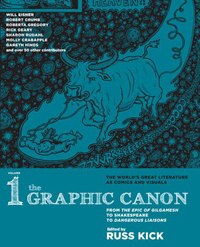
The Graphic Canon, Vol. 1 Russ Kick: The Graphic Canon Vol. 1 (Seven Stories, 5/22/12)

Graphic-novel adaptations of classic literature are a dime a dozen these days, but rarely have they been organized or anthologized so well as in The Graphic Canon. The first volume of The Graphic Canon (“From The Epic of Gilgamesh to Shakespeare to Dangerous Liaisons”) is chock full of comic-book goodness and covers a lot of ground, especially considering that this is just the first part of the so-called canon.

Featuring graphic-novel re-tellings of everything from Babylonian tablets to a Japanese Noh play, Canon (and its two later volumes, which focus on the 19th Century and modern literature respectively) certainly addresses a wide breadth of content, even if the graphic-novel form makes for some sacrifices in terms of depth. After all, it’s hard to get a true sense of Popol Vuh in so few pages, but these abridged classics often work as entertaining new tales in their own right.