Eli Keszler: Cold Pin

Mechanized music marks Eli Keszler’s “L-Carrier” installation

The ambitious 28-year-old musician, composer, and visual artist Eli Keszler has an exciting month and road ahead of him. On June 5, he is releasing a two-CD compilation via Berlin-based PAN entitled Catching Net, and on June 7 he will perform alongside his newest installation piece, “L-Carrier,” at Eyebeam Art & Technology Center in New York City. The live event will be streaming at http://turbulence.org/works/l-carrier, and the installation will remain at Eyebeam through June 23.

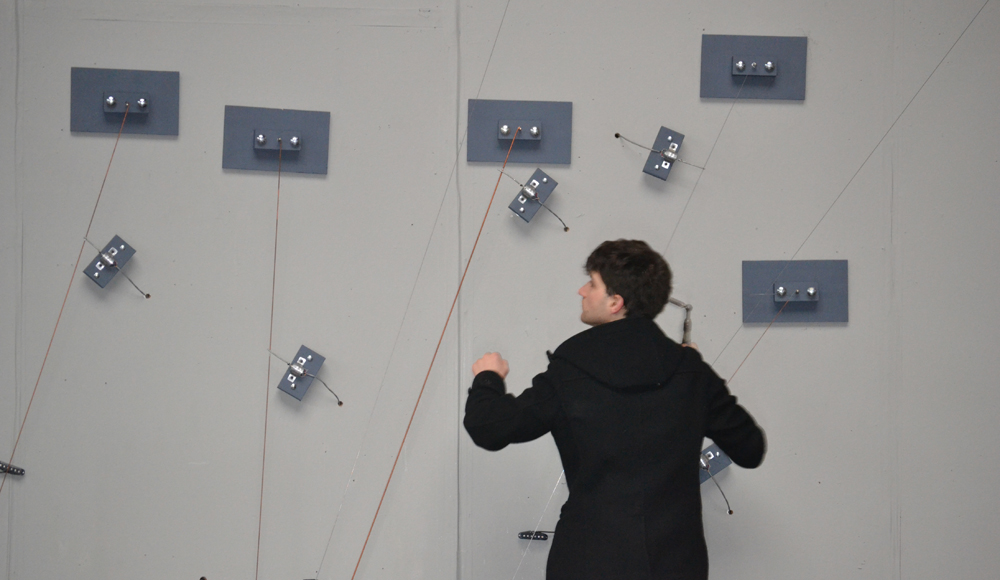
Catching Net assembles selected old and new compositions that also can serve as stand-alone installations. It’s mostly centered around “Cold Pin,” which uses motorized arms to pluck, tap, and scrape against piano wires of varying lengths to produce percussive noise that is abrasive yet musically resonant.


Kate Beacon: Dude Watchin' With the Brontes

Book review: Hark! A Vagrant

Kate Beacon: Hark! A VagrantKate Beaton: Hark! A Vagrant (Drawn and Quarterly, 9/27/11)

Even if you’ve never heard of Kate Beaton, you’ve probably seen her work. Beaton, a Nova Scotian cartoonist and webmistress of harkavagrant.com, has quickly become a mainstay of Internet and blog culture, with her comics being re-posted around the Web and shared widely between bloggers, history buffs, and readers. Her sharp and somewhat absurd humor and casual riffing on history are instantly recognizable, and have earned Beaton a number of fans and accolades in the six years that harkavagrant.com has been online.

Bill Brown: Dreamwhip #14

Zine Scene: Bill Brown’s Dreamwhip

Bill Brown: Dream WhipBill Brown: Dreamwhip (Microcosm)

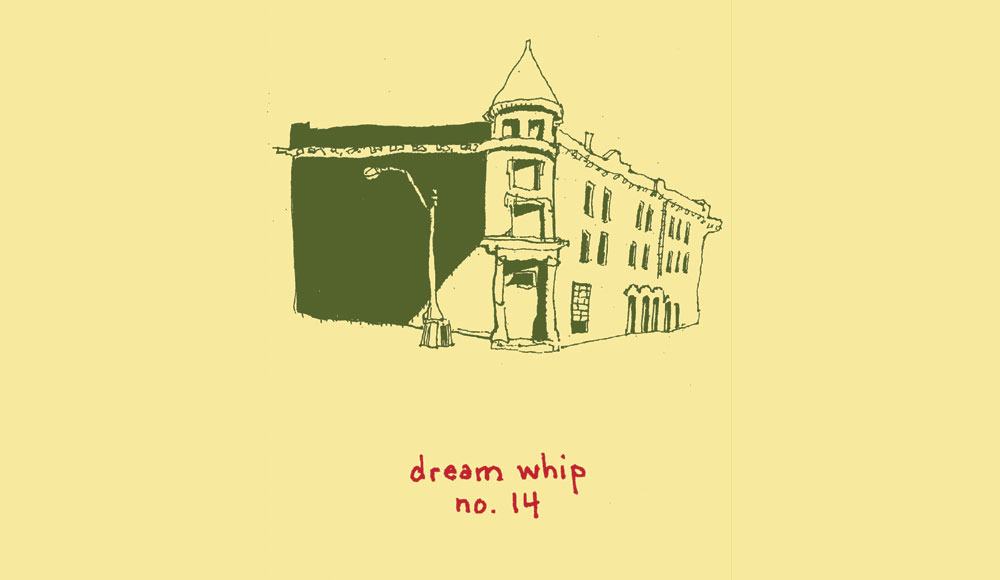
Most of us don’t feel like we have time to drive around or see the world. We have commitments, responsibilities — what we see as our lives, basically. We think of ourselves as stationary individuals, and traveling is something that we do for a week or two, maybe, when we’re not too busy or when we’ve been planning this for months in advance. Thinking of a life in non-stationary terms involves a huge shift in our frame of reference in order to even imagine the possibility. And yet there are others, for whom driving and drifting is life. Travel is almost a compulsion; being grounded takes on a new meaning in the context of highways, and living is defined as something else entirely.

Ryan Cecil Smith: SF Supplementary File #2

Zine Scene: Ryan Cecil Smith’s SF Supplementary File

Ryan Cecil SmithRyan Cecil Smith: SF Supplementary File (Closed Caption)

Space-age mystery, kitschy thrills, and futuristic adventure — what more could the discerning zine reader want? SF Supplementary File is the brainchild of Ryan Cecil Smith, an American-born cartoonist living and working in Nishinomiya, Japan.

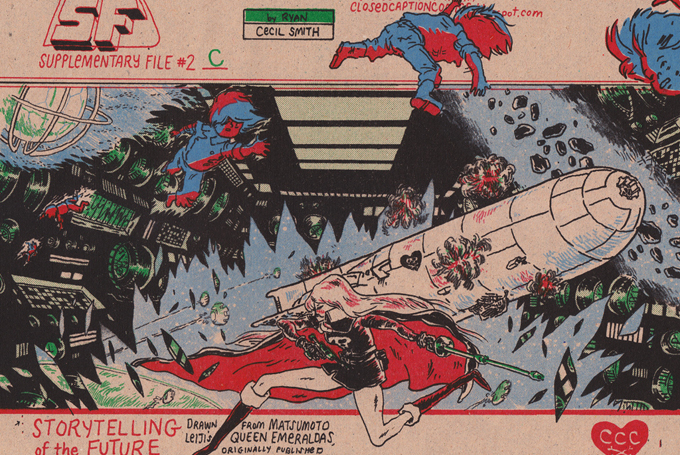
The first SF and SF Supplementary File were part of the same coming-of-age saga in space, a mini-comic throwback to the Golden Age of pulp science fiction. SF Supplementary File #2, however, goes even further; the zine is “a hand-drawn, hand-written reproduction from Matsumoto Leiji’s 1979 science-fiction manga series Queen Emeraldas in three parts.” This piece of the ’70s, lovingly updated, offers the nostalgic thrill of cross-cultural and cross-generational kitsch reconfigured into a jewel-toned, hand-assembled, risograph-printed zine.

Abner Smith: "The CIA Makes Science Fiction Unexciting"

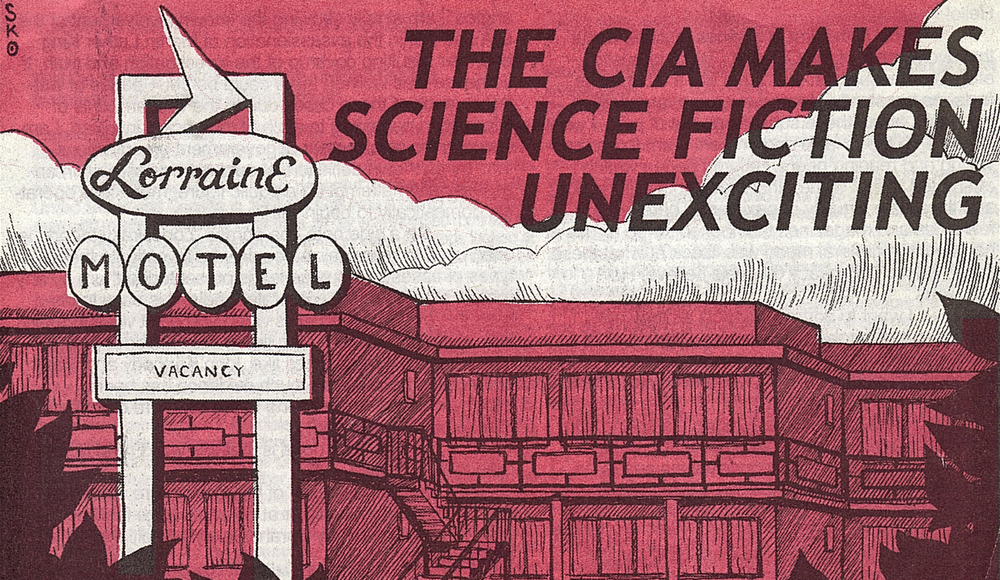
Zine Scene: Abner Smith’s The CIA Makes Science Fiction Unexciting

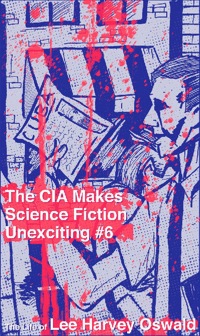
Abner Smith: The CIA Makes Science Fiction Unexciting #6Abner Smith: The CIA Makes Science Fiction Unexciting #6 (Microcosm)

For more than a decade, zine writer Abner Smith has tackled what we usually consider USA-related “conspiracy theories” in The CIA Makes Science Fiction Unexciting. The series’ six issues delve into the shocking details of Martin Luther King Jr.’s assassination, HIV, Iran-Contra, and more. Smith’s writing reacts against both the personal-story vogue in the zine genre and the uncritical eye that most people give to historical accounts (you can read more about Smith in a wonderful interview with his publisher).

In each issue, Smith shows that all it takes is a little digging to uncover a more complex and troubling version of historical events than what the authorities or the media report. Reprints of all six of his zines are available through Microcosm, including his newest: an updated biography of Lee Harvey Oswald.

J Gerlach: Simple History series

Zine Scene: J Gerlach’s Simple History Series

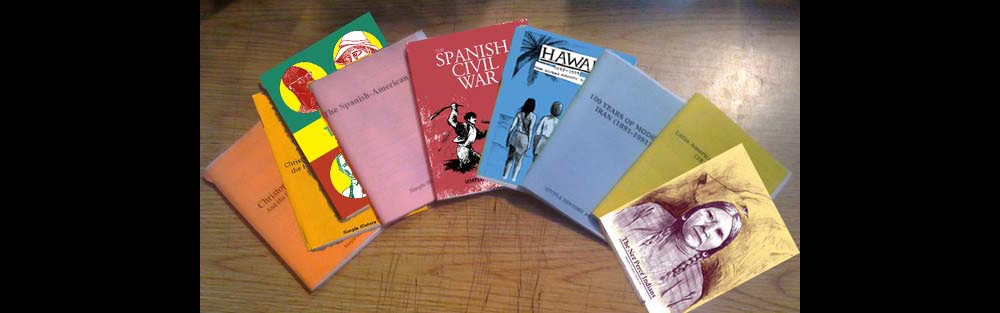
J Gerlach: Simple History SeriesJ Gerlach: Simple History Series (Microcosm Publishing)

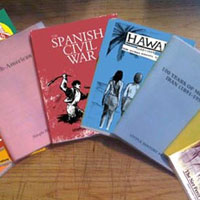
The history textbook might seem like an odd choice to adapt to a zine format. On a shelf full of comics, perzines, and essays, you wouldn’t really expect to find a history of modern Iran or the Nez Perce Indians. J Gerlach’s Simple History series (Microcosm), however, aims to change that. Each edition chronicles a decisive moment or movement in world history, condensing a story to the 50-page chapbook format. These books provide an insightful and informative antidote to the bulky historical tome usually found at schools or libraries. Additionally, the presentation breaks significantly with the mainstream idea of “history;” a sort of micro-People’s History of the United States, Gerlach looks at these events with a leftist, anti-imperialist, and sharply critical approach that’s in contrast to many established historical interpretations.

Al Burian

Zine Scene: Al Burian’s Burn Collector

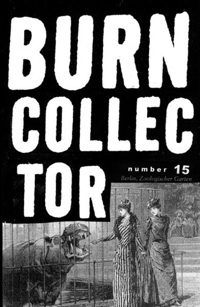
Al Burian: Burn Collector #15Al Burian: Burn Collector #15 (Microcosm Publishing, 3/1/11)

For a purported personal zine, Al Burian’s Burn Collector is strangely outward-looking. His philosophical musings on expat culture, life in Berlin, punk rock, and other topics are based on his own experiences, but they aren’t just stories. Burian raises plenty of questions without answering them, putting his reader in a position to consider these everyday ideas in a new light. His essays are a fine counterpoint to the legions of navel-gazing zinesters that populate the perzine genre in that they aren’t meant to chronicle his life, but instead connect it with larger social and existential problems.

Zine Scene: Adam Gnade’s Hey Hey Lonesome and The Heat and the Hot Earth

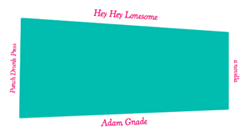
Adam Gnade: Hey Hey LonesomeAdam Gnade: Hey Hey Lonesome and The Heat and the Hot Earth (Punch Drunk Press, August and December 2011)

When writers or readers think of literary formats, the lowly novella is often overlooked or forgotten. Usually between 20,000 and 40,000 words, the novella occupies an awkward space between short story and novel, but it offers opportunities for characterization and conciseness that longer or shorter forms don’t. Adam Gnade writes both novellas and novels, and his shorter works stand apart as fascinating experiments in an unusual media form.

Hey Hey Lonesome and The Heat and the Hot Earth were published in 2011 and share a lot in terms of structure and characterization. Both follow a group of teens (and one older character) in Southern California as they navigate relationships and try to find their place in an amorphous social order. Lonesome follows the paths of several characters as they move toward a house party; they move between astonishingly crude and aloof dialogue and highly emotional introspection. Its characters, for the most part, balance outer cool and inner turmoil. Hot Earth is more dynamic and simpler in structure; punctuated by a longing letter and a sneering Tumblr post from two characters, it reflects the callousness and romanticism of the modern teen.

The two novellas are connected through recurring characters and themes, and Gnade notes that he ultimately wants to link these stories with his longer novel, Hymn California, and another novella. Gnade says, “The whole universe of my characters is mapped out in a little three-inch-thick notebook. It’s like a geometric cube of paper. I’m just following that map until it’s done.” The connectedness of the stories gives the novellas a feeling not unlike those big ensemble teen comedies of the ’80s and ’90s; characters move in and out of each other’s orbits, brushing against each other as they go.

Zine Scene: Phase 7

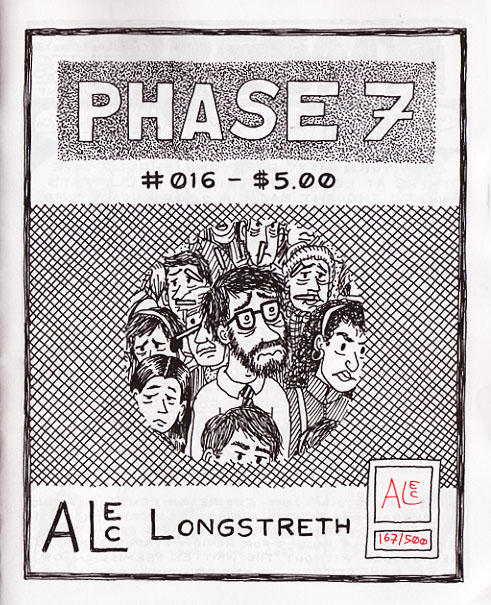
Alec Longstreth: Phase 7Alec Longstreth: Phase 7

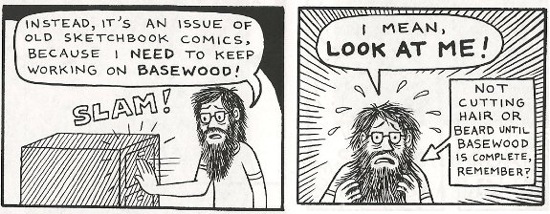
The personal zine or “perzine” genre is one of the most popular in independent publishing (we’ve covered a few here, like EmiTown and King-Cat). It can be hard to distinguish yourself in such a crowded field, but Alec Longstreth’s Phase 7 stands out. Published by the author since 2002, Phase 7 is a series of minicomics, most recently alternating between five-issue adventure story “Basewood” and sketchbook issues on the artist’s life. It’s personal, funny, and, incredibly, quite original.

Despite its most recent form, Phase 7 is much more than “Basewood” and even departs frequently from personal stories. As Longstreth says, “The subject matter of each issue of Phase 7 varies widely, depending on what kind of stories I want to tell. I’ve done auto-bio, attempts at serious fiction, humor, comics essays, stick-figure diary comics, and sketchbook issues.” Variety is the key to Longstreth’s longevity, but it also seems like the outgrowth of a natural impulse to continue experimenting and learning.

Issue #16 in particular covers Longstreth’s years in New York, struggling to make a living and forget old loves while pursuing new ones. He also includes plenty of absurd and charming interactions with New Yorkers on the subway or in parks. Random denizens of the city approach him to offer encouragement on his drawing, or simply to yell at him. We see Longstreth at work, out with friends, on dates, and in a wide variety of ways, adjusting to life in New York.

Alec Longstreth: Basewood