CMJ 2011

Contest: Win a five-day pass to CMJ 2011

From October 18 – 22, New York City’s finest venues, nightclubs, and theaters will be taken over by musicians, music-industry professionals, college-radio nerds, filmmakers, and critics. Yes, it’s back: the CMJ Music Marathon and Film Festival.

Notable bands scheduled to perform include: Trash Talk, Parts & Labor, Davila 666, A Place to Bury Strangers, the Doomtree crew, Talkdemonic, Mexicans with Guns, and Kylesa. Seeing so many concerts, screenings, and panels normally comes at a pretty steep price, but we’ve teamed up with CMJ to give away two five-day passes. Total retail value of one pass alone is $495 and will give its bearer access to any event, provided that it’s not sold out or at capacity.

To enter to win, fill out the form below by the end of Thursday, October 13. By entering your information, you’ll also be signed up to receive ALARM’s weekly E-mail newsletter, The ALARMIST.

Battles

Concert Photos: Battles @ The Vic (Chicago, IL)

Descending once again upon the Windy City, Battles brought its three live members — drummer John Stanier, multi-instrumentalist Ian Williams, guitarist/bassist Dave Konopka — and a couple of digital friends. The trio was flanked by two tall projection screens, which allowed them to jam alongside video recordings of Gloss Drop guest vocalists Gary Numan, Kazu Makino, and Yamantaka Eye. As usual, the stage floor was packed with pedals, controllers, laptops, synths, and all other manner of loop-friendly gadgetry. Photographer Wallo Villacorta captured these images of the explosive performance at The Vic.

Battles

Primus

Primus: Back on the Bike, Going “Green”

[Chromatic, our 400-page exploration of musicians and color, is out now. Order here!]

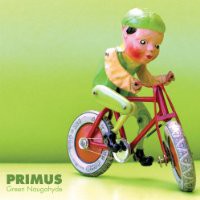
Primus: Green NaugahydePrimus: Green Naugahyde (ATO / Prawn Song, 9/13/11)

Primus: “Tragedy’s a’Comin'”

[audio:https://alarm-magazine.com/wp-content/uploads/2011/09/Primus_Tragedys_AComin.mp3|titles=Primus: “Tragedy’s a’Comin”]

“It’s kind of like trying to describe a wine,” chuckles Primus bandleader/bassist Les Claypool. “Everybody has their different adjectives that they use.”

Responding to the suggestion that the oddball Bay Area trio’s new album, Green Naugahyde, was recorded and mixed with a more transparent “sound” than previous work, Claypool doesn’t necessarily agree or disagree. The album is the band’s first full-length in 12 years, and listeners, of course, are bound to draw their own conclusions.

“Whatever ‘transparent’ means to you,” he continues, “might be different than what it means to me. From a production standpoint, the approach to this thing was very similar to what we’ve always done, which is record ourselves at my house. Over the years, I’ve collected a bunch of old vintage gear — we recorded to tape through an old API console, so it’s a very clean, very crisp, very clear recording. And for the most part, we weren’t coloring things after the fact. It was going to tape as raw as we could possibly put it to tape. But there’s also a lot of contrast between the individual songs.”

Chris Connelly

Guest Spots: Chris Connelly’s track-by-track breakdown of Artificial Madness

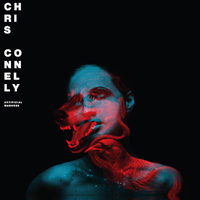
Chris Connelly: Artificial MadnessChris Connelly: Artificial Madness (Relapse, 11/8/11)

Chris Connelly: “Wait for Amateur”

[audio:https://alarm-magazine.com/wp-content/uploads/2011/10/Chris_Connelly_Wait_for_Amateur.mp3|titles=Chris Connelly: “Wait for Amateur”]

Chris Connelly, formerly a member of industrial bands Ministry and Revolting Cocks, is set to release his 15th solo album in November. Entitled Artificial Madness, the record is guitar-driven rock that wears its contrasting pop and post-punk influences proudly. A month before its scheduled release, Connelly took some time to run through each song, explaining lyrical content and narrative themes.

Track-by-Track Breakdown of Artificial Madness
by Chris Connelly

Here is a breakdown to the lyrics on Artificial Madness. I’ve never really done this before. It’s always been my intention to leave a lot of things ambivalent, giving the listener a few red herrings here and there. Perhaps I’ll leave some stuff buried in there…

1. “Artificial Madness”
The protagonist is not really a person — more of a collective consciousness built from panic and paranoia. The city and landscape are fabricated, and all the aggressors or distractions are metaphors. Here we have the crux of the album: the “artificial madness” brought on by the deity that is technology. It can be used to enslave parts of our minds, conscious or subconscious, and it can also serve as a control tactic and a mind-numbing drug. Why do we feel the need to talk and keep in touch with each other so much? Because we are panicking and fearing some sort of apocalypse? I recently read that the Taliban turned off all cell-phone communication at 8 PM in an urban area that they had control over. Control and fascism — always at work.

2. “Wait for Amateur”
The emperor’s new clothes. A satirical song about modern pop culture using modern theater (namely Samuel Beckett’s Waiting for Godot). Can you tell if the play is being superbly or horribly acted? Are the actors playing us? Taking us for a ride? Is the director making fools of the actors? (Make a mark in the ground with a primitive tool.)

3. “Classically Wounded”
A high-speed chase on a wet night, and a violinist is ultimately impaled on his/her own violin bow. A cautionary tale.

4. “Cold Blood in Present Company”
War being waged via technology, misinformation, independent contractors (mercenaries), and the torture of innocents to glean information that will result in the deaths of thousands. Like I said earlier, fascism is very good at adapting to the times.


The Groove Seeker: Mayer Hawthorne’s How Do You Do?

On a biweekly basis, The Groove Seeker goes in search of killer grooves across rock, funk, hip hop, soul, electronic music, jazz, fusion, and more.

Mayer Hawthorne: How Do You Do? (Universal Republic, 10/11/11)

Mayer Hawthorne: “A Long Time”

[audio:https://alarm-magazine.com/wp-content/uploads/2011/10/02-A-Long-Time-mastered.mp3|titles=Mayer Hawthorne: “A Long Time”]

As the soul revival sound goes, Mayer Hawthorne is in a league of singers who strike the proper balance between old school and new school. Yes, the singer’s act takes greatest influence from the early Northern soul era, but there’s more to Hawthorne’s music than a game of name-that-classic-45.

In exception to the Impressions EP and the New Holidays cover on his 2009 debut, A Strange Arrangement, Hawthorne’s music is wholly original. He shows his appreciation for the throwback song-craft by mirroring its fundamentals: carefully placed horn sections, sweet harmonies, tight group-vocal backing melodies, and exceptionally smooth and polished arrangements.

For his sophomore effort, Hawthorne reaches deeper into the late-’60s, early-’70s reference bag to make a no-frills record packed with tolerantly addictive soul hooks. How Do You Do? covers a lot of ground and shows some new sides to Hawthorne’s musical palette with cleaner and more robust production and instrument arrangements. Whether or not his jump to Universal Republic from Stones Throw has anything to do with it is arguable, but Hawthorne finds a way to use time-honored soul maxims to forge an individual sound.