Morrow vs. Hajduch

Morrow vs. Hajduch: Dave Douglas’ Orange Afternoons

Scott Morrow is ALARM’s music editor. Patrick Hajduch is a very important lawyer. Each week they debate the merits of a different album.

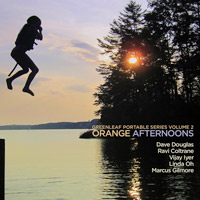
Dave Douglas: Orange AfternoonsDave Douglas: Orange Afternoons (Greenleaf, 8/30/11)

Dave Douglas: “Solato”

[audio:https://alarm-magazine.com/wp-content/uploads/2011/09/Dave_Douglas_Solato.mp3|titles=Dave Douglas: “Solato”]

Morrow: Without room to properly bill it in our title, Orange Afternoons is the new installment of the Greenleaf Portable Series, a return to the informal jazz sessions of yore. Though all of the compositions are credited to all-star trumpeter Dave Douglas, it features a similarly famous/standout cast, including saxophonist Ravi Coltrane, pianist Vijay Iyer, bassist Linda Oh, and drummer Marcus Gilmore. It’s a traditional but engaging display of jazz melody and dexterity.

!!!

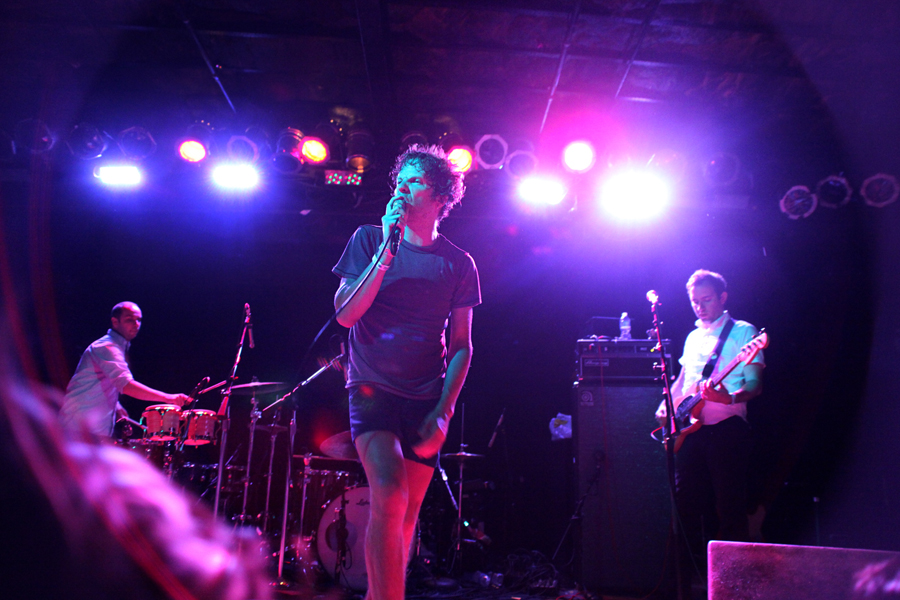
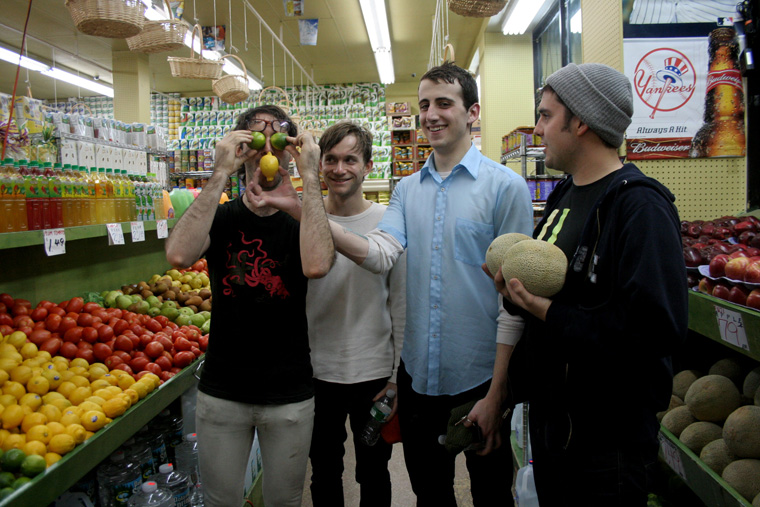
Concert Photos: !!! @ Bottom Lounge (Chicago, IL)

After completing a busy summer-festival circuit (SXSW, Sasquatch, Bonnaroo, Coachella, and Bilbao, in Spain), dance-punk band !!! brought its high-energy tunes to Chicago recently. Contributing photographer Elizabeth Gilmore was on hand at the Bottom Lounge to capture all of the sweaty action. The band chugged and churned through tracks from its 2010 album, Strange Weather, Isn’t It?, among other crowd favorites from its back catalog. According to !!!’s website, its members will be taking some time off from touring soon to work on a new album.

!!!

Rasputina

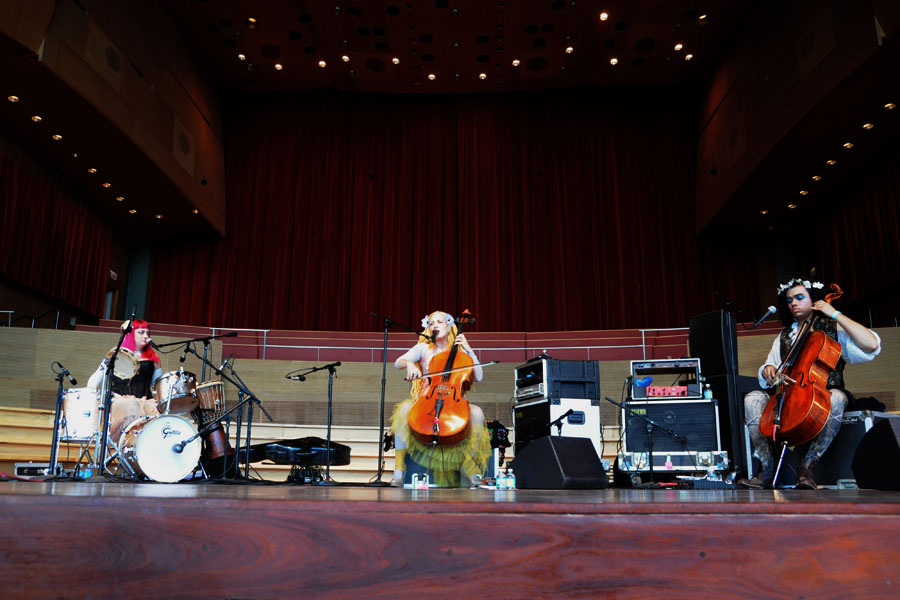
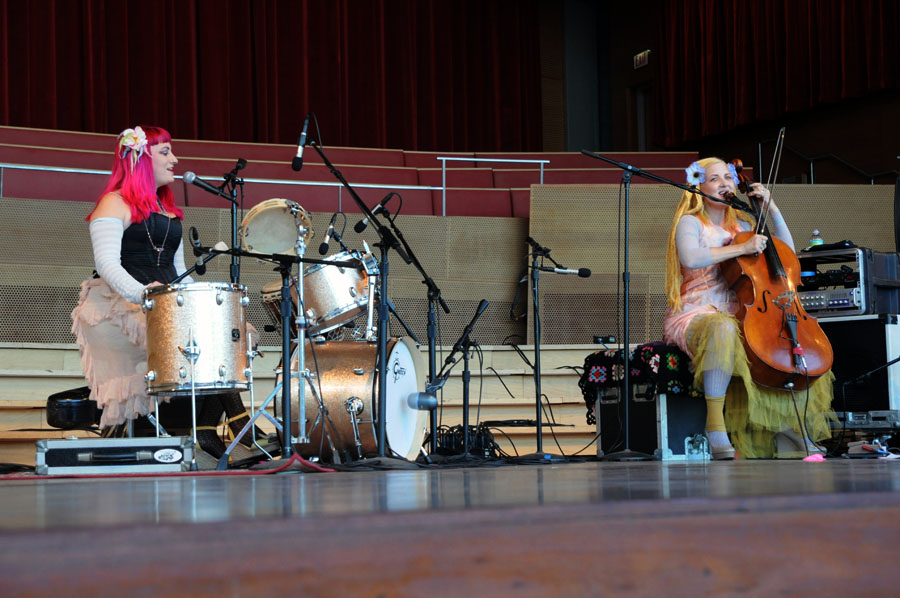
Concert Photos: Rasputina @ Pritzker Pavilion (Chicago, IL)

In August, neo-classical cello-rock band Rasputina took to Pritzker Pavilion in Chicago’s Millennium Park. The diverse audience, befitting a free summertime show, spread across the lawn and listened intently until triggered into laughter periodically by lead singer Melora Creager’s quaint, endearing banter between songs.

At one point in the band’s set, Creager explained what a song was actually about, declared that it was not a “popular” theme, and asked that the audience help her fabricate a new, more popular song. It was all in jest, but the audience ate it up and bellowed absurd topics, which the band fused to create an even more absurd introduction to the song. Later, right before plucking into “Secret Message,” Creager said, “I think, next, I will play one of our many science songs, this being the physics department of our [music].”

– Text by Mojdeh Stoakley / photos by Lauren Hermann.

Rasputina

Cymbals Eat Guitars

Pop Addict: Cymbals Eat Guitars’ Lenses Alien

Every Thursday, Pop Addict presents infectious tunes from contemporary musicians across indie rock, pop, folk, electronica, and more.
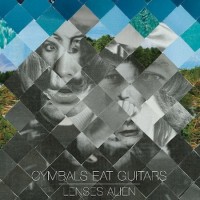
Cymbals Eat Guitars: Lenses AlienCymbals Eat GuitarsLenses Alien (Barsuk, 8/30/11)

Cymbals Eat Guitars: “Rifle Eyesight (Proper Name)”

[audio:https://alarm-magazine.com/wp-content/uploads/2011/08/CymbalsEatGuitars_RifleEyesightProperName.mp3|titles=Cymbals Eat Guitars: “Rifle Eyesight (Proper Name)”]

A couple of years ago, Staten Island-based Cymbals Eat Guitars released Why There Are Mountains, an arresting, noisy display of off-kilter rock songs mixed with a few hooks and left turns. For many listeners, the album came out of left field. Its raucous guitars, crashing drums, and frantic vocals made Cymbals Eat Guitars an instant sensation in the indie-music scene, and soon, it was one of the most respected bands — and one of the best surprises — of 2009.

Now, two years later, the band that’s often touted as being “on the rise” has returned with its second effort. Lenses Alien, the band’s first offering since signing to Barsuk, looks to establish the band as a staple in indie rock.

Lenses Alien picks up where Why There Are Mountains left off, and builds indispensably upon the recklessly nurtured garage rock that the band has seemed to perfect in its short career. Pinpointing the band’s sound is a tad difficult — the music has elements of the PixiesPavement, and Pinback — but it keeps in step with tried-and-true lo-fi methods. Indeed, with Lenses Alien, Cymbals Eat Guitars has added another chapter to the musical styling of its solid debut. With album opener “Rifle Eyesight (Proper Name)” clocking in at more than eight minutes, and riveting tracks like “Keep Me Waiting” and “Shorepoints,” the band seems intent on hitting listeners with the full force of its grunge-meets-pop capabilities.


Morrow vs. Hajduch

Morrow vs. Hajduch: Noxious Foxes’ Légs

Scott Morrow is ALARM’s music editor. Patrick Hajduch is a very important lawyer. Each week they debate the merits of a different album.

Noxious Foxes: LégsNoxious Foxes: Légs 2xLP (Broth IRA, 7/26/11)

Noxious Foxes: “Doth Shalt Noth”

[audio:https://alarm-magazine.com/wp-content/uploads/2011/08/Noxious_Foxes_Doth_Shalt_Noth.mp3|titles=Noxious Foxes: “Doth Shalt Noth”]

Morrow: In the vein of Hella and other masterful duos that overachieve with layered loops and hot licks, Noxious Foxes is a pair of like-minded guitar/drums artists. The music, though technical, is rooted more in melody and groove than Hella — somewhere closer to Spencer Seim spinoffs The Advantage or sBACH if you were to further force the comparison.

Guitarist Justin Talbott pulls double duty with synths and electric pianos over the guitar loops, adding a tinge of the Blood Brothers aesthetic to the mix. (There isn’t a pair of sassy-as-fuck vocalists, however.) And the occasionally 8-bit-esque synths add to the video-game vibe that the guitars give off, making the Advantage comparison more apt, even if there are no Contra covers.

Anarchist Bike Rally: Confidential Mad Libs

Zine Scene: Anarchist Bicycle Rally: Confidential Mad Libs

Anarchist Bike Rally: Confidential Mad LibsJoe BielAnarchist Bicycle Rally: Confidential Mad Libs (Cantankerous Titles, 2011)

Many bicycle enthusiasts (and city dwellers) will likely be familiar with Critical Mass. Groups of cyclists ride through urban areas in order to slow traffic and promote cycling over use of automobiles, often using disruption to increase awareness of their cause. Though often a minor inconvenience to some motorists (thus reinforcing the cyclists’ pro-bike message), Critical Mass can be, to hear Anarchist Bike Rally: Confidential Mad Libs tell it, nothing less than a scourge for cops.

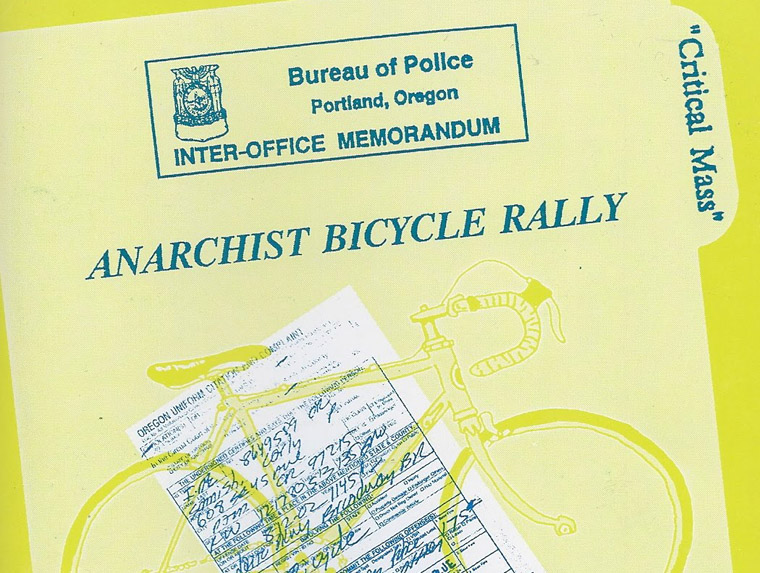
Detailing the history of Portland’s Critical Mass movement through 12 years of internal police documents, Anarchist Bike Rally shows the police department’s annoyance, anger, and finally acceptance and cooperation with Critical Mass.

Beginning with documents dating from 1993, Anarchist Bike Rally follows the Portland police as they sit in on Critical Mass meetings, try to predict routes, issue citations, arrest the more disorderly members of the movement, and spend thousands of dollars of police resources to contain groups that, in early years, rarely exceeded 30 participants. Detailed reports follow a narrative that should be familiar to anyone who has taken part in a political action; police confusion gives way to monitoring, attempts to minimize the impact on other citizens, and later communication and cooperation with the activists.

Critical Mass presents a challenge for these cops, however, in that it purposely lacks a clear leader, making the rides that much harder to manage. Trial and error characterizes the police response until the early 2000s, when permitted rides became more common. To make matters worse, early reports show that police seemed to barely recognize the rides as a political statement, instead treating them as unusually organized acts of hooliganism. The riders easily use police confusion to their benefit, avoiding their chaperones and increasing visibility of the rides.