
Q&A: The Dirt Daubers

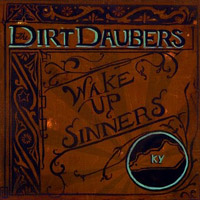
The Dirt Daubers: Wake Up, Sinners!The Dirt Daubers: Wake Up, Sinners! (Colonial Knowledge / Thirty Tigers, 9/13/11)

The Dirt Daubers: “Wake Up, Sinners!”

[audio:https://alarm-magazine.com/wp-content/uploads/2011/08/The_Dirt_Daubers_Wake_Up_Sinners.mp3|titles=The Dirt Daubers: “Wake Up, Sinners!”]

The Dirt Daubers is a slight change of pace for JD Wilkes, the wild front man for the raucous, rockabilly-inspired blues-punk band The Legendary Shack Shakers. Joined by his wife, Jessica Wilkes, and Shack Shakers bassist Mark Robertson, Wilkes has slowed down a bit to help craft ragtime-inspired country blues. The trio’s sophomore album, Wake Up, Sinners!, finds JD’s gritty and rumbling vocals balanced by Jessica’s rich tones and harmonies, floating over finger-picked banjo, bellowing blues harp, and thumpin’ bull fiddle.

The Southern gothic lyrics spin tales of traveling outsiders, a strong-willed woman, and the true tale of a misunderstood boogey man from the deep woods of Kentucky. The trio’s toe-tappin’ rhythms and earnest sincerity are apt ingredients for a slice of Americana. ALARM caught up with JD to ask about the roots of The Dirt Daubers and what’s up next.

What compelled you to start The Dirt Daubers?

I made a documentary called Seven Signs, a movie about Southern culture and music, that was selected by the Raindance Film Festival in London, England. The festival coordinators told me they would pay for my flight over if I came and played some music. My wife and I had been practicing banjo music, somewhat in secret, so I talked her into going. We got flown over, got wined and dined, played the gig, and had a blast. It was my first time playing banjo in public and her first time playing in front of people ever. Why, Les Claypool, of all people, was in attendance and told us it was great. So we decided to press onward and upward…eventually becoming the Dirt Daubers!

Is there a necessary balance between The Legendary Shack Shakers and The Dirt Daubers? What purpose does each band serve for you?

The Shack Shakers is the wholesale flaunting of my unfettered id. The Dirt Daubers puts a completely different demand on my skill set as a musician. In this band, if I stop playing banjo, there’s a huge hole in the song. So, yes, I like this new challenge of being responsible for the bulk of the band’s sonics.

Moses Supposes

Moses Supposes: Why you should think twice before joining ASCAP or BMI, part III: Who pays more?

Moses Avalon is one of the nation’s leading music-business consultants and artists’-rights advocates and is the author of a top-selling music business reference, Confessions of a Record Producer. More of his articles can be found at www.mosesavalon.com.

In Part I of this three-part series, I addressed the key question: Should you bother to join either PRO? Part II dealt with the fallacy of ASCAP and BMI’s self-postulated “nonprofit” status BS and the PR they spread at trade shows as to why this makes them better than SESAC. Here in Part III, we’re getting to the bottom line: Who pays more?

But first…

Let me start by making one thing perfectly clear: Even though this entire three-part series has been about vetting the sales pitches, organizational structures, and payment methods of the two main US-based performing-rights organizations (PROs), ASCAP and BMI, the economic viability of the writers of popular music would be endangered, and the music business in general would suffer, without them.

The PROs, aside from collecting money for writers and publishers, also support the music community by giving grants to charities and helping writers get loans and receive healthcare benefits. They also go to great lengths to ensure that writers get paid their share of royalties, even if a writer is un-recouped with his or her publisher. These services have an important impact on our community and deserve recognition and consideration. But you can read more about these good deeds on their websites (here and here).

Here’s what you wont read…

Who pays more?

When it comes to up-front money, BMI has been known, on rare occasions, to offer non-recoupable advances (called “guarantees”) to superstars, whereas ASCAP is emphatic that it will not ever give advances, because it claims that its internal policies won’t allow it. However, it is no secret that it has, in fact, given recoupable advances in the multiple millions of dollars to several of its superstar writers.

So on the advance side of the argument, BMI wins, hands down.

The case for who pays more when it comes to dispersants, however, is where it gets amusing. Reps from both PROs make the claim that they pay the same as the other. However, this is about as truthy as the public policies regarding advances. There are myriad songwriting teams where each member was signed to a different PRO, yet their checks for the same song in the same pay period were very different. The fact that this happens with some degree of frequency begs the question: How can any discrepancies occur between them if they are, as commonly referred to, like Coke and Pepsi, and function identically?

There are two factors that help explain the why their payments can be so different:

1. How much does the PRO actually spend to collect your money?

2. What method does the PRO use to calculate what it owes you?

We covered the first point in the first two parts of our series (part Ipart II), so let’s look at the second point listed above. To do that, we have to look at the PROs’ “pooling system.”

Q&A: Marissa Nadler

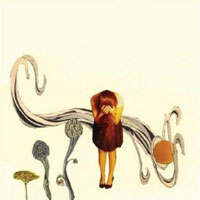
Marissa Nadler: s/t Marissa Nadler: s/t (Box of Cedar, 6/14/11)

Marissa Nadler: “The Sun Always Reminds Me of You”

[audio:https://alarm-magazine.com/wp-content/uploads/2011/08/03-The-Sun-Always-Reminds-Me-of-You.mp3|titles=Marissa Nadler: “The Sun Always Reminds Me of You”]

An RISD grad, multi-medium craftswoman, and self-taught guitarist, New England singer-songwriter Marissa Nadler has been no stranger to the creative outlets of music and fine arts since her youth.

Choosing to take the musical route shortly after college, the mezzo-soprano holds a discography of acoustic neo-folk that spans nearly a decade. Nadler made her US debut with Ballads of Living and Dying on Eclipse Records, establishing herself as a solo artist with enchanting reverberations, finger-picked guitars, and intoned legatos. Over subsequent albums, her sound and accompaniment expanded, culminating in a fuller, more mature sound.

Her new, self-titled album was funded through fan contributions on Kickstarter and Etsy and has since been released on her own imprint, Box of Cedar Records. Here she discusses her musical paths and the new approaches for her new album, which includes a greater country-western influence.

Why did you decide to pursue a career in music rather than the fine arts, bearing in mind you never received any formal music training?

I still dabble in the fine arts and am starting to get serious about painting again. I just go through waves with what medium I am interested in, but I don’t think the medium you use really makes a difference. I see painting and music as having similar meaning in my life. I got a really direct feeling of expression from music. In some ways, I think formal training in an art form can be kind of a hindrance because you start to intellectualize everything. Sometimes when I paint, I start to say, “This looks like this…” and with music, it still feels like I am discovering things each time I pick up the guitar. I do wish that I could read music and want to learn.

Morrow vs. Hajduch

Morrow vs. Hajduch: Beastwars

Scott Morrow is ALARM’s music editor. Patrick Hajduch is a very important lawyer. Each week they debate the merits of a different album.

BeastwarsBeastwars: s/t (5/9/11)

Beastwars: “Damn the Sky”

[audio:https://alarm-magazine.com/wp-content/uploads/2011/08/BEASTWARS_Damn_the_Sky.mp3|titles=Beastwars: “Damn the Sky”]

Morrow: Hailing from New Zealand, Beastwars is a four-piece stoner/sludge-metal outfit that specializes in down-tuned guitars, deep grooves, and gruff wailing. The group remains unsigned for now, but after hearing this self-titled album (which you can do for free at Beastwars’ Bandcamp page), it’s only a matter of time before an indie label picks them up. (Hello, Tee Pee?)

The music isn’t groundbreaking, but it’s a fist-pumping, head-banging good time — part Unsane, part old-school Soundgarden, and part High on Fire.

Hajduch: There is a major, major grunge influence at work here. “Lake of Fire” sounds a whole lot like a burlier “School” by Nirvana. The way the vocals interact with these huge riffs carries a definite Pacific Northwest influence. There’s also something about the riffs that remind me of Undertow-era Tool but with more of a classic-metal gallop to them.

I’m definitely shocked at how little exposure this band has gotten. This is a really solid stoner-metal album that should appeal to everybody who even slightly likes this kind of thing.

World's End Girlfriend

Q&A: World’s End Girlfriend

World's End Girlfriend: Seven IdiotsWorld’s End Girlfriend: Seven Idiots (Erased Tapes, 6/21/11)


World’s End Girlfriend: “Teenage Ziggy”

[audio:https://alarm-magazine.com/wp-content/uploads/2011/05/Worlds_End_Girlfriend_Teenage_Ziggy.mp3|titles=World’s End Girlfriend: “Teenage Ziggy”]

For more than a decade, Tokyo’s World’s End Girlfriend has produced electric and electronic music that stubbornly resists tidy classification. Though elements of post-rock, IDM sample-weaving, and classical melody are present in WEG’s dense soundscapes, the thrilling sum of the music is much more difficult to define than its individual parts.

World’s End Girlfriend is the solo project of Japanese composer Katsuhiko Maeda. Despite enjoying a sizable cult following in his home country, Maeda has garnered relatively little exposure in the United States. In fact, American audiences probably are most familiar with the 2006 album Palmless Prayer / Mass Murder Refrain, WEG’s collaborative effort with renowned Japanese post-rockers Mono.

But all of this is poised to change following the domestic release of its most recent effort, last year’s Seven Idiots, in June. Simultaneously hyper-melodic and abrasive, Seven Idiots easily ranks among WEG’s best work and should serve as a fine introduction to the band for American audiences.

When he’s away from the studio, Maeda spends most of his spare time at the helm of Virgin Babylon Records, a label he created last year. Virgin Babylon handles all of WEG’s regional distribution (Seven Idiots is being distributed in America through UK-based Erased Tapes Records) and is currently home to diverse stable of artists that includes Matryoshka, About Tess, and Joseph Nothing Orchestra.

How has WEG drawn on and altered the history of post-rock in Japan?

I don’t want to put my music in the small framework of post-rock. If you look at music as a huge tree, my music is a tiny branch of it. But that branch is a part of tree that is rooted deep under the ground. I can answer your question, talking about that tiny branch part, but I’m not interested.

You originally recorded Seven Idiots with vocals and later deleted them after finishing the songs. Why?

[In] the beginning, I decided to delete the vocal parts after the initial making. The reasoning of that method was to use strong melody and ’60s-like pop-sense as a melodic core, and then to mash that with other elements — mixing “pops” and “un-pops” together unconsciously through distraction and reconstruction.

God God Dammit Dammit

God God Dammit Dammit: An Australian Punk-Funk Ensemble

God God Dammit Dammit boasts a makeup of some of Adelaide, Australia’s most distinguished hardcore, experimental, and punk musicians. The band has broken out of the city’s genre-based music scene by introducing horns and performance elements that encourage a hard-to-resist party atmosphere.

Mister Heavenly

Pop Addict: Mister Heavenly’s Out of Love

Every Thursday, Pop Addict presents infectious tunes from contemporary musicians across indie rock, pop, folk, electronica, and more.

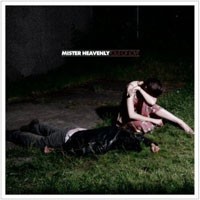
Mister Heavenly: Out of LoveMister HeavenlyOut of Love (Sub Pop, 8/16/11)

Mister Heavenly: “Bronx Sniper”

[audio:https://alarm-magazine.com/wp-content/uploads/2011/08/Mister_Heavenly_Bronx_Sniper.mp3|titles=Mister Heavenly: “Bronx Sniper”]

Supergroups are usually a crapshoot. Sometimes they blossom into something outstanding (e.g., Wolf Parade), and other times they fall flat on their face (e.g., Audioslave). With so many ideas and creative juices flowing — as well as taking caution to not step on any toes of the other bands — collaborating can sometimes lead to strained and tolling music. So it’s with much caution that I began listening to Mister Heavenly, which features indie rockers Nick Thorburn (Islands, The Unicorns, Human Highway), Ryan Kattner (Man Man), and Joe Plummer (Modest Mouse, The Shins). But unlike so many side projects, which can serve as pedestals for glorified B-sides or a hodgepodge of directions that don’t always click, Mister Heavenly plays to its strengths, resulting in a fantastic album and listening experience.

After the first few tracks of Mister Heavenly’s debut, Out of Love, it becomes apparent that a collaboration of this caliber just makes sense. In fact, the songs fit so well together that it seems ridiculous that these three have never teamed up before. Thorburn has made a name for himself by being a part of quirky musical projects; Kattner has gained much attention for his band’s eccentric tendencies; and Plummer, as the drummer of Modest Mouse, has helped craft some of his band’s best songs with erratic beats and percussive versatility.