
Grails

Guest Playlist: Grails picks the 11 best songs for OD-ing

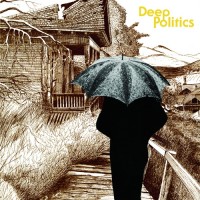
Grails: Deep PoliticsGrails: Deep Politics (Temporary Residence, 3/8/11)

Grails: “I Led Three Lives”

[audio:https://alarm-magazine.com/wp-content/uploads/2011/01/Grails-I-Led-Three-Lives.mp3|titles=Grails: “I Led Three Lives”]

The newest album from Portland, Oregon-based instrumental-rock band Grails, Deep Politics, got a nod in a recent installment of This Week’s Best Albums. Mixing cinematic compositions with worldly sounds and a little ’60s psychedelia, it encapsulates, perhaps better than any of its other releases, what Grails is capable of as a band.

For its guest playlist, Grails made 11 picks based on a new, tongue-in-cheek method of determining a song’s quality.

The 11 Best Songs for OD-ing
by Grails

Emil Amos: At a shitty party some years ago, a man was heard to have said in a drunken defense of the Eagles, “More people have shot up and died to this band than will ever hear ours!”

That man was me. After this rip in the logical fabric of the universe was torn, a new yardstick was introduced to the high-record-collector culture around the concept of “Can you OD to it, though?” And then the inevitable schools of thought naturally followed: “Is it a harsh track to OD to, or more mellow/inviting?”

See what you can get out of these, enjoy yourself, and don’t die!

Tangerine Dream: “Ricochet”

Tune-Yards

The Groove Seeker: Tune-Yards’ Whokill

The Groove Seeker goes in search of killer grooves across rock, funk, hip hop, soul, electronic music, jazz, fusion, and more.

Tune-Yards: Whokill (4AD, 4/19/11)

Tune-Yards: “Bizness”

[audio:https://alarm-magazine.com/wp-content/uploads/2011/04/06-Bizness.mp3|titles=tUnE-yArDs: “Bizness”]

If you’ve ever seen Merill GarbusTune-Yards play live, you understand how resourceful and creative a musician she is. With a ragtag set of drums and ukulele close at hand, Garbus builds her songs from scratch by live-looping repetitive drum and vocal patterns. Crafty to say the least, her performances are a multitasking puzzle of pedal stepping and vocal-scat arranging, revealing compositions and melodies that are spontaneous but clearly logical.

As Tune-Yards, Garbus surprised many with a gem of a debut in 2009. That record, Bird-Brains, thrives on the same weirdness and DIY attitude that make Garbus’ live shows so enjoyable. Not only were the songs recorded using a freeware program, but the folk-inspired experiments are packed with field recordings, Dictaphone samples, and intermittent elements of R&B and hip hop, all loosely fastened down by Garbus’ versatile Afro-pop-influenced vocals.

Whokill, Garbus’ second album under the case-sensitive moniker (generally stylized as tUnE-yArDs), sees her trading in the Dictaphone for some full-blown studio time. Tracked and mixed by Eli Crews (producer for Deerhoof and Why?), with co-writing credits going to bassist Nate Brenner (Beep), the record shows definite growth from those lo-fi-recording days. Thankfully, a bit of studio polish doesn’t take away her charm and musical wit.  If anything, the new approach gives her avant-garde pop the right venue in which to be properly heard.

Atmosphere

Beats & Rhymes: Atmosphere’s The Family Sign

Each Monday, Beats & Rhymes highlights a new and notable hip-hop, rap, DJ, or electronic record that embraces independent sensibilities.

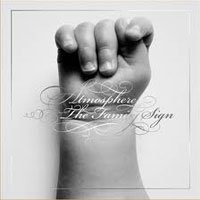
AtmosphereAtmosphere: The Family Sign: The Family Sign (Rhymesayers, 4/12/11)

Atmosphere: “Just for Show”

[audio:https://alarm-magazine.com/wp-content/uploads/2011/04/Atmosphere_Just_for_Show.mp3|titles=Atmosphere: “Just for Show”]

The land of independent hip hop is a dangerous, inconstant place. Giants like Rawkus Records and Definitive Jux, once considered among the most vital sources of hip-hop innovation, have collapsed into footnotes. But Minnesota-based Rhymesayers Entertainment has managed to hold its place in the world of underground rap for more than 15 years, thanks in part to founders Slug and Ant’s flagship duo, Atmosphere.

Atmosphere’s previous album, When Life Gives You Lemons, You Paint That Shit Gold, broke into the Billboard top 10 — an impressive achievement for an underground hip-hop group, and, as a result, Atmosphere represents to the general public what underground hip hop is. Its latest album, The Family Sign, typifies all of the strengths and weaknesses of indie rap, but it’s unusual and accessible enough to be easily enjoyed. If the genre must have a face, it could do much worse than Atmosphere.

Toro Y Moi

Concert Photos: Toro Y Moi @ Empty Bottle (Chicago, IL)

South Carolinian experimental-pop band Toro Y Moi is the creative effort of one Chazwick Bundick, formerly of the band The Heist and the Accomplice. The band, whose new album, Underneath the Pine, was released in February, has garnered buzz on the strength of its funky, dreamy blend of chillwave and dance pop. In a recent stop in Chicago, there was enough demand to schedule two shows: an early show with electro-pop act Adventure and a late show with indie-rock band Braids. ALARM copy editor Kyle Gilkeson was there to capture the action.

Toro Y Moi

Implodes

Guest Spots: Implodes’ sonic-phenomena counterparts

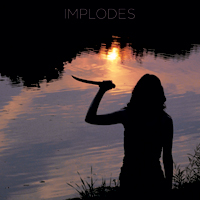
Implodes: Black Earth Implodes: Black Earth (Kranky, 4/20/11)

Implodes: “Marker”

[audio:https://alarm-magazine.com/wp-content/uploads/2011/04/02-Marker.mp3|titles=Implodes: “Marker”]

According to Chicago-based drone-rock band Implodes, its new album, Black Earth, is inspired by a “haunted and magical place,” where “there’s an old barn there with many rooms and a silo that’s filled with dead insects.” With a wealth of slow-moving melodies and dark guitar murmuring tangled in a web of reverb, it’s an aptly creepy description. The Psycho-esque cover art does an equally effective job of communicating the record’s paradoxical beauty and gloom.

All four members of the band answered this question for ALARM: what natural sonic phenomenon best describes your role in Implodes?

Implodes’ Sonic-Phenomena Counterparts
by Implodes

Emily Elhaj:

Naturally, I would hope my sound could be likened to an avalanche. The indistinct rumble of packed snow sliding down a mountain’s façade seems to complement the booming nature and tone of my playing. The sounds are heavy yet mobile.

Justin Rathell:

The world around me has a remarkable way of translating very easily into percussive rhythms, tapping on my ears, begging me to follow along. Playing in Implodes often reminds me of just a couple of choice moments, much darker moments in my times experimenting with hallucinogens.  Times where I was stricken with such overwhelming paranoia that I found myself focusing on the quietest, most isolated sounds.  Sounds that began to grow louder and louder, drowning out other foreground noise that, in reality, was much more prominent. Sometimes, I was hearing the pulse in my neck or the beat of my own heart.  It sounded like drums to me.  It was somehow comforting. Everything else, even my other senses would dull.  Except I think I could see my pulse; it would move the air.

Septicflesh

The Metal Examiner: Septicflesh’s The Great Mass

Every Friday, The Metal Examiner delves metal’s endless depths to present the genre’s most important and exciting albums.

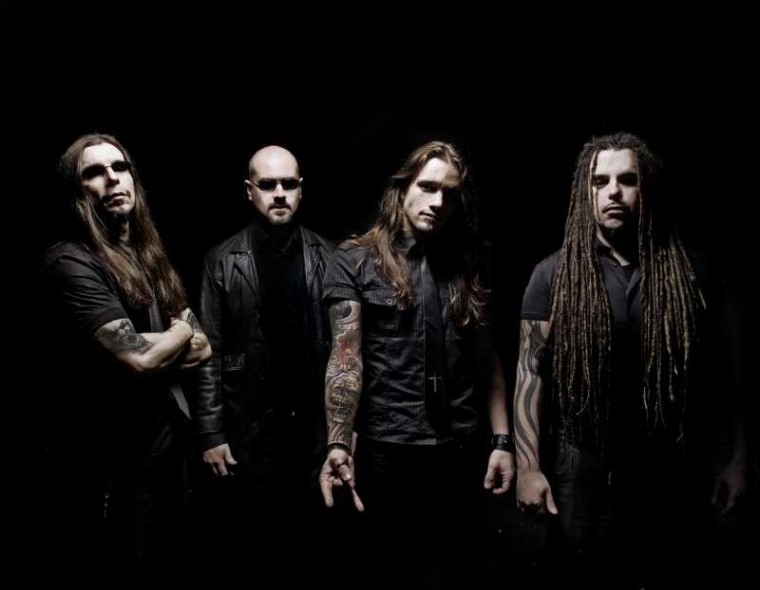
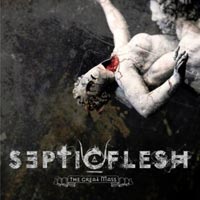
Septicflesh: The Great MassSepticflesh: The Great Mass (Season of Mist, 4/18/11)

Septicflesh: “The Vampire from Nazareth”

[audio:https://alarm-magazine.com/wp-content/uploads/2011/04/Septicflesh-The-Vampire-from-Nazareth.mp3|titles=Septicflesh: “The Vampire from Nazareth”]

Metal bands have long employed classical composition techniques. Celtic Frost introduced To Mega Therion in 1985 with a Strauss-ian melody played by a French horn. Morbid Angel cited Mozart as the greatest composer of all time on its sophomore album. Ritchie Blackmore laced his leads for proto-metal band Deep Purple with classical arpeggios.

Continuing in this tradition, Septicflesh‘s guitarist Christos Antoniou recently completed studies in classical composition. As such, the band’s seventh full-length, The Great Mass, is rich in orchestration, handled by the Prague Philharmonic Orchestra.

Moses Supposes

Moses Supposes: Are Copyrights the Vietnam of Today’s Youth?

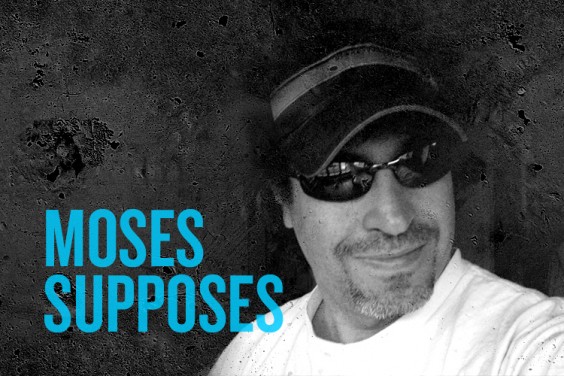
Moses Avalon is one of the nation’s leading music-business consultants and artists’-rights advocates and is the author of a top-selling music business reference, Confessions of a Record Producer. More of his articles can be found at www.mosesavalon.com.

I grew up in the aftermath of the “hippie” era — the one that made political protests into a social activity.  You risked arrest to end the Vietnam War — and met girls. Music was the rallying point. It gave the movement momentum.

Today, it seems that music is at the center of a different kind of youth revolution, one in which the values are far different from its forebears’ movement. Whereas pop music was once the soundtrack of the revolution, now it’s more or less the revolution’s object, manifesting as the “right” to free music. Or, as the P2P culture would put it: the right to access information and liberate music from the shackles of “Big Content,” which cannot accept the death of copyrights.

“Big Content.” Even the term itself positions artists and their teams as part of “the establishment” — the way a cop would symbolize Big Brother. Those who like to share music libraries through P2P services have cast record labels as the Nixon administration, while they, the illegal P2P users, are the hippie liberators, fighting for what they perceive as the basic human right to share that which should be free in the first place.

I get it. I understand their frustration. Content is pricey.  A lot of it is junk too.  And many in the culture seem to think that the music industry is as big and rich as utilities, oil, or aerospace. They are probably not aware that the music business is composed mostly of creative types, and, if you added up the revenue from all of the US entertainment industries for a year, it would barely reach what energy companies earn in a month.

At the heart of the anti-war movement was the hope to stop bloodshed. Hippies rebelled against something serious — the draft. What is today’s P2P “sharing” movement about? Free tunes? Cheaper flicks?  And what are the parents of today’s youth movement thinking? They have to be hoping that their offspring will pursue a cause more deserving of jail time than overturning the copyright regime.  What will today’s rebels do when the wholesale illegal sharing of music comes to an end in the Americas (and it will)?