

Zulu Records

Behind the Counter: Zulu Records (Vancouver, BC)

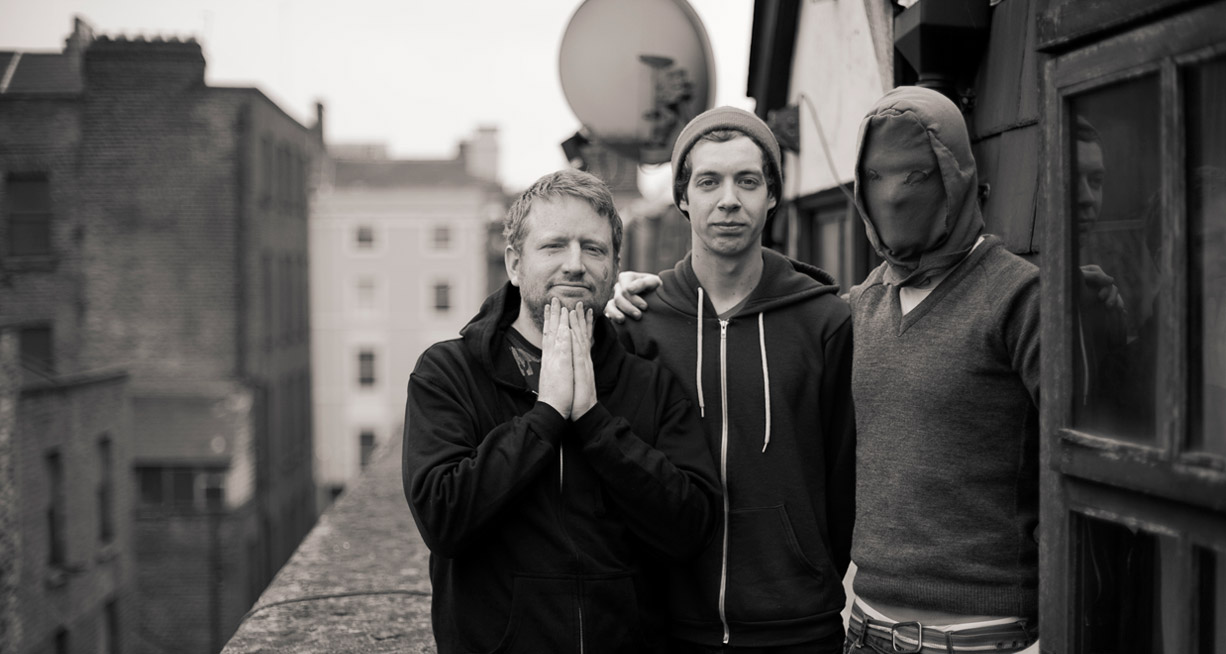
With an army-green facade out front and wood-paneled walls and retro furniture inside, Zulu Records is an established musical stronghold in the Canadian metropolis of Vancouver, British Columbia. More than a place to buy music (though it covers that angle pretty thoroughly), Zulu has become a family-friendly, cultural centerpiece of the community with a number of notable in-store performances, art openings, and a continued independent, DIY approach to business.

What was your motivation for starting a music store? / What is your background in music?

Zulu Records grew out of the ashes of an old store called Quintessence that specialized in prog and rock. It was 1981, music was changing, and there was a community of young punkers who were starved for all of the amazing imports coming out overseas. Zulu Records’ owner, Grant McDonagh, was one such fan with big ideas who saw his part-time job at Quintessence fizzle out and an opening present itself. Grant had ties to all of the great Vancouver punk bands and, in the early days, worked closely with  this community, including later starting his own record label to press bands that he felt deserved to be heard. Today, Zulu Records concentrates completely on being one of Canada’s finest indie music shops, and it still prides itself on the model of building and maintaining community ties.
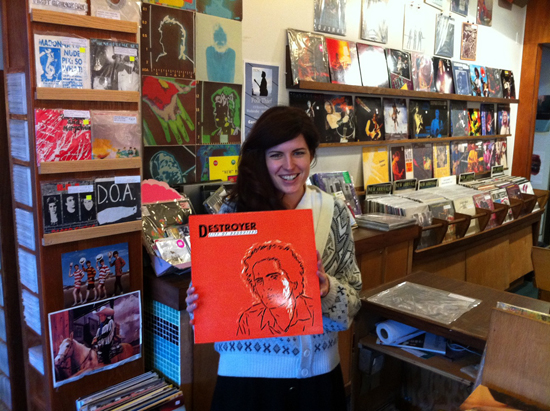
 

Melanie holds Destroyer's City of Daughters

What is the musical community like in Vancouver?

Vancouver’s music community is tight-knit. Vancouver has always had a bit of an annexed feel to it; we are in the corner of Canada, and the city is geographically bounded and can’t really sprawl endlessly like other major Canadian and American cities. As a result, the spots where bands play, practice, and congregate haven’t really changed over the last 25 years. There is still a very punk/DIY feel to how bands go about doing things, as really we are pretty far away from the spotlight of the business in Toronto. In fact, we have more of a West Coast / Pacific Northwest vibe going on, and certainly, Seattle feels like kindred musical spirits.

Wagon Christ

Q&A: Wagon Christ

Wagon Christ Wagon Christ: Toomorrow (Ninja Tune, 3/07/11)

Wagon Christ: “Manalyze This!”

[audio:https://alarm-magazine.com/wp-content/uploads/2011/04/03-Manalyze-This.mp3|titles=Wagon Christ: “Manalyze This!”]

Electronic producer Luke Vibert is a man of many sounds and aliases. Since the early ’90s, Vibert has recorded under his own name as well as under Wagon Christ, Plug, and several others to accommodate his sheer girth of recorded output.  His brand new release as Wagon Christ, Toomorrow, retraces his funky roots while pasting disparate vocal samples over waving bass lines and hip-hop beats.

Toomorrow is a 15-track collection that demonstrates Vibert’s humorous fusions and reflects the slinky rhythms of his Wagon Christ alias.  Here Vibert discusses the making of his newest record, the truth behind live electronic music, and how technological innovations have affected his material.

Your first record, Phat Lab Nightmare, was based on a lie, but you eventually got your foot in the door with Rising High. Do you think your approach to music would have been different had you not started with an impromptu ambient record?

That’s an interesting question. I don’t think anyone’s ever asked before. Yeah, I’m sure it would have been, probably. I have to recover, in a way, from that album. At the time, I think if I could have made anything, if I could have been totally free and making anything, I would have probably made very similar stuff to now. Like more funky break beats, and not so obviously ambient. But I sort of forced myself to try and make ambient music, and actually really enjoyed it. So then, slowly, that influenced the rest of my tracks. After a few years, I kept coming back to the album and thinking, “Actually, I quite like that.” So yeah, it definitely changed me for some reason, but it’s hard to think of how because it was so long ago.

Wagon Christ came about in the mid-’90s. How has the evolution of house and the abundance of new musical influences changed or affected Wagon Christ’s material?

It’s funny — I think, in a way, that it makes me more try to find my own sound and stick to that. I’ve had lots of people tell me, “Oh, man, your sound is quite dated, and the tracks sound very ’90s, and some people — kind of friends, really, all people I meet in clubs — often say, “Don’t you like dubstep?” (or some new thing), and I say, “Yeah — yeah, I do.” But I don’t really want to make it. I just want to find my own thing that I like doing.

Especially now that I’ve got kids and more work to do — like looking after them, and then more gigs that I have because the records don’t make so much money — I’m always off traveling around, touring. So I think when I do come to make music now, I just kind of really want to be me and forget about all new music. I don’t take much influence, really, from all the millions of new styles that have developed over the years. My stuff still sounds pretty old and basic.

The One AM Radio

Guest Spots: The One AM Radio on self-portraiture

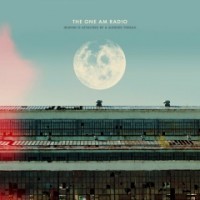
The One AM Radio: Heaven is Attached by a Slender ThreadThe One AM Radio: Heaven Is Attached By A Slender Thread (Dangerbird, 4/12/11)

The One AM Radio: “Sunlight”

[audio:https://alarm-magazine.com/wp-content/uploads/2011/04/The-One-AM-Radio-Sunlight.mp3|titles=The One AM Radio: “Sunlight”]

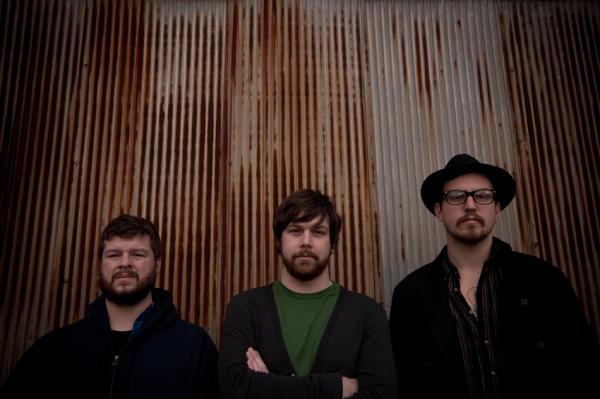
LA-based multi-instrumentalist Hrishikesh Hirway is the force behind dream-pop band The One AM Radio. On the day before his new album, Heaven Is Attached By A Slender Thread, is released to the world, Hirway took the chance to get introspective with ALARM. Below, he explores the alignment (or misalignment) of various expectations and realities, including those of his own songwriting process, through the lens of self-portraiture.

On Self-Portraiture
by Hrishikesh Hirway (The One AM Radio)

Everyone confronts this question every day: how do I present myself to the world? This process is so ubiquitous and so fundamental that it often goes unnoticed, a blip in the subconscious. But when dealing with any work that’s declared to be a self-portrait, the process of figuring out who you think you are, and how you want to reveal that to others, becomes paramount.

For my new record, I wanted to make a conscious effort to step away from the adjectives that were often used to describe my music: somber, melancholy, introspective, East Coast. I thought, “I’d like to make something buoyant, happy, fun, LA. Dance music.” When the record was done, I realized that I hadn’t accomplished that at all. There was a huge divide between what I thought I could make and what actually came out.

Young Widows

Record Review: Young Widows’ In and Out of Youth and Lightness

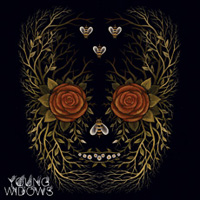
Young Widows: In and Out of Youth and LightnessYoung Widows: In and Out of Youth and Lightness (Temporary Residence, 4/12/11)

Young Widows: “In and Out of Lightness”

[audio:https://alarm-magazine.com/wp-content/uploads/2011/04/Young_Widows_In_and_Out_of_Lightness.mp3|titles=Young Widows: “In and Out of Lightness”]

More than ever, Louisville’s Young Widows is teaching listeners to appreciate the quietness in post-punk.

Consider, for contrast, the slobbering borderline silliness of Pissed Jeans, or any other band that draws on a ton of distortion. At first listen, Young Widows might seem to have something missing. The vocals lead the songs but aren’t panicked or even immediately catchy. The guitars often walk an eerie line between clean and dissonant. The rhythm section — though hardly crude, if you’re paying attention — often favors a ceremonial plod.

In between, there’s a roomy silence, occasionally breached with a wandering guitar echo or backing vocal. But soon it stops feeling incomplete. That lurking silence, and the unresolved feeling that it creates, becomes the hook.

Moses Supposes

Moses Supposes: Will Obama put the federal kibosh on P2P sharing?

Moses Avalon is one of the nation’s leading music-business consultants and artists’-rights advocates and is the author of a top-selling music business reference, Confessions of a Record Producer. More of his articles can be found at www.mosesavalon.com.

Here’s one story you won’t see going viral on a geek blog near you: the Obama administration is going to make torrent streaming, also known as P2P (peer-to-peer) sharing of music, a felony.  A felony.  This means, according to the administration’s White Paper, recommending an upgrade to the act of illegal streaming of music to one of “financial espionage,” carrying prison time of up to 20 years.

This would apply to sites and people using, promoting (carrying ad links), and hosting services like The Pirate Bay, Utorrent, Bittorrent, and Limewire derivatives.  But what about the sites that just side with P2P and its lifestyle, like Pirate Party, Zeropaid, TechDirt, and Boycott-RIAA?  Are they in danger too?

The White Paper, which makes the recommendations to Congress, includes as part of its focus websites that “provide access to infringing products” and would give local authorities “wiretap rights” in order to gather evidence.  In other words, sites promoting the P2P lifestyle would be investigated the in same way as street gangs, terrorists, and the Mafia.

What’s New

In theory, copyright laws have always provided that infringement is a federal crime for which you could go to jail, but so far, no one has, unless they were running a factory that made thousands of bootleg CDs. As for the casual infringement by students or grandmothers or even semi-pro infringements, our government has always given the taxpayer a rest, allowing copyright laws to be sorted out in civil court.

But thanks to the Obama administration, we are seeing “change you can believe in” in spades. In a review of the current state of intellectual property, the administration is recommending that Congress upgrade existing laws to make illegal streaming of content and providing access to “infringing products” a felony.

Saille

The Metal Examiner: Saille’s Irreversible Decay

Every Friday, The Metal Examiner delves metal’s endless depths to present the genre’s most important and exciting albums.

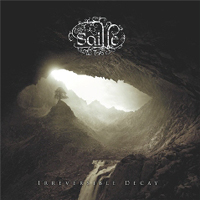
Saille: Irreversible DecaySaille: Irreversible Decay (Code666 Records, 3/4/11)

Saille: “Plaigh Allais”

[audio:https://alarm-magazine.com/wp-content/uploads/2011/03/04-Plaigh-Allais.mp3|titles=Saille, “Plaigh Allais”]

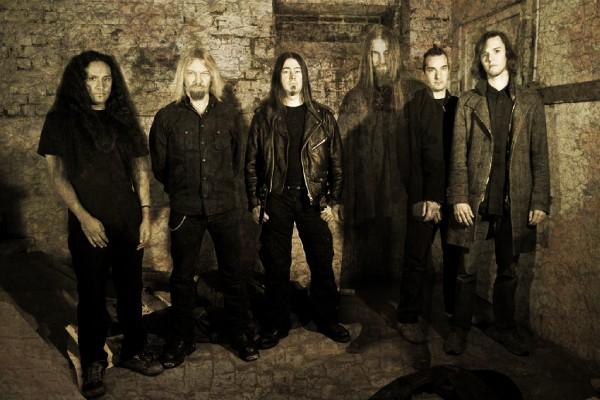
Though the genre arguably has lulled for the better part of the past decade, symphonic-metal creators and consumers alike have welcomed any possible heirs to Emperor’s long-abdicated throne. With Irreversible Decay, Belgian five-piece (nine-piece, if you count the in-studio classical personnel) Saille throws its hat into the ring by way of nine tracks that are mostly symphonic in intention, even if not always in execution, and definitely leaning more towards the “black metal” part of the label.

Coupling moments of nominal tastefulness (the acoustic guitar fueling intro track “Nomen,” the quasi-classical breakdown in “Maere”) with wider expanses of muddied percussion and thrashing guitars, Irreversible Decay quickly reveals itself firmly planted in the genre’s time-honored blueprint. Cellos and violins float over acoustic guitars — but only over the acoustic guitars. Saille respects its ambitions but also very blatantly segregates them from each other, resulting in music that constantly sounds as though it’s hedging its bets.

DeVotchKa

Concert Photos: DeVotchKa @ House of Blues (Chicago, IL)

Last fall, when experimental Balkan-pop quartet DeVotchKa played a show in Chicago, it was at Lincoln Hall in support of its 2008 release, A Mad and Faithful Telling. Since then, the band has released a new album, 100 Lovers (Anti-, 3/1/11), and embarked on a new tour, this time playing with Nashville seven-piece Kopecky Family Band in support. Photographer Wallo Villacorta caught the multi-instrumentalists at a recent stop at House of Blues in Chicago.

DeVotchKa