
Earth

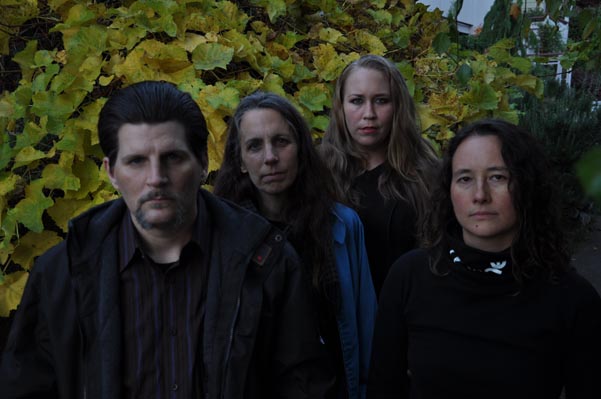
Q&A: Dylan Carlson of Earth

Earth: Angels Of Darkness, Demons Of Light 1Earth: Angels of Darkness, Demons of Light Vol. 1 (Southern Lord, 2/22/11)

Earth: “Father Midnight”

[audio:https://alarm-magazine.com/wp-content/uploads/2011/02/20110113_specialmusic_earth.mp3|titles=Earth: “Father Midnight”]

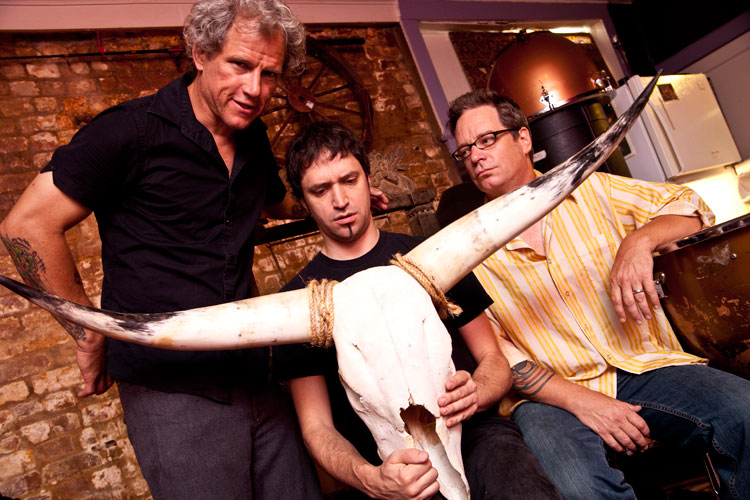
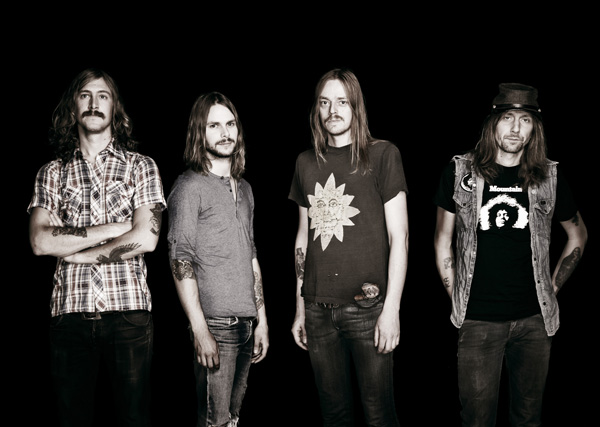
Most God-fearing people would probably characterize Earth’s cinematic drone-rock music as dark, and the assumption is not without merit. Since 1989, Earth’s founder and guitarist, Dylan Carlson, has specialized in a kind of down-tempo, almost lethargic style of slow rock that easily allows listeners to conjure thoughts of an emotional purgatory.

Carlson describes Earth’s musical destinations in a conversely different light. For him, the band’s resonant, slow-forming instrumentation represents a musically cerebral path to some sort of middle ground, but it’s not so much as a waiting room to hell as it is a medieval common area, where people are free to simply be, free to do as much or as little as they’d like. Earth’s womb-like melodic cocoon is in many ways an external and extremely personal catharsis — an intimate attempt to make sense of an ever-present melancholy that pervades Carlson’s vision of humanity.

What do you think has allowed Earth to maintain the same musical continuity for so long, while so many other bands from your time period have faded from the radar, sold out, died, or come back playing something completely different than what they started?

I think it’s still pretty similar. I think the main difference is more seen by working with [drummer] Adrienne [Davies] and working with the other members of the band more; it’s more of a collective experience than before. There were times when there were very few members of the band — no members of the band — [laughs] except me, so it was definitely more of a solitary pursuit at points, where now I have the luxury of being able to attract musicians to play with me and are able to play with me for at least a couple years at a time, instead of album by album.

That’s different, and I like that. I’ve always viewed Earth as a band, and wanted it to be a band, but it’s not always the easiest thing to find musicians to work with and keep them. I’m more cognizant of what I’m doing than before.

Do you think your sobriety has played a role in that?

Yeah, I definitely think so. I’m definitely more focused on doing music now and not wasting my time running around chasing [pauses] other things [laughs], so that’s good. And I’ve obviously been more productive in this second go-around than I was in the first, in terms of output and performing live.

Has your creative process changed at all over the years?

Yeah, I mean, for the most part, I guess. To me, there are certain things that need to be there for it to be Earth, otherwise I’d do something different. Within that, it should be slow, it should be simple, and hopefully be on the longer end of letting things develop — the longer end of the scale. There’s some wiggle room to do some other things, but if those three things aren’t there, then I should do a different project.

And if I were going to do something different, I’d do something completely different and wouldn’t try to sell that off as Earth. I think Earth has an identity of its own. I don’t think that would be fair to people to make something really fast and new-wave-y and call it Earth [laughs]; that wouldn’t be Earth. That would be my really fast new-wave-y project.

Morrow vs. Hajduch

Morrow vs. Hajduch: Boxcutter’s The Dissolve

Scott Morrow is ALARM’s music editor. Patrick Hajduch is a very important lawyer. Each week they debate the merits of a different album.

Boxcutter: The DissolveBoxcutter: The Dissolve (Planet Mu, 4/25/11)

Boxcutter: “TV Troubles”

[audio:https://alarm-magazine.com/wp-content/uploads/2011/04/Boxcutter_TV_Troubles.mp3|titles=Boxcutter: “TV Troubles”]

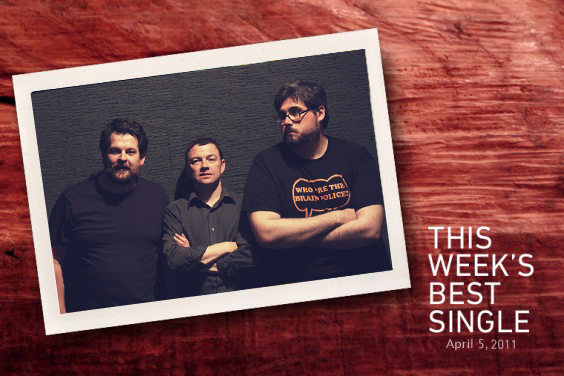
Morrow: The Dissolve is the fourth full-length album by Boxcutter, a dubstep/IDM musician from Northern Ireland and a regular of the Planet Mu roster.  Also known as Barry Lynn, he often takes a dance-influenced approach to his music, enabling an entry point for those who can’t handle thornier artists like Aphex Twin.

On The Dissolve, some of the dark dance elements remain, but by and large, this is a shift in a much funkier direction, with retro electronic sounds providing a much lighter and old-school feel.

Helms Alee

Helms Alee: Unapologetic, Unwieldy Post-Rock

Led by guitarist/vocalist Ben Verellen, Seattle-based post-punk band Helms Alee makes melodic heaviness that evokes grunge and post-metal — but with harmonized moments of clean-channel clarity.

The Groove Seeker: The Dead Kenny Gs’ Operation Long Leash

The Groove Seeker goes in search of killer grooves across rock, funk, hip hop, soul, electronic music, jazz, fusion, and more.

The Dead Kenny Gs: Operation Long Leash (The Royal Potato Family, 3/15/11)

The Dead Kenny Gs: “Black Truman (Harry the Hottentot)”

[audio:https://alarm-magazine.com/wp-content/uploads/2011/04/02-Black-Truman-Harry-the-Hottentot.mp3|titles=The Dead Kenny G’s: Black Truman (Harry the Hottentot)]

Smooth-jazz lovers beware.  As an antidote to the polished alto saxophones and rarely improvised easy-listening jams of adult contemporary music, eccentric jazz trio The Dead Kenny Gs has released its second album, Operation Long Leash.  Given its play-on-words moniker that simultaneously drives a sock down the mouth of smooth-jazz king Kenny G and recalls the early ’80s hardcore-punk band The Dead Kennedys, the powerhouse trio taps into a sound that fuses jazz and punk.  It’s a crazy mix that works surprisingly well, played intensely by a group that has the skill and knowledge to pull it off.

Composed of three of the members of legendary Seattle-based Critters Buggin — bassist Brad Houser, drummer and vibraphonist Mike Dillon, and saxophonist Skerik — the band uses its genre-mashing experience to anchor it all down.  The trio has played in countless projects together, including all three in The Black Frames, and Dillon and Skerik comprise half of Garage a Trois.  Needless to say, the three have run in the same circles for more than two decades, playing hybrid styles that are everything but conservative.

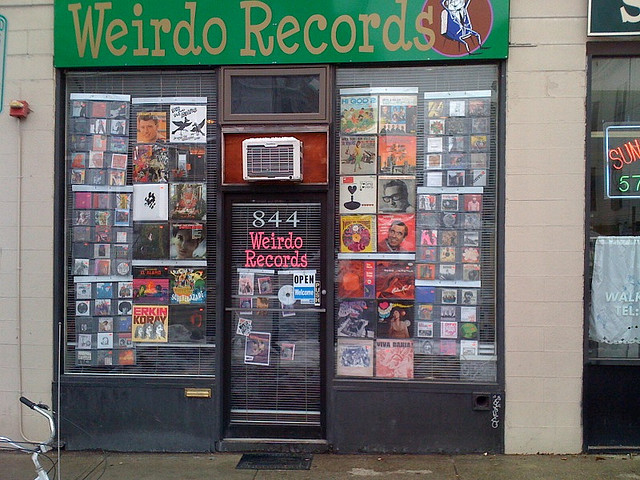
Weirdo Records

Behind the Counter: Weirdo Records (Cambridge, MA)

Each week, Behind the Counter speaks to an independent record store to ask about its recent favorites, best sellers, and noteworthy trends.

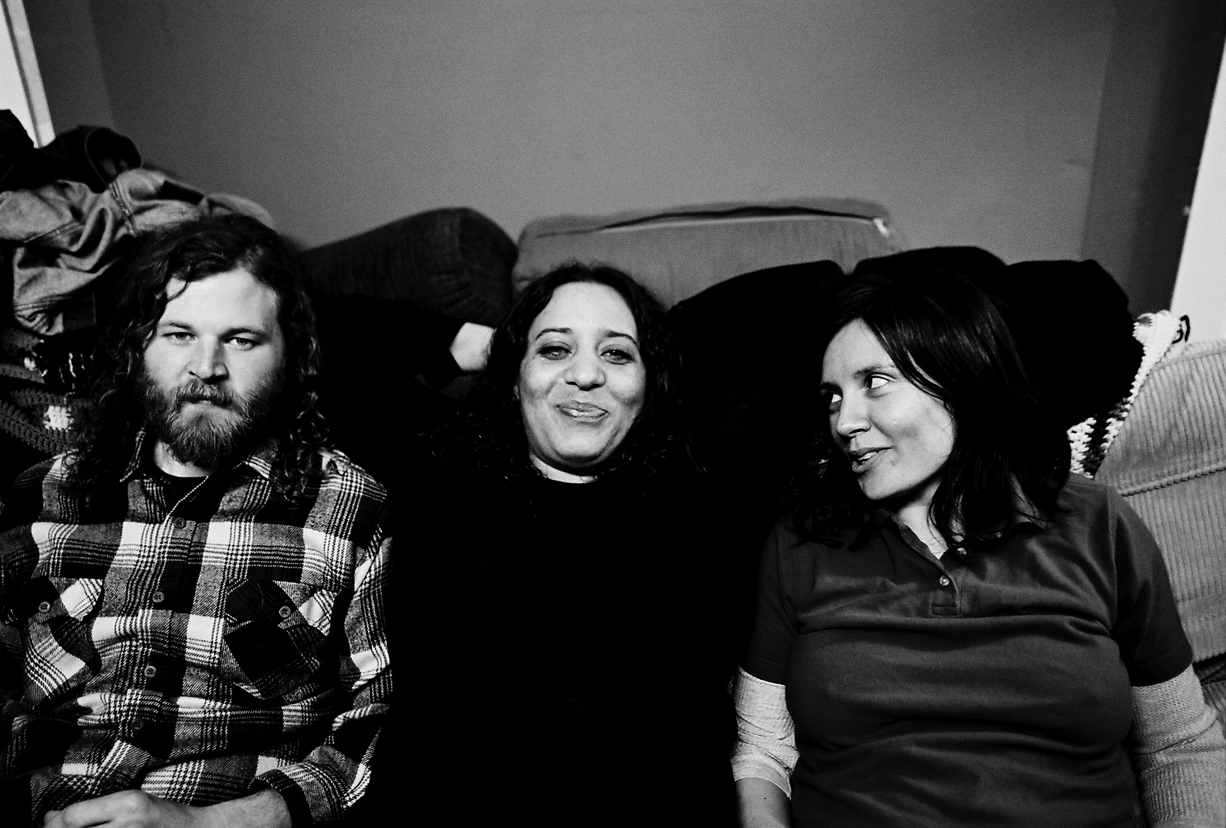
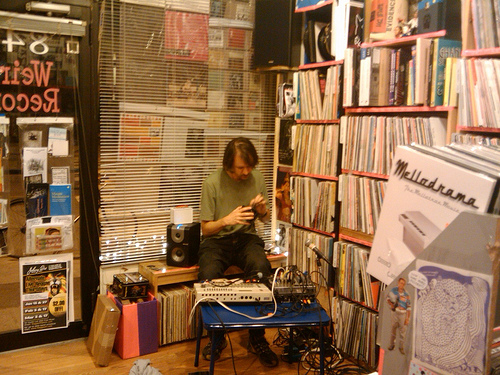
Weirdo Records in Cambridge, Massachusetts lives up to its name. Rather than try to compete with the various stores selling indie rock and big-name artists, it’s found a niche in the esoteric and obscure — “records where people are literally just banging on their kitchen pots and pans and yelling,” according to store owner Angela Sawyer. We spoke with Sawyer and found out what makes Cambridge a haven for music (and book) geeks.

What was your motivation for starting a music store? / What is your background in music?

This year is my 20th year working in a record store. So I’d wanted to start one for a long time, but really couldn’t figure out how — mostly because I was always working in a record store, which meant living below the poverty level, and I couldn’t put together enough money to buy a car or a vacation, much less start a business.

When the Internet came into its own, I started using all my spare time to try and figure out how to build a website. I started with about 10 titles, and these days there are several thousand. I moved into a proper storefront at the beginning of 2009, and a few folks (mostly journalists) were surprised that I was opening a shop. Simply and frankly, I’ve been surrounded by and motivated by records my entire adult life. So I felt like, what was I gonna do — take up taxidermy?

Weirdo Records

What is the musical community like in Cambridge?

Flat-out amazing. Boston is home to more colleges and universities than any spot on Earth, so it’s the college town’s college town. All those students mean that it’s a real haven for book and music geeks. Right now, there are three different handmade paper pamphlets around town that are solely dedicated to listing different underground house shows (and they don’t overlap in what they cover). There’s a vibrant, world-class improvised music scene, and lots of crossover between noise, jazz, hardcore, avant classical, etc. There are also several unique regular DJ nights where people play all 45s or LPs, each focusing on something a little bit different (three different soul ones, several ’60s-only, one for international music, one for rootsy country, and so on).

New England is known far and wide for its adventurous and voracious record collectors, and the prices in town are cheap, and the selection is plentiful — especially for genres that are abstract or difficult. The record-collecting community here has been very good to me, and the shop is really theirs. I feel extremely lucky just to get to hang out in it all day, and I think that it just wouldn’t fly anyplace else.