The Groove Seeker: Seefeel’s Seefeel

On a weekly basis, The Groove Seeker goes in search of killer grooves across rock, funk, hip hop, soul, electronic music, jazz, fusion, and more.
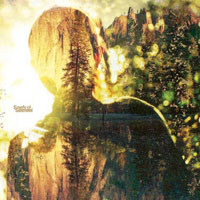
Seefeel: Seefeel (Warp Records, 1/31/11)

Seefeel: “Dead Guitars”

[audio:https://alarm-magazine.com/wp-content/uploads/2011/02/02-Dead-Guitars.mp3|titles=Seefeel: “Dead Guitars”]

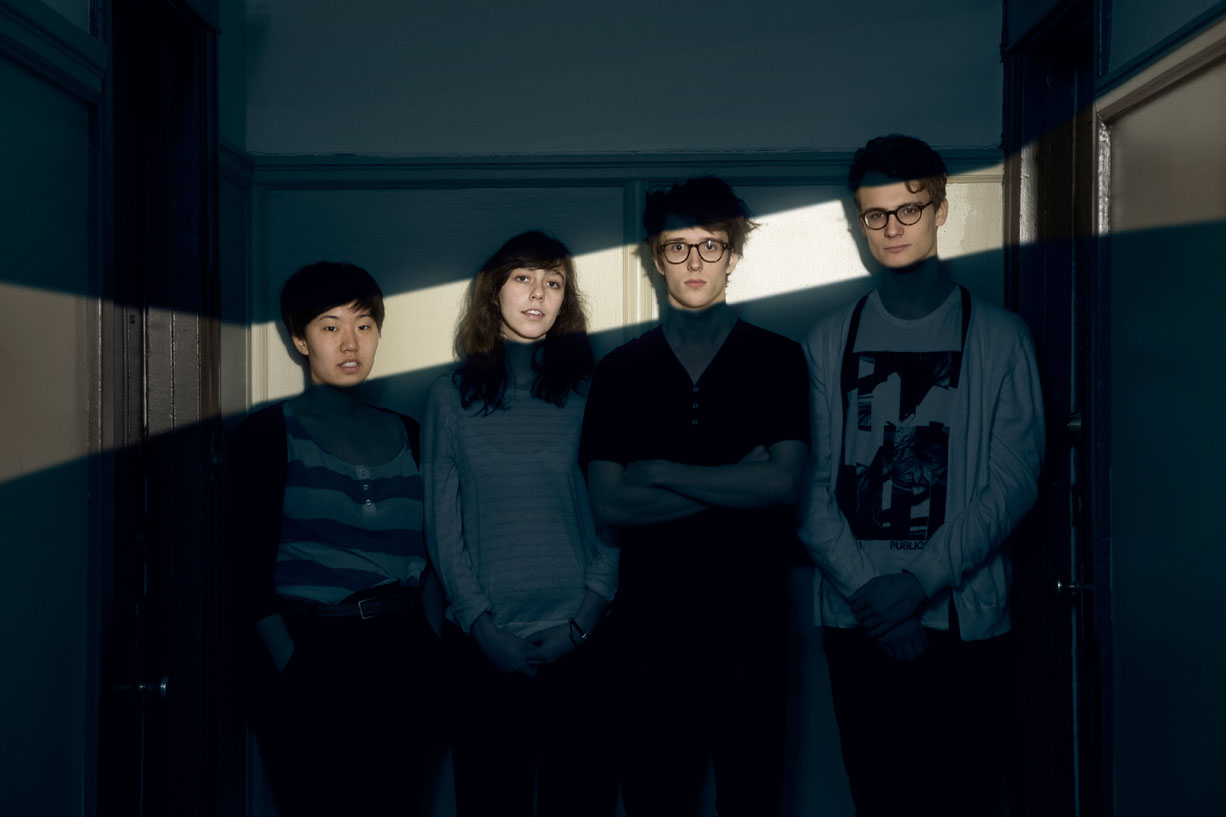
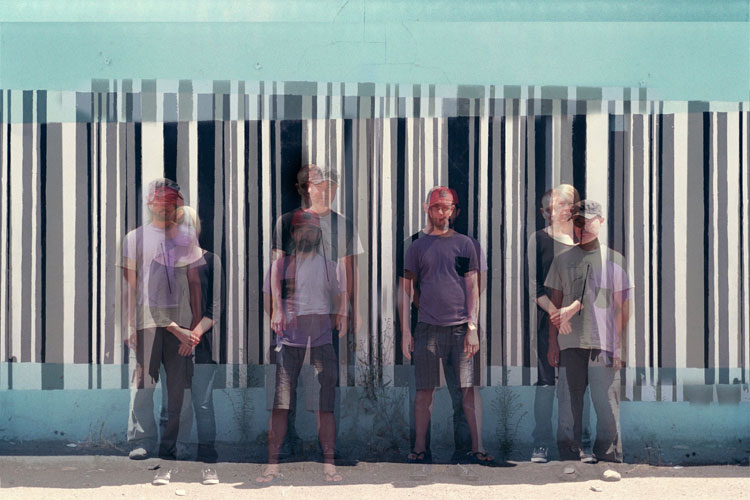
A largely forgotten mid-’90s band that was always ahead of its time, Seefeel has released its first album in 14 years. The self-titled record feels like a debut, and it is to a certain extent, considering the band’s lineup changes. Seefeel explores the territory of electronic outfits such Battles and Emeralds, bands that were influenced by Seefeel’s 1993 debut Quique. It feels like some sort of weird déjà vu.  If anything, it’s an impressive rebirth, one that has the group deconstructing the sample-based post-rock style it pioneered before MIDI sequencers were even looked at as viable forms of instruments.

Formed in 1992 in London, Seefeel’s music was once stylistically situated between shoegaze pop and what people were calling “ambient techno.”  It had a smooth nonchalance to its music, with ambient electro-pop symphonies strung together by Sarah Peacock‘s sparse, dream-like vocals.

Noise pop is perhaps the best way to describe its music retrospectively — or IDM before IDM was IDM.  Though we must not forget those  higher on the electronic family tree (Kraftwerk comes to mind), Seefeel’s importance to the scene lies in fending off the “dance” label.  What’s more, as the first “guitar” band signed to Warp in 1994, its use of live instruments also speaks to its groundbreaking artistry.

A-Musik

Behind the Counter: A-Musik (Cologne, Germany)

Each Tuesday, Behind the Counter speaks to an independent record store to ask about its recent favorites, best sellers, and noteworthy trends.

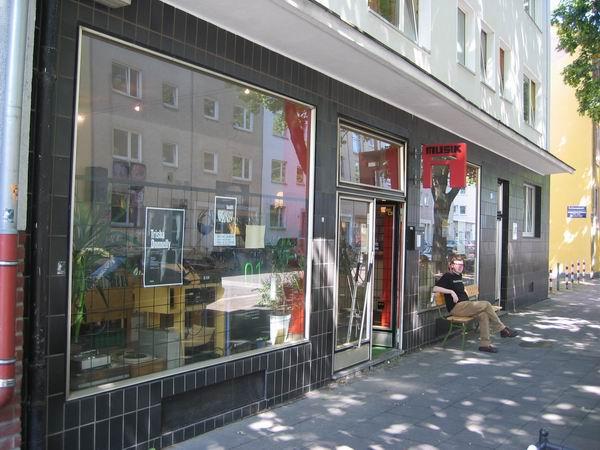
A-Musik in Cologne, Germany is a multifaceted record store, label, and distributor. Established in 1995, the small but mighty electronic-music specialist has grown over the years to encompass a wide variety of genres and formats. Its involvement in the Cologne music scene is just as varied, from art exhibitions to deejaying around town. We spoke with Wolfgang Brauneis, one of four shop employees, and learned the basics of A-Musik.

What was your motivation for starting a music store? / What is your background in music?

The shop was founded by Georg Odijk in 1995. The motivation was, I think, pretty simple: to create a place for music and records for which other shops and mail-orders don’t really care. In the first place that was mainly experimental music (from historical artists’ records via industrial to contemporary noise heads) and electronic music, which around that time was really thrilling. Here it is also important to mention that Georg at the same time founded the A-Musik label, which was strongly connected to the shop, and released the debut albums by Microstoria (Jan Werner of Mouse on Mars and Marcus Popp of Oval), Marcus Schmickler, Schlammpeitziger, and F.X. Randomiz. The background of Odijk and his helping-hand, Frank Dommert, was in experimental music. They both played in the electro-acoustic combo Kontakta while Dommert was running the Entenpfuhl label (which actually released the fist Jim O’Rourke LP back in 1991!). Of course, things have changed in the last 15 years — the musical taste of the people involved in the whole thing, and also the fact that, for quite some time now, there are four people working at A-Musik. Now the background(s) also include guitar stuff from garage punk onwards, dub or hip hop to free jazz, dubstep and breakcore.
 

Georg Odijk holds Lithops' Formationen (A-Musik, 2010)

Braids

Braids: Indie-Rock Balancing Act

For the young Canadian indie band Braids, a rise in popularity has meant increased promotional responsibilities. See how the band balances its time — as well as its multifaceted music — with the pressures of press.

Say Hi

Guest Spots: Say Hi on the big break that wasn’t

Say Hi: Um Uh OhSay Hi: Um, Uh Oh (Barsuk, 1/25/11)

Say Hi: “Devils”

[audio:https://alarm-magazine.com/wp-content/uploads/2011/02/SayHi_Devils.mp3|titles=Say Hi: “Devils”]

Seattle-based singer/songwriter Eric Elbogen, a.k.a. Say Hi, just released his third full-length, Um, Uh Oh, since shifting to a one-man operation with a shortened name (formerly Say Hi To Your Mom). According to a Barsuk press release, the album is the “result of the last ten years of Eric Elbogen’s experiences with failing at relationships, both musical and otherwise.” Who better to tell a story of a tragic missed opportunity in Hollywood in the late ’90s? Read on, and see how Elbogen manages to effortlessly weave the title of his new album into his prose.

How I Squandered The Biggest Break Of My Life
by Eric Elbogen

It wasn’t until I moved out of Los Angeles, California 11 years ago that I realized how much of the rest of the country conceives of that city as nothing more than a velvet-roped landmark next to the Pacific Ocean, overflowing with actors and the sorts of people you see on Entourage. A common question I fielded once I moved to New York was whether or not the reason for me having been born in LA was because my parents were in “The Industry.” I’d usually make an attempt at dryly turning the tables, asking if the inquisitor’s parents were gangsters (if they were from New Jersey) or tobacco farmers (if they were from anywhere south of the Mason-Dixon). Nevertheless, there is one anecdote I collected from the 23 years I spent in La La Land that, I suppose, makes the aforementioned question a valid one.

On an unremarkable day at some point in the late ’90s, I left the sheltered micro-hills of UCLA to return to the smog-shrouded sprawl of the San Fernando Valley, in which I grew up. A friend of mine had started working for a casting agency, and was trying to round up a bunch of folk to be extras in a then-untitled film. I wanted the money and had the day free of classes, so I took the trip. At the time, I had been playing music in one of my pre-Say Hi bands and was still naïve enough to think that rockstar-dom would come knocking any day, that said rockstar-dom would immediately, completely, and utterly solve the entirety of my woes, so I scoffed to myself at the multiple hours of us extras waiting outside in a parking lot under a sun-blocking overhead tarp and on splintery high-school, cafeteria-style benches (remember, this was LONG before the existence of “Angry Birds”).

Seven That Spells

Q&A: Seven That Spells

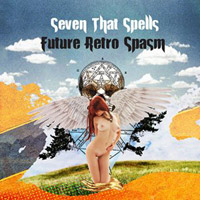
Seven That Spells: Future Retro SpasmSeven That Spells: Future Retro Spasm (Beta-Lactam Ring, 5/20/10)

Seven That Spells: “Olympos”

[audio:https://alarm-magazine.com/wp-content/uploads/2010/12/Seven_That_Spells_Olympos.mp3|titles=Seven That Spells: “Olympos”]

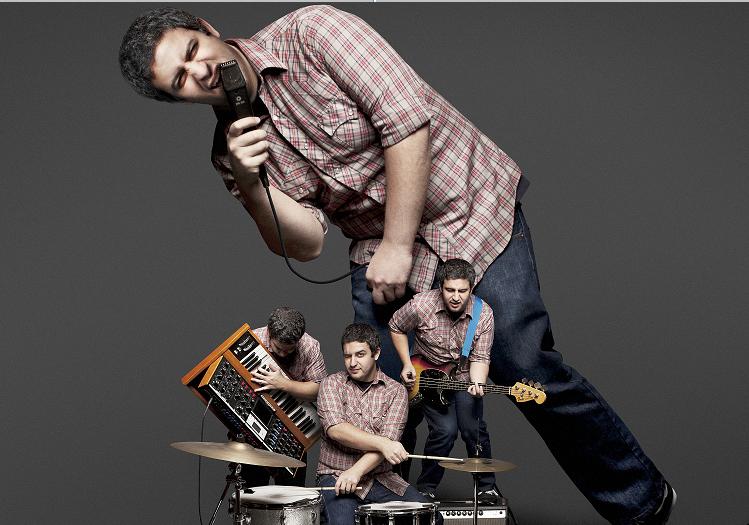
Croatian space-rock outfit Seven That Spells deals in extended psychedelic guitar freak-outs in the vein of Magma, Circle, Zappa, Trans Am, or Hawkwind. Perhaps its biggest musical influence, however, is Kawabata Makoto, who appears on the 2007 album Men From Dystopia. Founder and guitarist Niko Potočnjak modeled his collective after Makoto’s Acid Mothers Temple; lineups are transient, albums sound raw and live, and though recorded material is certainly released, the band lives for the performance.

The following Q&A was conducted with Potočnjak. He is extremely passionate about the music that his band creates, preferring danger and experimentation over consistency. The most telling quote from his dialogue demonstrates a singular philosophy that eschews genre: “We play music.”

How do you describe your music?

Psychedelic rock for the 23rd Century. New old religion of super loud! Polymetrics and occasional Viking funeral rites.

Can you give us a history of the band?

STS was formed in 2003. The main purpose was to have fun and play rock. Eight years, 60 people, and nine albums later, the purpose remains the same. We believe in the power and sincerity of rock music. I say “we” because STS is a collective — I just happen to be a guy with good organizational skills and a strong vision.

Trap Them

Record Review: Trap Them’s Darker Handcraft

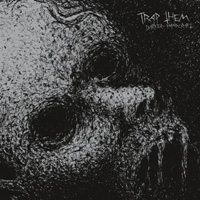
Trap Them: Darker HandcraftTrap Them: Darker Handcraft (Prosthetic, 3/18/11)

Trap Them: “The Facts”

[audio:https://alarm-magazine.com/wp-content/uploads/2011/02/Trap-Them-The-Facts.mp3|titles=Trap Them: “The Facts”]

To appreciate Trap Them‘s new album, Darker Handcraft, it helps to start with the Filth Rations EP from 2010.  Trap Them has consistently charged its hardcore side into a collision with metal that refuses to get dragged down in grime.

The four songs on Filth Rations give as sure a sign as ever that the band’s craft and tightness can always match its sheer impatience. The third track, “Dead Fathers Wading In The Bodygrounds,” keeps up a gimpy, stumbling trudge as the drums gradually thud harder, and vocalist Ryan McKenney bellows himself up to a pitch that invokes scalding tears and unforgivable injuries. There’s a sense that Trap Them is in a desperate frenzy to repeatedly overload their songs, lest a single McKenney roar or screech of feedback from the guitar go unused. Even the cramped handwriting of the lyrics in the EP’s liner notes looks more like a dozen rows of snaggled teeth than a sequence of words.

In retrospect, it’s as if the band that made Filth Rations was gearing up to achieve a height of directness and focus. Darker Handcraft is a plenty accurate introduction to Trap Them; it once again captures a sonic force that’s both furiously commanding and remains bitterly hurt no matter how feverishly it tries to expiate its demons. This time, though, that force resolutely says, “Look, one fucking thing at a time.”

Disappears

Concert Photos: Disappears @ Empty Bottle (Chicago, IL)

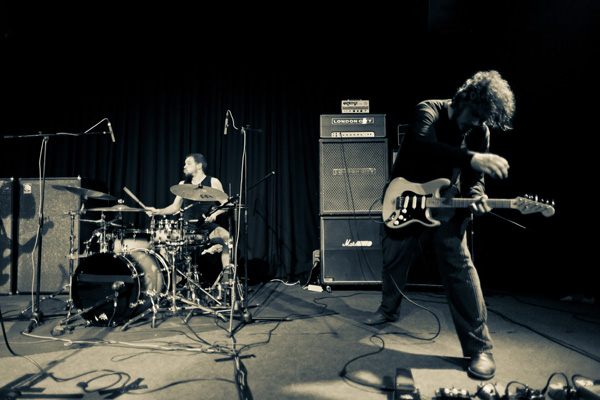
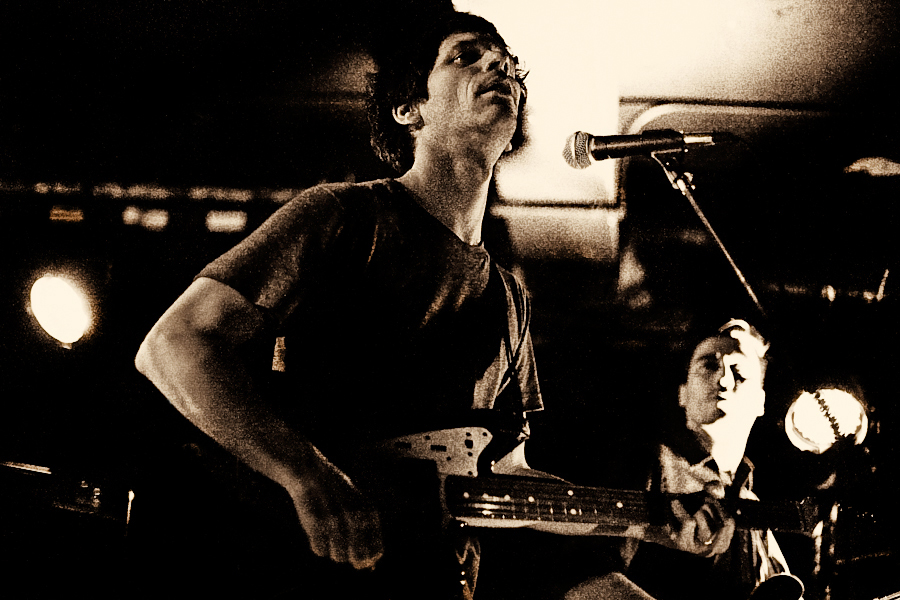
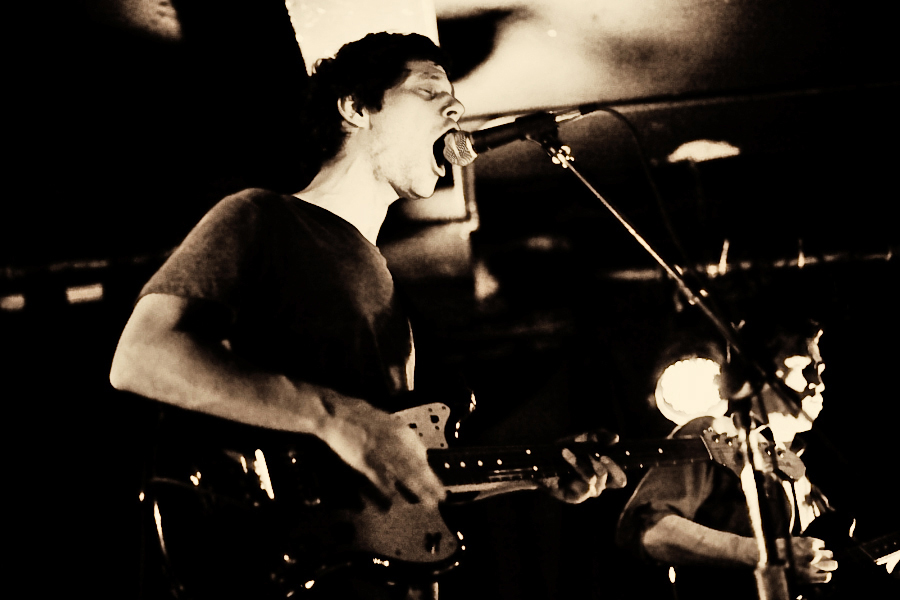
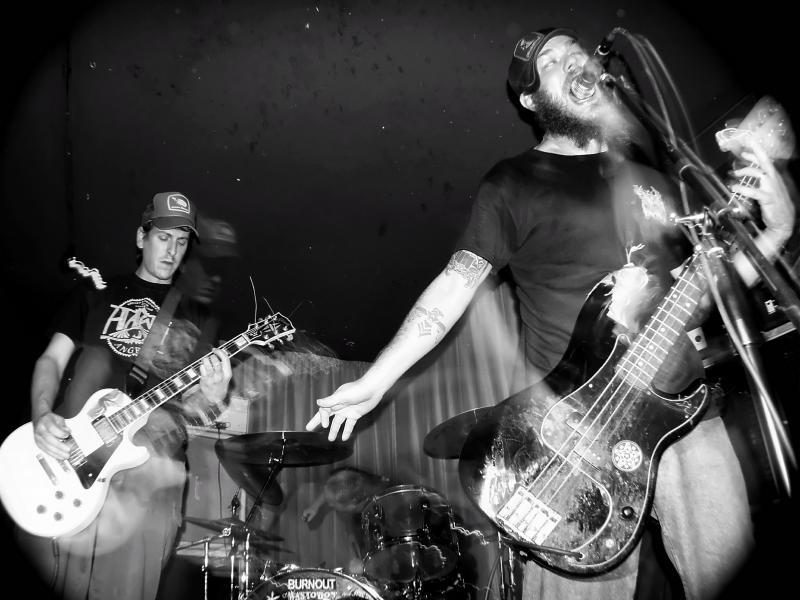
Chicago-based rock band Disappears played a hometown show at the Empty Bottle recently, performing material from its most recent release, Guider, out now on Kranky. Awash in heavy waves of reverb and distorted guitars, Disappears kept things characteristically minimal — no pomp, no circumstance, just pure, unadulterated fuzz-rock mania. Photographer Drew Reynolds captured these images, which, like the music, are simultaneously rich and stark.

Disappears

Weedeater

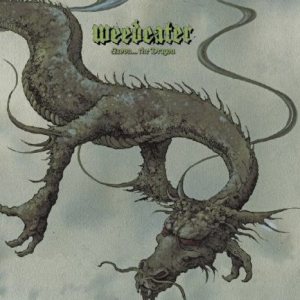
The Metal Examiner: Weedeater’s Jason…The Dragon

Weedeater: Jason...The DragonWeedeater: Jason…The Dragon (Southern Lord, 3/1/11)

Weedeater: “Mancoon”
[audio:https://alarm-magazine.com/wp-content/uploads/2011/02/Weedeater_Mancoon.mp3|titles=Weedeater: “Mancoon”]

North Carolina-based Weedeater has always balanced its stoner- and sludge-metal aspirations with a wide-open embrace of not just Southern rock but Southern culture as well. Songs about Dale Earnhardt sit alongside Lynyrd Skynyrd covers; odes to mystical demons were right at home alongside ballads praising the band’s titular indulgence.

But despite some commendable efforts (especially the group’s previous disc, God Luck And Good Speed in 2007), these two directions never fully reconciled, and the band’s masterpiece always seemed just out of its reach. Jason…The Dragon, the group’s fourth full-length (and second for Southern Lord), doesn’t quite put the group over the top of the mountain, but it’s never for lack of trying.