Dirty Three

Q&A: Dirty Three

Dirty Three: Toward the Low SunDirty Three: Toward the Low Sun (Drag City, 2/28/12)

Dirty Three: “Rising Below”

[audio:https://alarm-magazine.com/wp-content/uploads/2012/02/1-04_Rising_below.mp3|titles=Dirty Three: “Rising Below”]

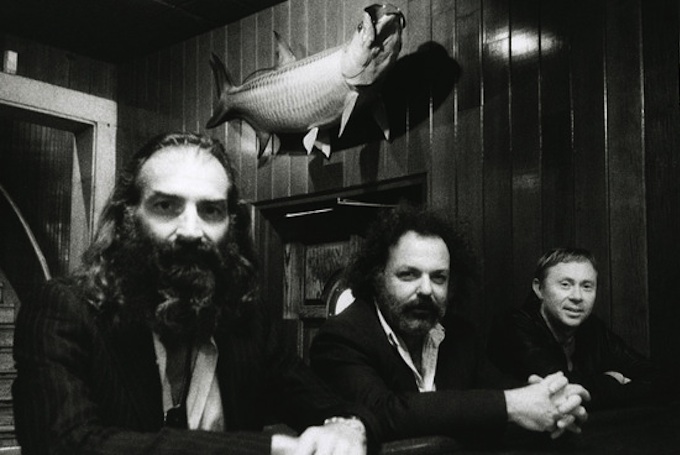
It’s been seven years since Aussie post-rockers Dirty Three have released an album. That’s not to say the band members have been lying low: residing in Melbourne, guitarist Mick Turner has kept himself busy with the Tren Brothers and his solo career, as well as his visual art; currently Brooklyn-based drummer Jim White has been touring the world with the likes of Cat Power and Bonnie “Prince” Billy; violinist and recent Parisian Warren Ellis, when not on the road with The Bad Seeds or Grinderman, can be found working with Nick Cave on film scores (The Assassination of Jesse James by the Coward Robert Ford, The Road).

The past seven years have been one of the most creative periods in the band’s history — and it shows on the the trio’s new album, its Drag City debut, Toward the Low Sun. Each member seems to have benefited from the hiatus, as they return with a sound that’s more definitive than ever.
Jason Viola

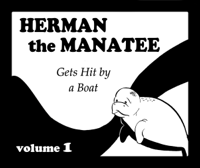
Zine Scene: Jason Viola’s Herman the Manatee, Rabbit Shadows, and Who is Amy Amoeba?

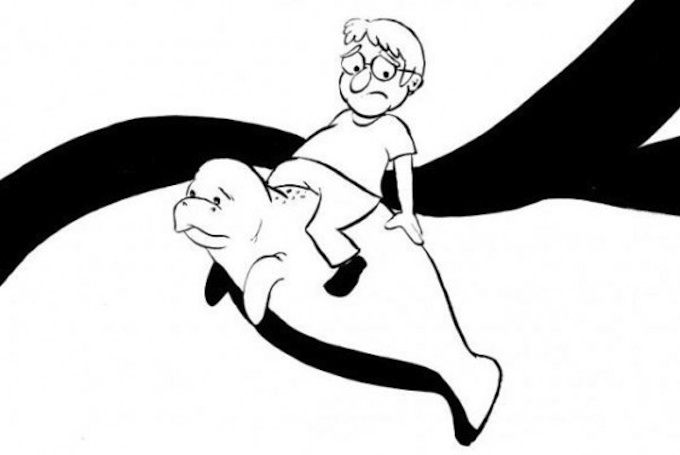
Jason Viola: Herman the Manatee Vol. 1Jason Viola: Herman the Manatee (Manatee Power, 1/25/12)

Jason Viola’s comics might look simple at first. Herman the Manatee, Rabbit Shadows, and Who is Amy Amoeba? sound like kids’ stuff. Viola’s comics use the tropes of the Sunday paper strip (animal characters, big bug eyes, cartoonish proportions, and, of course, humor), but the artist uses this style to explore themes that are decidedly un-cartoonish. Even if he claims that Garfield creator Jim Davis is his biggest influence (“for better or worse”), many of his online and booklet stories cover much darker and more interesting territory.

Qua

Qua: A Digital-Analog “One-Stop Shop” for Texture, Color, and Melody

This story first appeared in Chromatic: The Crossroads of Color and Music. Order your copy today.

Qua: Q&AQua: Q&A (Electric Dreams, 4/27/10)

Qua: “Circles”

[audio:https://alarm-magazine.com/wp-content/uploads/2010/12/Qua_Circles.mp3|titles=Qua: “Circles”]

Given the proliferation of programmable equipment and digital production techniques, kids all over the world are growing up and playing music without ever touching a physical instrument. Who can blame them? Nearly every imaginable texture, pitch, effect, and beat is just a few clicks away. This sea change from analog to digital musicianship hasn’t just changed the way that we create music; it has changed the way that we see music too. Distinctly electronic timbres are coupled with the colorful swirls of an iTunes visualizer, the bright strobe lights of a dance club, and the neon aesthetics of genre giants like Daft Punk and MIA.

Though he grew up playing guitar in rock bands, Cornel Wilczek, better known as Australian electronic artist Qua, set aside his guitar and took the solo electronic road early in his career. His decision was made possible by a discovery of electronic music, a genre wherein Wilczek realized that he could become, as he says, a “one-stop shop.” He could handle production and technical duties without having to rely on anyone but himself.

At 17, Wilczek won a Yamaha guitar competition and moved to the USA to do session work and guitar demonstrations. “It was really quite amazing at the time,” Wilczek says, “but it was also the end of an era for me, because I had met so many of my guitar and music idols who were complete assholes. I actually came back [to Australia] and stopped playing guitar for about five years, and that’s when I found electronic music.”