Moses Supposes

Moses Supposes: Why your music career needs a music-business plan

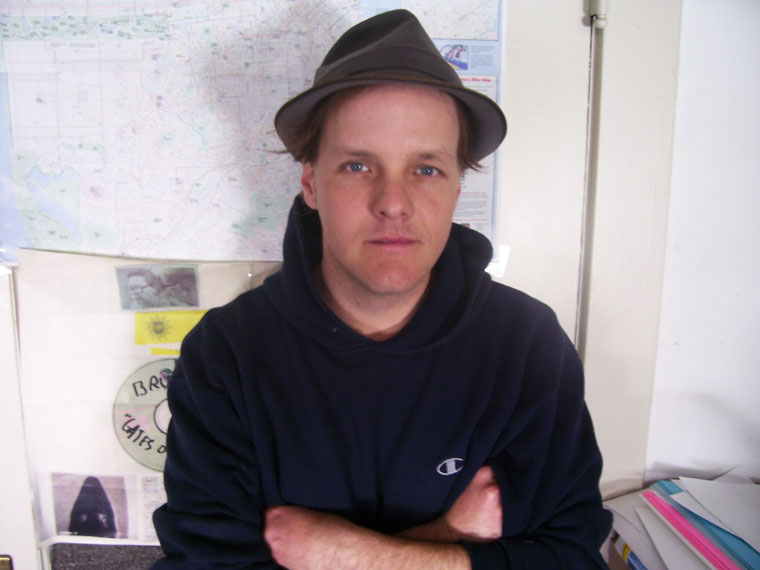
Moses Avalon is one of the nation’s leading music-business consultants and artists’-rights advocates and is the author of a top-selling music business reference, Confessions of a Record Producer. More of his articles can be found at www.mosesavalon.com.

You’ve heard it before: “It takes money to make money.” But getting start-up capital requires more than just talent. It means learning to communicate with investors. A business plan is a basic requirement. Sadly, the daunting task of creating one keeps many musicians from their well-deserved success. How can artists, who are not known for their business acumen, get past this major hurdle without blowing their start-up budget or feeling like corporate beggars? Here’s how.

The following is a sample chapter/excerpt from the revolutionary tell-all book by music business veteran, Moses Avalon, called 100 Answers to 50 Questions on the Music Business. Enjoy.

I’ve heard it over and over again from my younger clients: “Do I really need a business plan?” Simple answer, yes, you do…and yes, I know this sucks. This is the part where they start bargaining with themselves: “Why do I have to write this down — isn’t it obvious how we intend to make money?” Another simple answer: no, not to your would-be investors. Their exposure to the music business is probably the mainstream press, who tells them the industry is crumbling.

Over the past few years, even major labels have had to justify costs and income projections to their stockholders with written business plans. So why shouldn’t you?

You have a great product (your music), but you need to think of your act just as any other start-up business. With banks failing and our economy in a state of trauma, your potential investors are scared out of their minds about what to do with their money. If they are even considering investing in a musical group, then they are brave. You need to make them comfortable.


Dengue Fever

Concert Photos: Do Division Street Fest (Chicago, IL)

This past weekend, over 20 bands took to two stages on one of Chicago’s major thoroughfares, Division Street. The performances were part of the annual Do Division Street Fest & Sidewalk Sale. In addition to the music, local purveyors of food, drink, retail, and crafts offered a family-friendly crowd a wide variety of sustenance and shopping. Photographer Elizabeth Gilmore captured these images of A Place to Bury Strangers, Bonobo, Big Freedia & The Divas with Rusty Lazer, Javelin, and Dengue Fever over the course of the weekend.
 
A Place to Bury Strangers

A Place to Bury Strangers

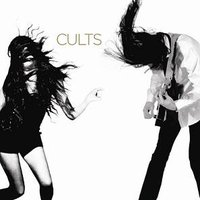
Cults

Pop Addict: Cults

On Thursdays, Pop Addict presents infectious tunes from contemporary musicians across indie rock, pop, folk, electronica, and more.

Cults: s/tCults: s/t (Columbia, 6/7/11)

Cults: “Abducted”

[audio:https://alarm-magazine.com/wp-content/uploads/2011/06/Cults_Abducted.mp3|titles=Cults: “Abducted”]

From the Peoples Temple’s mass suicide in Jonestown in the 1970s, to the violent end to David Koresh’s born-again hedonists in Waco, Texas, cults have been a dark chapter in America’s history. Though the organizations themselves claim to offer hope and promise to its members, something much more terrible has been covered by promises of self- fulfillment and spiritual rejuvenation. True to its name, then, Brooklyn-based duo Cults has a bit of this duality as well—offering music that’s blissful, summery, and full of promise yet tinged with an underlying darkness.

The band, though, has no problem balancing these contrasts. In fact, throughout the duo’s debut album, Cults’ gorgeously crafted summer-pop songs are layered with recordings of Jim Jones’ infamous “death speech.”  The second track, “Go Outside,” wallows in its own instruments, buzzing to life while Jones’ words state, “To me, death is not a fearful thing; it’s living that is treacherous.”  It then explodes into Madeline Follin’s hook-driven vocals, Brian Oblivion’s hazy guitar tooling, and an inescapably catchy xylophone — evoking a sound somewhere between Best Coast, The Kills, The Raveonettes, and The Beach Boys.

And though that juxtaposition helps define Cults, the band moves forward, track after track, offering catchy pop rock — the kind that makes you want to throw some belongings in the car and hit the road until you reach the coastline. And, in that sense, that’s the scary part of Cults: the songs are infectious — enough to brainwash you into liking it immediately.

Morrow vs. Hajduch

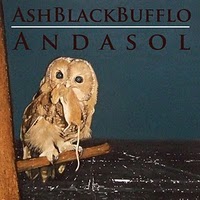
Morrow vs. Hajduch: Ash Black Bufflo’s Andasol

Scott Morrow is ALARM’s music editor. Patrick Hajduch is a very important lawyer. Each week they debate the merits of a different album.

Ash Black Bufflo: AndasolAsh Black Bufflo: Andasol (Knitting Factory, 5/23/11)

Ash Black Bufflo: “Buho”

[audio:https://alarm-magazine.com/wp-content/uploads/2011/06/Ash_Black_Bufflo_Buho.mp3|titles=Ash Black Bufflo: “Buho”]

Morrow: Ash Black Bufflo (note the missing A) is the recording moniker of Grails keyboardist Jay Clarke, and his debut release, Andasol, is the culmination of five years of solo composition.  Like Grails, the music here is extremely eclectic and skillful, but the styles found within Andasol are more segregated from track to track, not stirred in the melting pot like his group endeavor.

Hajduch: The music is mostly understated, minimal, and minor.  It’s very cinematic and seems designed to be unobtrusive, with occasional snippets of dialogue to fill the gaps.  With the soft nature of the music and the truncated length of the tracks, it’s an album that flies by.

Morrow: The 18 tracks do go quickly, and they’re sort of built like musical vignettes — which makes sense, because Clarke’s other material as Ash Black Bufflo has been used for movie soundtracks, theater productions, and dance recitals.  Even though some of the tracks are a medium length, nothing overstays its welcome.

Also, even though certain tracks are minimal or start out as such, many build into much more, with intricacy after intricacy added to the mix.  The album’s second track, “Misery is the Pilgrim’s Pasture,” is a perfect example, and it strikes a very Steve Reich vibe as flute, piano, harpsichord, and percussion work on top of the repeated foundation.

Erick Lyle

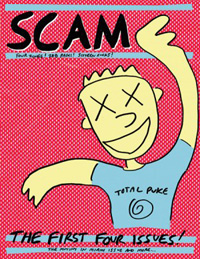
Zine Scene: Scam

Erick Lyle: ScamErick Lyle: Scam (Microcosm, 7/1/10)

Erick Lyle, a.k.a. “Iggy Scam,” has made a living out of living for free (and teaching others how to do it too). Since 1991, when he distributed the first issue of Scam in any way that he could — appropriately enough using stolen postage stamps and mail scams — Lyle has shown punks the possibilities of squatting, stealing, and resisting the restrictions of capitalist, corporatist America. The first four issues of Scam are now available in a hefty, polished paperback volume from Microcosm, ready for a new generation of punks to carry on the fight.

Based on his experiences of living in a shared “punk house” in Fort Lauderdale, Florida, and later squatting with girlfriend Ivy in Miami, Lyle has collected a lot of knowledge and stories about dumpster diving, spray painting, shoplifting, and avoiding cops. Scam is incredibly dense and referential; most of it is handwritten in various stages of legibility, and it seems to be directed almost exclusively at the early ’90s Floridian reader. But its stories of free and (not so) easy living will be compelling for anyone who has ever thought of rejecting society’s rules and dropping out of the system.

Like any zine, there are letters to the editor — or more often, reprinted court summons — as well as book and music reviews, comics, and short stories. Accounts of scams done well and scams gone awry are balanced with a good amount of practical advice. By now, most of the scams are outdated; this was 1991, when UPC barcodes were just coming into their own, and many stores didn’t bother with entryway scanners.