During the summer of 2005, New Orleans resident Anne Gisleson and her friends were in the midst of developing Intersection New Orleans, a collaboration that encouraged 25 pairs of artists and writers to find inspiration in 25 intersections throughout the city. After Hurricane Katrina ravaged the city, Gisleson and her friends were determined to regroup and continue providing a cultural refuge for locals.
“It was just kind of an imperative need to start doing things after the storm, because nothing was happening culturally, for obvious reasons,” Gisleson says.
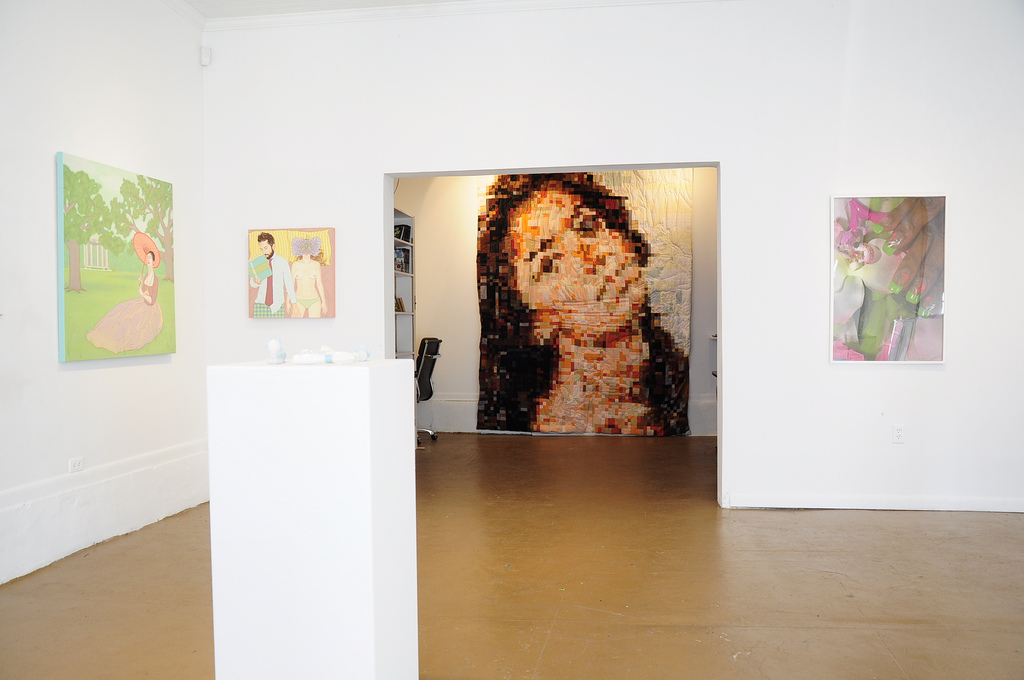
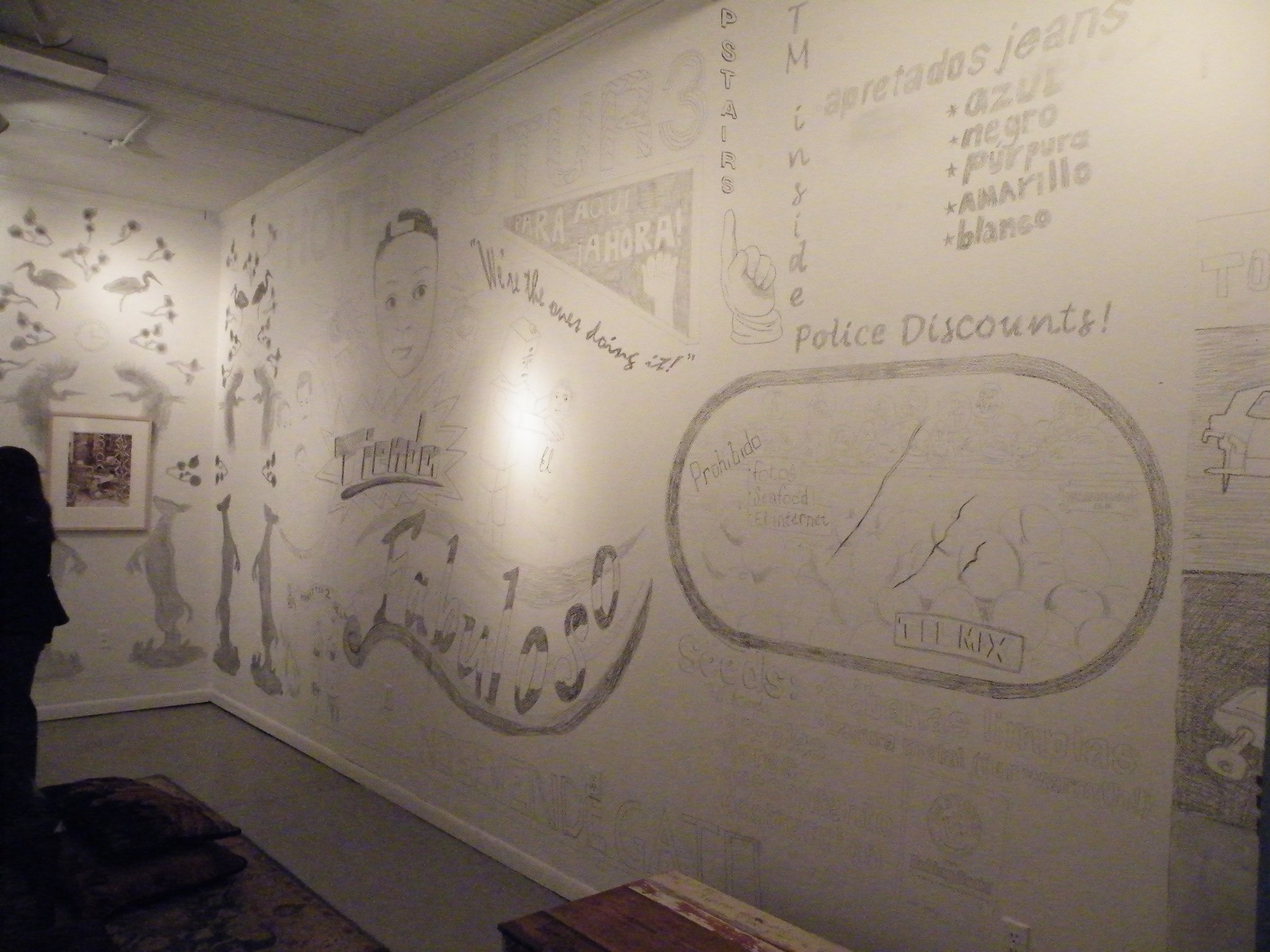
The informal art shows and literary events that the group hosted in the months after the storm led to the formation of Press-Street later that year. In 2008, Gisleson and her partners opened Antenna, a gallery space on St. Claude Street in the city’s Upper Ninth Ward. Their intent with Antenna was to create a place that would support and inspire the local creative community by focusing on cutting-edge contemporary art.
“It’s a space where the commercial end is taken out of the equation,” Gisleson says. “It’s a space where people can do the sort of projects that they wouldn’t be able to do in a for-profit gallery, which tends to be a bit safer and market oriented.”
Morrow: With a background in hip hop as well as hardcore and punk, New Jersey rapper GDP approaches his genre with a unique perspective, coupling an unfiltered vocabulary with sociopolitical themes, banging beats, and a decidedly Aesop Rock-style delivery.
His newest full-length, Useless Eaters, quickly gets at the underbelly of America, whether discussing drugs, war profiteering, climate change, or big-brother distrust. “Neural Circuitry” begins the album with high-energy hi-hats and a nearly G-funk synth groove, but it hits hardest with its subject matter: hardcore drug use. There’s underlying intellect, however, and in making a passing reference to Afghani opiates, GDP rhymes, “Soldiers aren’t dying for us / they’re risking their lives for the change / a full ride to college or a meaningless grave.”
Hajduch: Australian producer Aoi makes clanging, colorful synth-based beats that remind me somewhat of the kaleidoscopic dubstep pushed by people like Hyetal. It’s glammy and full of square waves, and for all the clamor and seeming lightness, it still bangs. The fidgety beats fit GDP’s restless rhymes well. He’s equally comfortable deploring battle rap as he is deploying it.
Annah Billips is one strange girl. A self-described tease, she flirts and dates, has boyfriends and girlfriends, and apparently can’t fall in love for one very strange reason: her mad-scientist father removed her Penfield homunculus when she was nine years old, and it became a clone named Ginger who ran away with Annah’s ability to feel strong emotion. Or did it?
Gingerbread Girl, the new graphic novel by husband-and-wife team Paul Tobin and Colleen Coover, boasts a bizarre storyline that runs the strong risk of alienating some. Self-consciously odd and full of narrative daring, the comic has its own charms, though, and an adventurous reader can’t help but be drawn into its central mystery. Does Annah really have a twin named Ginger walking around, or is she actually crazy and deeply scarred from her parents’ divorce years before?
Gingerbread Girl doesn’t give any answers, but it does take a fascinating journey through Annah’s psyche, as seen by lovers, bystanders, pigeons, bulldogs, a neuroscientist, and a magician.
Tobin chooses to tell Annah’s story via a fluid stream of narrators, each of whom speaks directly to the reader and then passes the story amongst the other narrators. How each speaker chooses to define Annah, or judge her sanity, gives us a little insight into the narrator. As the reader follows Annah on a date with her girlfriend, Chili, Tobin wisely leaves Chili’s perspective for last.
On the strength of its sprawling 2009 EP, Anam Cara, Georgia-based post-rock band A.Armada broke out from its under-the-radar status and toured its material worldwide for the first time.
Chrissy Murderbot: “Bussin’ Down” (Feat. DJ Spinn)
[audio:https://alarm-magazine.com/wp-content/uploads/2011/04/01-chrissy_murderbot-bussin_down_ft._dj_spinn-bnp.mp3|titles=Chrissy Murderbot: “Bussin’ Down” (Feat. DJ Spinn)]
After releasing a number of mixes, EPs, and LPs on his own label, Sleazetone, Chicago-based footwork/juke DJ Chrissy Murderbot (a.k.a. Chris Shively) is set to release his Planet Mu debut this May. The record, titled Women’s Studies, comes on the heels of a whirlwind year in which Shively released a mixtape every week for one full year (www.yearofmixtapes.blogspot.com). Here, he highlights his Women’s Studies collaborators with a collection of 10 choice tracks.
My Collaborators and Why I Love Them By Chrissy Murderbot
On my new album, Women’s Studies, I work with a lot of guest vocalists, DJs, remixers, etc. A few times already, interviewers have asked me, “How did you find out about these people?” or “What made you choose this particular group of people to work with?” So I thought I’d take this opportunity to show you the songs that turned me onto all the great musicians who’ve contributed to my new LP.
1. Rubi Dan & The Heatwave: “Higher Heights”
[audio:https://alarm-magazine.com/wp-content/uploads/2011/04/theheatwave-rubidan-higherheights.mp3|titles=Rubi Dan & The Heatwave: “Higher Heights”]
Rubi Dan is a British MC who performs on dancehall records, UK garage records, grime records, and pretty much anything else you give him. This is a dancehall tune from 2008, produced by UK bashment crew The Heatwave. I met the guys from The Heatwave in 2005, and after I heard this tune, I asked them to put me in touch with Rubi Dan. We’ve made two tracks together so far: “New Juke Swing” and “Pelvic Floor,” both of which are on the new album. For the record, I’m really glad I can say I’ve released a tune called “Pelvic Floor.”
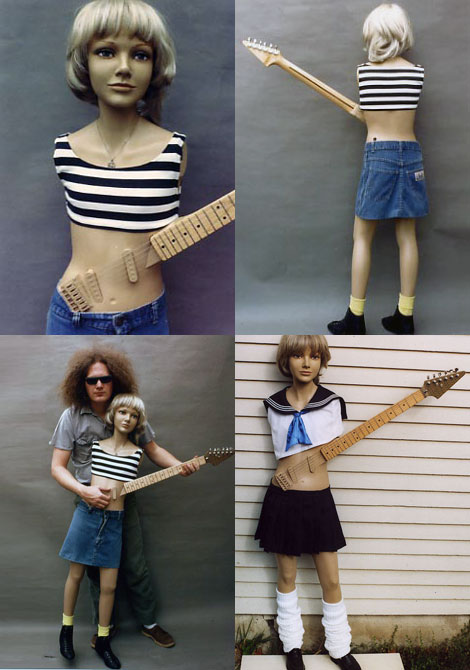
Fang Island, with its three-guitar attack and lightning-fast riffs, knows a few things about shredding. Logic dictates that it also knows a fair amount about guitars. For guitarist Nicholas Sadler, there’s one axe in particular that stands out: a weirdly human girl-guitar of mysterious origins. In this piece penned for ALARM, Sadler laments the fact that he didn’t conceive of the musical mannequin first and goes on to explain what exactly makes Teenar so magical.
I Wish I Had Thought of This First: Teenar, Girl Guitar
By Nick Andrew Sadler
My name is Nick Sadler, and though I hate guitar players, I love guitars. This one is a work of mad genius. Here is Teenar, my dream guitar, at what could be a middle-school, father-daughter dance with her pervert-savant creator / daddy, “Sunset” Lou Reimuller. I am absolutely enamored with Teenar, and I really wish that I had thought of this first.
Teenar is totally baller, outfitted from head to toe in vintage clothing, without arms, ahead of her time with a set of fiery Beavis-legs, and sporting a smart, belly-thru-body guitar that peeks out from behind her bodacious, above-the-knee, low-cut denim skirt. Cute! Teenar, Girl Guitar also has 21 frets on a beautiful blond neck that has been carefully integrated into her never-developing torso, two skin-colored, single-coil pickups that straddle her rock-hard bellybutton, and a fleshy six-string, yummy-tummy bridge, just like the one that my big sis got when she moved out of the house and began dating [Mikey] “Bug” [Cox] from Coal Chamber.
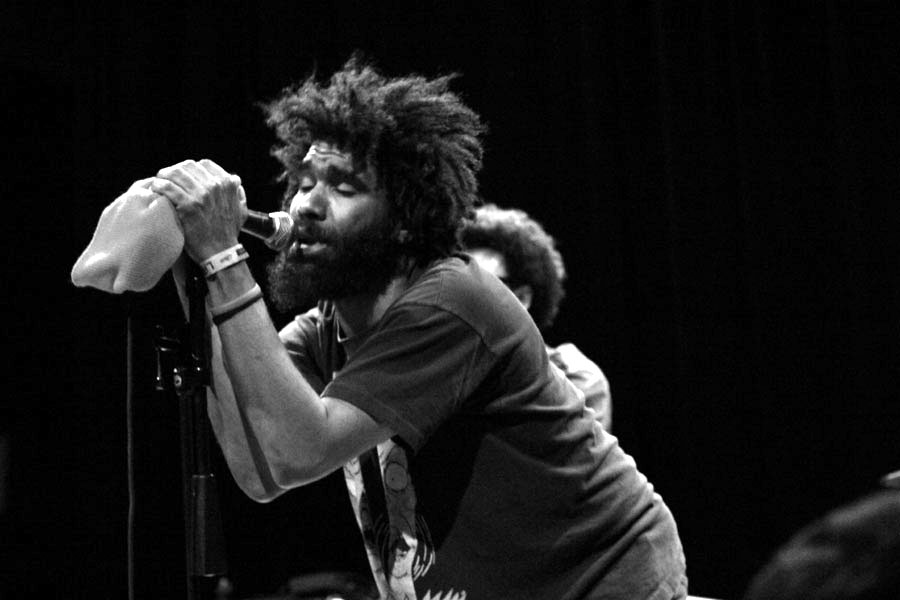
Seattle hip-hop trio Champagne Champagneteamed with Portland, Oregon-based indie-rock band Starfucker in a recent show at Lincoln Hall in Chicago. Champagne Champagne, composed of emcees Pearl Dragon and Sir Thomas Gray and multi-instrumentalist DJ Gajamagic (formerly of The Blood Brothers), stormed through a high-energy, punk-rap set culled largely from its self-titled album, released in 2009. Tracks like the twisted love song “Molly Ringwald” showcased the group’s unorthodox production and penchant for pop-culture allusion. ALARM staff member Kyle Gilkeson was there to capture the action.
By the end of the 1960s, The Beatles had been absent from any kind of live performance for years. This supposed retirement from commercial concerts, however, never fully quelled speculation that the group could return to the stage in some way. Of the various conjectured shows, none held more what-if potential than a rumored collaboration between the Fab Four and German avant-garde composer Karlheinz Stockhausen.
According to a vague report noted in a biography by author Michael Kurtz, Stockhausen was said to have arranged a meeting with one of The Beatles at his New York apartment in 1969 to discuss a joint concert, but a blizzard ultimately kept the two parties apart. Between Paul McCartney occasionally citing a fascination with Stockhausen’s “Gesang der Junglinge” in interviews, The Beatles including a image of him in the cover crowd of Sgt. Pepper’s Lonely Hearts Club Band, and John Lennon’s “Revolution 9” getting regular critical comparisons to Stockhausen’s Hymnen, The Beatles and Stockhausen maintained at least a shred of connectivity to make such a collaboration possible.
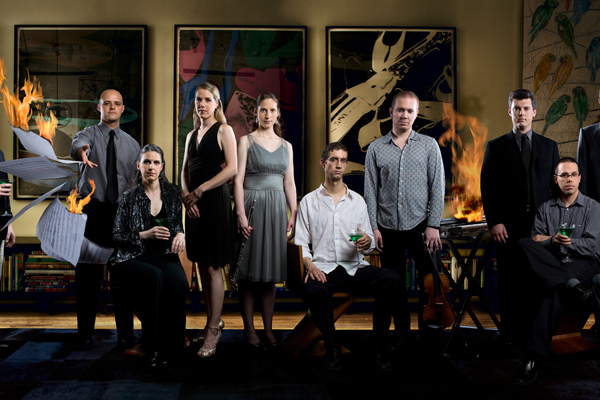
Though the rendezvous, like most hearsay, has been proven to be devoid of truth, fiction has never gotten in the way of inspiration. Such is the case with avant-garde ensemble Alarm Will Sound and its most recent work, 1969. Mixing musical composition, scripted acting, audio dialogue, and archival video, the group’s live production uses the myth of the would-be collaboration as a jumping-off point to examine a time period rife with political, artistic, and social change. ALARM recently spoke with the ensemble’s conductor, Alan Pierson, to discuss the new work, its combination of history and falsehood, and why the year of 1969 was such a big deal.
Let me ask you about 1969. How did this concept develop?
We had been working on this for a long time. In a way, it goes back to those composer portraits as one-composer concerts. Those sorts of concerts, we felt, were a really good way for us to be developing our reputation in New York. But at a certain point, we felt like we wanted to do something broader than that. What I liked about the composer portraits was that they were a way of creating a contemporary music concert that really felt like an event, rather than just a collection of pieces.
There was a really special kind of vibe that you got when you had people walking into a hall to experience an entire evening of Steve Reich or of György Ligeti. The question was “How [do we] create that kind of experience with a broader repertoire?” and “What is a way to bring together really different kinds of music in a coherent framework?”
We did a couple of things along those lines. We did a show called Odd Couples at Carnegie Hall in 2006, which I think was really successful. But as we started brainstorming ideas for concerts, one thing I started thinking about was this idea of doing music of a single year and using a period of time as a way to connect really different kinds of music. Nineteen sixty-nine just emerged pretty quickly in that process as a really interesting time to look at. In the process of looking at that more deeply, I stumbled on this story of the planned meeting between Stockhausen and The Beatles, and it just seemed like too great a story not to tell.


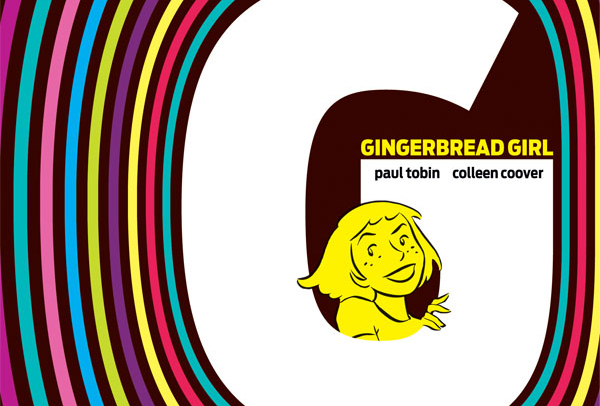
 Paul Tobin & Colleen Coover: Gingerbread Girl (